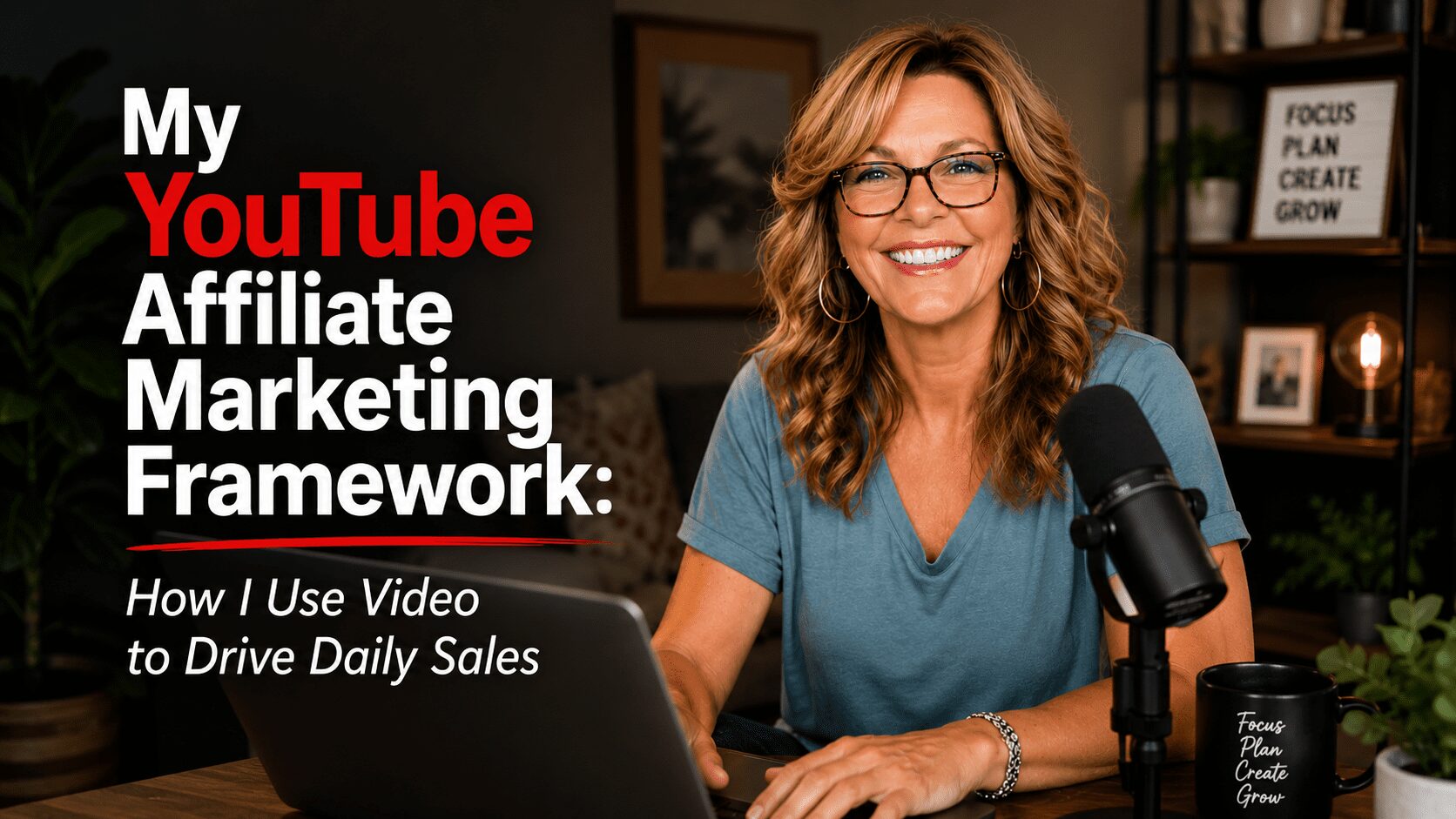
I did not set out to build a YouTube-driven affiliate marketing system. I started making videos because I wanted to explain things that were hard to explain in writing. The affiliate commissions followed, and then they started compounding in a way that made me realize YouTube was not a side channel. It was the engine.
I cover how YouTube fits into my full affiliate system in my ebook Affiliate Marketing: How I Turned My Content Into Commissions, available at ballenpublishing.com for $27. It walks through the complete repurposing framework across video, blog, and social. Here is the YouTube piece of it.
Why YouTube Converts Differently
People who find you on YouTube know you before they buy from you. They have seen your face, heard your voice, watched how you think through a problem. By the time they click an affiliate link in your description, they have already decided they trust your recommendation. That pre-established trust is why YouTube affiliate conversions tend to be higher quality than most other traffic sources.
Compare that to a Pinterest pin. Someone found a pin in search, clicked through to a post, and landed on a recommendation from a writer they have never encountered before. The content might be excellent but trust is being established in real time. With YouTube, the trust is already there before the first click.
I use Pinterest to introduce new people to my topics and YouTube to convert them into buyers. The two platforms compound each other.
The Video Formats That Drive Affiliate Sales
Not every video earns affiliate commissions at the same rate. The highest-converting formats in my experience are tool walkthroughs, honest reviews, workflow videos, and comparison content.
Tool walkthroughs show how I use a specific product or tool in my actual workflow. The recommendation is demonstrated rather than stated, which is more persuasive and more honest. Honest reviews do not shy away from limitations. A review that acknowledges what a product does not do well is more credible than one that presents everything as perfect. My viewers know that if I am recommending something, it is a real assessment.
Workflow videos show how I accomplish something specific, and the tools that make the workflow possible earn commissions naturally. A video showing my Pinterest pin batching routine mentions and links the tools I use. The commission follows from useful content rather than a sales pitch. Comparison videos do very well for specific affiliate commissions because viewers in the comparison stage are already close to a buying decision.
YouTube Shopping in My System
YouTube Shopping lets me tag products directly in videos. A viewer sees the product appear on screen, taps the tag, and can purchase without leaving YouTube. I added YouTube Shopping to my workflow for physical products I recommend on camera. It adds a commission layer directly to my video views without requiring any separate content. Not every program integrates with it, so I layer in traditional affiliate links through video descriptions and linked blog posts for everything else.
My Link Placement in Videos
Affiliate links go in two places: the video description and the linked blog post. The description lists the links with a brief description of each product, organized by category if the video covers multiple recommendations. I always have a companion blog post for my highest-earning video topics. The blog post contains full affiliate context and additional links that would be too much for a description. I send viewers from the video to the post and the post earns from its own search traffic independently. Both pieces compound over time.
The Repurposing Loop
A YouTube video does not stay on YouTube. I pull clips for TikTok and Instagram Reels. I write a companion blog post targeting the same keyword. I create Pinterest pins pointing to the blog post. The video sends viewers to the blog. The blog sends readers to Pinterest. Pinterest sends search traffic to the blog. All of it points toward the same affiliate commissions, compounding across channels from a single content investment.
What the Routine Actually Looks Like
I record video in batches when possible. One recording session produces two to four videos that I edit and schedule across three to four weeks. This keeps the channel consistently active without requiring me to show up on camera every week. Between recording sessions, the existing content earns. Videos I recorded a year ago still generate affiliate commissions today because they rank in YouTube search and in Google video results.
That is the long-game argument for YouTube that most people underestimate when they are deciding whether the effort is worth it. The answer is yes, but only if you think of video as an asset that appreciates over time rather than content that expires after the first week. The income I earn from my YouTube affiliate system is not from any single video. It is from a library of videos all earning simultaneously, in amounts that add up to something meaningful every single day.
The Full System
YouTube is one piece of how I run affiliate marketing across video, blog, and social as a one-woman operation. If you want the complete picture, including how I choose programs, how I structure each content type for conversions, and how the whole repurposing loop connects, it is all in my ebook Affiliate Marketing: How I Turned My Content Into Commissions. It is $27 at ballenpublishing.com. That is where I break down every part of the system I just described, in the detail you actually need to build it yourself.

Hey there! Just a quick heads-up: some of the links on this site are affiliate links, meaning I may earn a small commission if you make a purchase (including through the Amazon Associates program), at no extra cost to you. Occasionally, products featured here are gifted by brands.
I also use AI tools to help research and create content for you! While I love sharing strategies to help you succeed, please remember that everyone's journey is unique—individual results vary, and there are no guarantees. Thanks so much for stopping by!