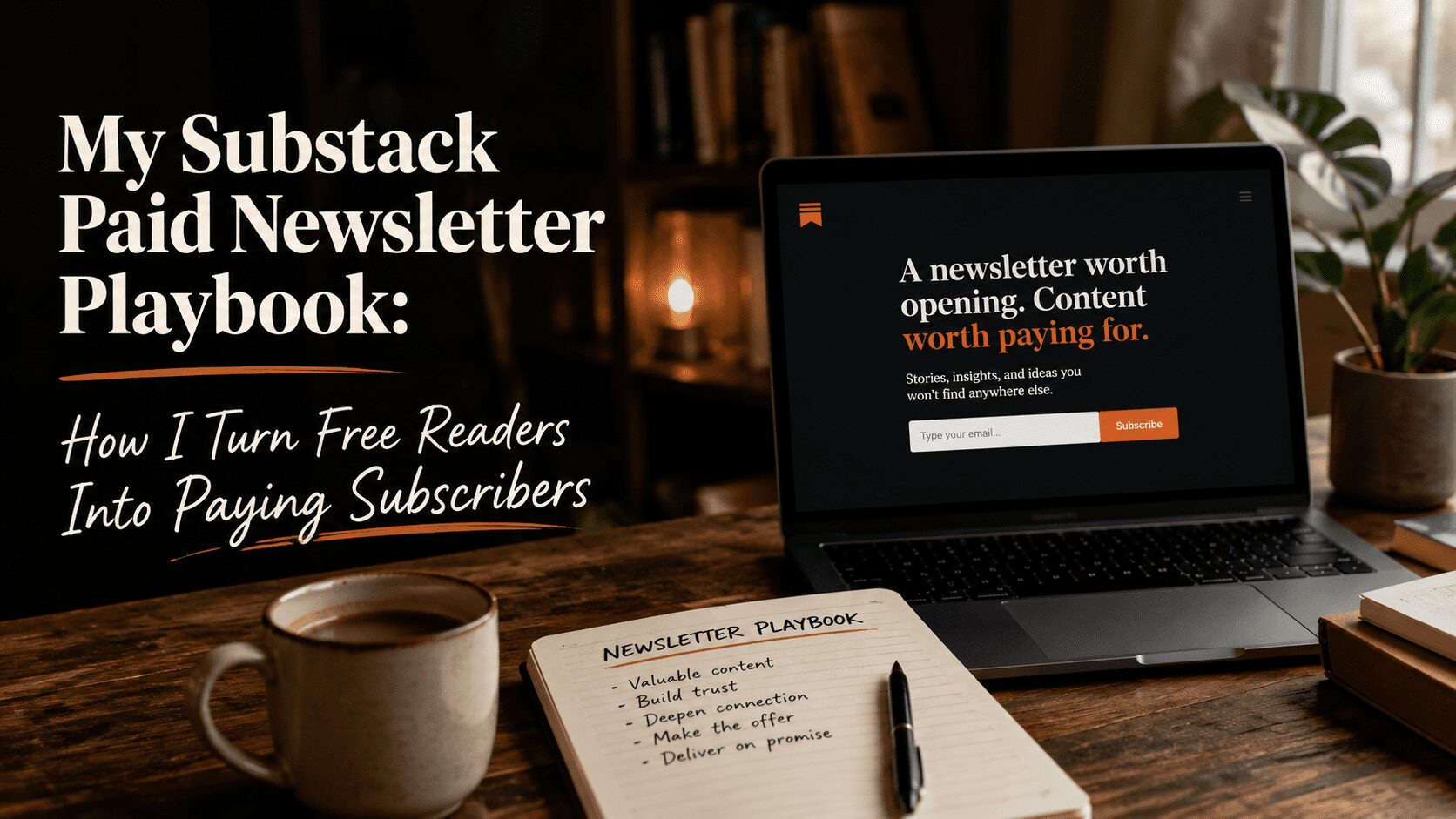
I turned on paid subscriptions on my Substack before I felt ready. My list was small, my open rates were good, and I had been told by everyone I respected to wait until I had a bigger audience. I ignored that advice, turned on paid, priced it at $7 a month, and got my first paid subscriber within 48 hours. Not because I had a big audience. Because the readers I had trusted me enough to pay for access to more.
The full monetization strategy, including pricing psychology, multiple income streams, and the paywall structure I use, is all in my ebook Substack 101: A No-Fluff Guide to Building and Growing a Paid Newsletter at ballenpublishing.com for $27. Here is the playbook for converting free readers to paid ones.
When to Turn On Paid
The conventional wisdom is to wait until you have a big audience. I disagree with this strongly. The best time to turn on paid subscriptions is as soon as you have any subscribers who are consistently opening your emails and engaging with your content. A small engaged audience converts to paid at a much higher rate than a large disengaged one. A list of 200 people who open every email is more likely to produce paid subscribers than a list of 2,000 people who subscribed once and forgot about you.
Waiting for a bigger audience to turn on paid subscriptions also delays the psychological shift that happens when money is on the table. The moment real subscribers are paying real money for what you write, your commitment to the newsletter changes. That shift makes the newsletter better, which brings more paid subscribers. Waiting for the audience delays the thing that accelerates the audience.
My Pricing Approach
Substack lets you set a monthly price and an annual price. I started lower than I should have, which I cover in more detail in the ebook, and raised prices once I understood the conversion dynamics better. The principle behind Substack pricing psychology is that the price signals the value of what is behind the paywall. Price too low and readers assume the paid content is not substantially different from the free content. Price at the level that reflects what serious access to your thinking is actually worth.
The annual plan is where the majority of my paid revenue comes from, not the monthly plan. Annual subscribers pay upfront, stay longer, and are more likely to be genuinely engaged readers rather than people who subscribed out of momentary interest. I promote the annual plan as the primary option and offer the monthly plan as the accessible entry point for people who want to try before committing.
The Paywall Structure That Converts
The paywall is not a wall. It is a doorway. The free content on the other side of the subscribe button has to be good enough that readers want to know what is on the paid side. Every free article is doing conversion work for the paid subscription, whether I think of it that way or not.
My specific paywall structure places certain article types behind the paywall while keeping others free. I think about it this way: free content demonstrates the quality of my thinking. Paid content delivers the practical value of my experience. Anyone can read my analysis for free. Subscribers pay for the systems, the specific frameworks, and the direct application of what I know to what they are trying to do.
The article type that converts free to paid most reliably for me is the one that opens a door partway. A free article that establishes a problem, starts solving it, and puts the most useful portion behind a paywall is more effective than a full free article with a subscription prompt at the bottom. The reader is already invested when they hit the paywall. Upgrading feels like finishing something they started.
Multiple Income Streams from One Audience
Paid subscriptions are one income stream from a Substack audience. They are not the only one, and for a creator who has built trust with an audience over time, they are often not even the largest one. My Substack audience also buys my ebooks, finds its way to my YouTube channel where I earn affiliate commissions, and arrives at my blog where display ads and affiliate links generate additional revenue.
The newsletter is the relationship. Everything else is a natural extension of that relationship for readers who want more of what I offer. A Substack newsletter that treats paid subscriptions as the only monetization path is leaving significant income on the table. The audience you build on Substack will follow you wherever you send them if you have earned their trust.
The Conversion Levers I Pull
When I want to drive paid conversions I use a few specific approaches. A limited-time founding member rate generates urgency for readers who have been on the fence. A free trial of paid content lets hesitant readers experience the paid tier before committing. A direct ask in a high-performing free article, simple and specific, converts a percentage of readers who were already thinking about it but had not been prompted. None of these are complicated. All of them work.
The Full Paid Newsletter System
The conversion strategy does not stand alone. It sits on top of a newsletter that publishes consistently, uses Notes to grow, leverages recommendations to find new audiences, and has a clear paywall structure that makes the paid tier feel worth it. All of that, plus the 30-day launch plan, the pricing psychology breakdown, and the full recommended tools list, is in my ebook Substack 101: A No-Fluff Guide to Building and Growing a Paid Newsletter. It is $27 at ballenpublishing.com. It is written by someone actually running a paid Substack newsletter, not by someone who read about it and wrote a guide.
Hey there! Just a quick heads-up: some of the links on this site are affiliate links, meaning I may earn a small commission if you make a purchase (including through the Amazon Associates program), at no extra cost to you. Occasionally, products featured here are gifted by brands.
I also use AI tools to help research and create content for you! While I love sharing strategies to help you succeed, please remember that everyone's journey is unique—individual results vary, and there are no guarantees. Thanks so much for stopping by!