Getting to 30,000 subscribers without leaving Substack
One writer’s breakdown of 32,000 subscribers gained almost entirely inside the platform, taken apart honestly. Which sources you control, which you do not, what Substack has actually published about its own network, and what the number is really worth once it converts.
If you only take four things from this
Most of that growth was not controllable
In the breakdown that got everybody’s attention, the largest single source was Substack’s own onboarding flow. You cannot make that happen. You can only be positioned for it.
The controllable part was Notes
Roughly a quarter of the total, by that writer’s own accounting, and it is the only lever in the whole equation you operate yourself.
Big numbers and good numbers are different
Subscribers acquired through onboarding open less. One publisher who audited her list found recommendation signups had the lowest open rate of any source she had.
Revenue does not scale with the subscriber count
The realistic free-to-paid median across real publications is about 3%. Thirty thousand subscribers is not thirty thousand times anything.
Where the 32,000 came from
One writer’s self-reported accounting of one publication. Not platform data. The shape is the useful part, not the precision.
| Source | Share of the 32K | Can you control it | What it actually is |
|---|---|---|---|
| Substack onboarding recommendations | Around 10,000+ | Not controllable | New Substack users are shown publications to follow during signup. Being one of them is the single biggest lever on the platform, and it is not a lever you hold. |
| Substack Notes | Around 8,000+ | Fully controllable | The short-form feed. This is the only large source in the breakdown that responds directly to what you do on a given day. |
| Writer recommendations | Meaningful, harder to isolate | Semi-controllable | Other publications pointing at yours. You earn these by being worth pointing at, and by recommending others first. |
| The app feed and profile visits | Steady background | Semi-controllable | Downstream of Notes. People see you, tap the profile, subscribe from there rather than from any single piece. |
| External traffic | Smallest by volume | Fully controllable | Search, social, your own site. The smallest number here and usually the highest quality, which is the tension in this whole subject. |
Six things the number is actually made of
What the 32,000 was actually made of
A writer posted a breakdown of gaining more than 32,000 subscribers almost entirely from inside Substack, and it went around because the numbers were specific. Before anything else, the honest framing: this is one writer’s self-reported accounting of one publication. It is not platform data and it is not a study. It is useful because the shape of it matches what a lot of people are seeing, not because it has been verified.
The shape is what matters. The largest single source was Substack’s own onboarding flow, where new users are shown publications to follow when they sign up. Ten thousand plus subscribers from a placement nobody can buy, apply for, or reliably earn.
The second largest was Notes, at around eight thousand. That is the number to pay attention to, because it is the one you can affect on a Tuesday afternoon.
Why the split matters more than the total. If you read that story as a growth strategy, you will spend a year trying to reverse-engineer something that was mostly handed out by an algorithm. If you read it as an argument for the controllable quarter, you get an actual plan.
The network numbers, and what Substack has actually said
The in-network growth effect is real and Substack has published on it repeatedly. It is worth knowing the actual figures rather than the version that circulates.
February 2024: Substack said recommendations alone drove half of all new subscriptions on the platform, and a quarter of new paid ones. July 2024: they said the app and network together drove half of all new free subscriptions and 30% of new paid ones.
And here is the part people miss. Substack’s current marketing page puts the network at 25% of paid subscriptions, which is lower than the 30% they claimed in 2024. The eye-catching 50% figure has only ever applied to free subscriptions. If somebody tells you half your paid revenue will come from inside Substack, that is not something Substack has ever claimed.
The same page says readers who find you inside the network are three times more likely to pay than readers who arrive from outside.
Quality, and the uncomfortable trade
Growth from inside the network is easier and lower quality. Growth from outside is harder and higher quality. Almost everything about scaling a Substack sits inside that trade.
The evidence here is thin and I am going to say so. Substack publishes no comparative engagement data by acquisition source. What exists is publisher reports. One publisher who audited her own list found her direct subscribers opened at roughly 30% above her average, that recommendation subscribers had the lowest open rate of any source she tracked, and that 40% of her non-engaging subscribers had come from recommendations. She deleted 428 of them. One publication, her own analysis.
Why it matters anyway. A list padded with people who never open does two things. It makes your open rate meaningless as a signal, so you can no longer tell whether a piece landed. And it slowly teaches inbox providers that your mail is ignorable, which affects the people who did want it.
The practical version. Watch source-level engagement, not just the total. Substack’s dashboard already breaks growth into direct, email, onboarding, app and network buckets. And prune. A smaller list that opens is worth more than a big one that does not, both to you and to the algorithm that decides whether your mail lands.
The weekly operating rhythm
This is the part that actually produces the compounding, and it is far less exciting than the growth story.
Batch the short-form once a week. Substack added native Notes scheduling in March 2026, so this now costs nothing but the time. Sit down once, queue what you can, and stop treating each day as a blank page. Twenty minutes on a Sunday changes what the rest of the week looks like.
Do the engagement live. The scheduling handles the posting. It cannot handle the replying, and the replying is where the growth actually is. Show up daily in the comments, on your notes and on other people’s.
One or two real posts a week. Come for the Notes, stay for the posts. The short-form gets people to the door and the long-form is the reason they walk in. Publications that let the long-form slide end up with a following instead of a readership.
The full tactical version of the Notes side lives on its own page. Here is the Substack Notes playbook.
What automation cannot do. A queue does not build a community. The writers who scale and keep their engagement are automating the mechanical half and personally doing the human half, and the moment that flips, the numbers keep climbing while the open rate falls.
Turning the list into revenue
Start with the real conversion number. Substack’s guidance points at 5 to 10% of free subscribers converting to paid. The median across a multi-year dataset of actual publications is about 3%, and only around a fifth of publications exceeded 5%. Use 3% when you are doing your own arithmetic and treat anything above it as a good result rather than the plan.
What the fees really are. Substack takes 10%. Stripe takes 2.9% plus 30 cents, plus another 0.7% on recurring billing. On an $8 monthly subscription that is roughly $1.36 before you see anything.
The partial paywall is the highest-leverage setting. Give the whole argument away and paywall the part that does the work. The specifics, the numbers, the template, the walkthrough. People pay for utility far more readily than they pay for access.
About the bestseller badge. You will see 100, 1,000 and 10,000 quoted as the thresholds. Substack has never published those numbers. What their support page actually says is hundreds of paid subscribers for the first badge, thousands for the second, and tens of thousands for the third, and that free trials and comped subscriptions do not count. The specific numbers are the community’s inference, not a stated rule.
Do not let subscriptions be the only line. Sponsorships, your own products, and services all convert from the same list, and they do not take a percentage cut. A $27 guide sold to 2% of a list can outearn the subscription revenue from that same list, and it does not churn.
Traffic quality, ranked
If you are deciding where to put the next hour, this is the order I would put these in, and the reasoning is about intent rather than volume.
External high-intent traffic wins. Somebody who searched a question, found your answer and subscribed has already told you what they want. This is the smallest channel by volume for almost everyone and the best one by conversion.
Notes traffic is second. These people chose you. They read something, liked it enough to tap through, and subscribed on purpose. Slower than onboarding, considerably better quality.
Onboarding and recommendation signups are last. Not worthless, and at volume they still produce real paid subscribers. But they arrived through a suggestion rather than a decision, and the engagement reflects that.
The strategic version of all this. Let the network give you scale, because you cannot make it happen anyway. Build the external channel deliberately, because it is the part nobody can turn off. And treat Notes as the bridge between them, because it is the only large source you actually operate.
What 30,000 subscribers is actually worth
Run these on the median, not the aspiration.
| Starting from | At what rate | Result | The honest note |
|---|---|---|---|
| 30,000 free subscribers | at the 3% median | 900 paid | This is the realistic version and it is still a real business. |
| 30,000 free subscribers | at Substack’s 5% aspiration | 1,500 paid | Achievable, but only about a fifth of publications clear 5%. |
| 900 paid at $8/month | minus Substack’s 10% and Stripe | roughly $6,000/month | Gross before tax. The fees take about 17% of the top line on a monthly plan. |
| The same 30,000 | one $27 guide, 2% buy it | $16,200 once | No percentage to the platform, no churn, and it can be sold again to every new cohort. |
These are arithmetic illustrations using published conversion benchmarks, not a projection or a promise. Your numbers will depend on your subject, your list quality and your offer.
The whole system, start to bestseller
The complete recorded masterclass. How I set it up, what I publish and in what order, how the paid turn actually happens, and the pieces that took me from starting to bestseller.
- The full setup walkthrough, nothing skipped
- The publishing rhythm that compounds
- How the free-to-paid turn actually happens
- Lifetime access to the recording
The written versions
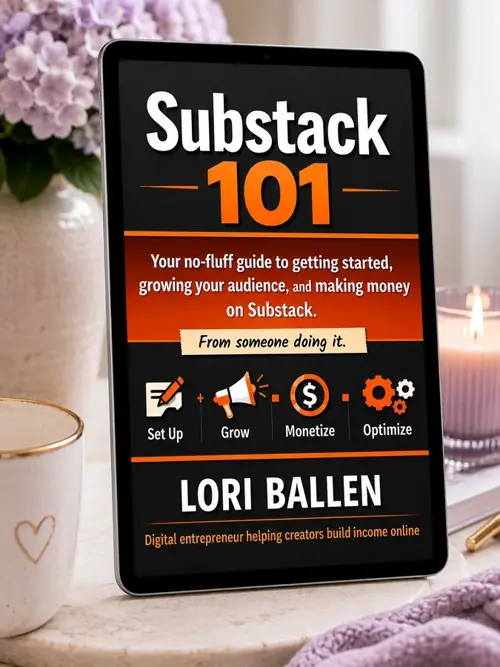
Substack 101
A no fluff guide to building and growing a paid newsletter, start to finish.
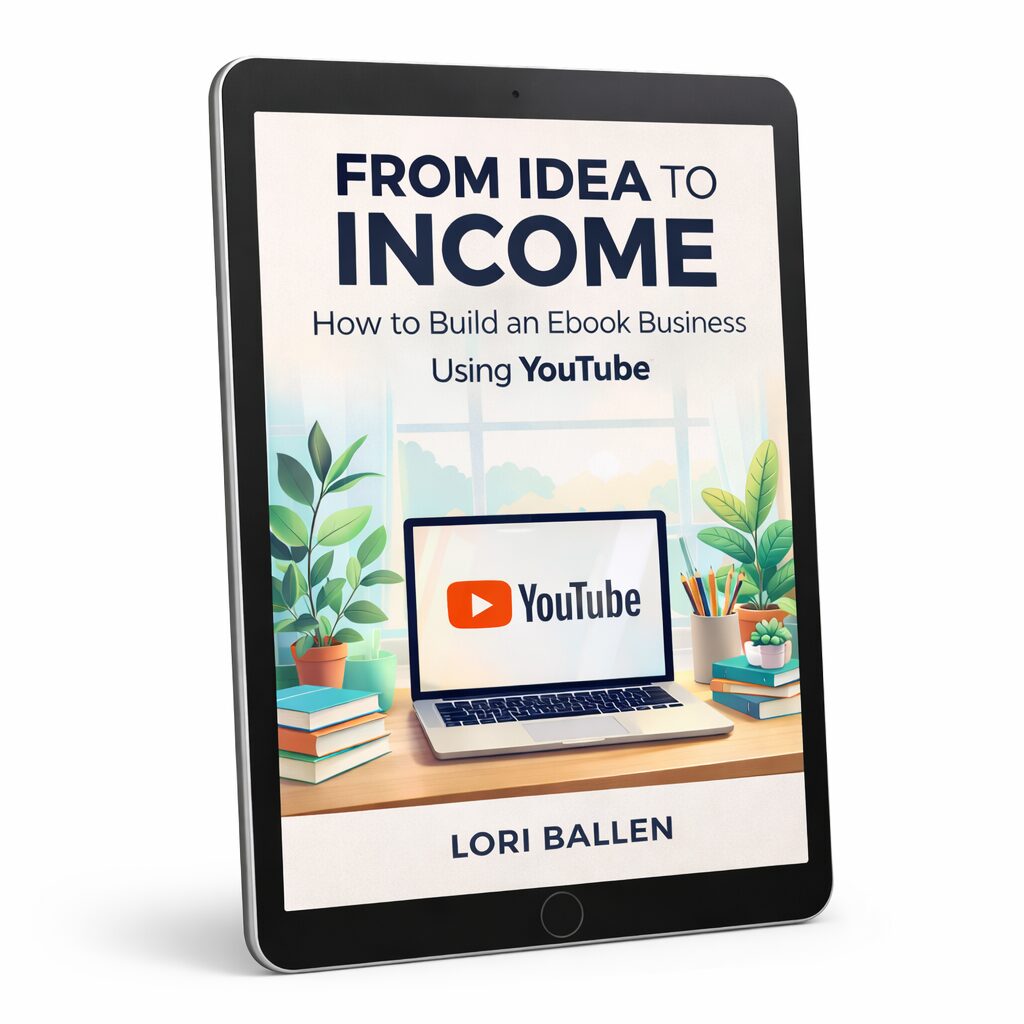
From Idea to Income
The product that sits alongside the subscription, so the platform is not taking a cut of everything.
Five ways people misread a growth story
- Treating somebody else’s onboarding luck as a strategy. The biggest number in that breakdown was a placement nobody controls. Build the plan around the quarter you operate.
- Optimizing for the subscriber count. Thirty thousand people who do not open is worse than five thousand who do, because it destroys the only signal you have.
- Automating the conversation. Schedule the notes. Never schedule the replies. The moment the human half gets automated, the engagement goes with it.
- Planning around a 10% conversion rate. The median is about 3%. Build the business on 3% and treat anything better as upside rather than as the assumption.
- Making subscriptions the only revenue line. Products and sponsorships convert from the same list, take no platform cut, and do not churn. Most publications leave this entirely unbuilt.
Where to take this next
The Notes tactics in full
Cadence, hooks, and which rules are actually documented. The Substack Notes playbook →
Not there yet?
The two growth engines and a milestone ladder. Your first 1,000 subscribers →
Make it convert
Why treating Substack as a blog leaves money behind. Substack as a conversion engine →
Weighing a move?
Real 2026 pricing and what migration actually costs. The platform comparison →
About scaling on Substack
Can I get into Substack’s onboarding recommendations?
There is no application and no documented criteria. What you can do is be the kind of publication that gets surfaced: clear subject, consistent publishing, real engagement. Treat it as weather rather than as a goal.
Is 30,000 subscribers realistic for a normal publication?
For most people, no, and not on that timeline. What is realistic is the mechanism. The same behaviors that produced 32,000 for one writer produce a few thousand for many, and a few thousand engaged subscribers is a real income.
How much of my growth should come from outside Substack?
More than it probably does. In-network growth is easier so it dominates by default, but external traffic is the only channel nobody else can switch off. If it is under 10% of your growth, that is a concentration risk.
Should I prune non-openers?
Yes, on a schedule. Engagement is a deliverability signal, and a large silent segment quietly damages the mail reaching people who do want it. Give them a chance to re-engage first, then remove them.
What actually earns more, subscriptions or products?
It depends on the list, but products are consistently underused. There is no platform cut and no churn, and a single $27 guide can be sold to every cohort that arrives after it.
How long does this take?
Longer than the case studies suggest, because the case studies are the ones that worked. The rhythm is what compounds: notes most days, real posts weekly, and showing up in the comments. It is dull, and it is the part that works.
“Let the network give you scale, because you cannot make it happen anyway. Build the channel nobody can switch off.“— Lori Ballen
Want my one person business field notes?
The three buckets I run everything through, and how I decide what to build next. Short, free, and the same map I use.
Let’s build your growth rhythm together
Scaling is mostly a question of what you do every week, not what you know. In group coaching we set the cadence, look at where your subscribers are actually coming from, and build the revenue lines that are not subscriptions.
Join group coaching →Work the quarter you control. Let the rest arrive or not.
Want it in your inbox instead? Get Letters from Lori, my field notes on building a business that earns for the long haul.
Hey there! Just a quick heads-up: some of the links on this site are affiliate links, meaning I may earn a small commission if you make a purchase (including through the Amazon Associates program), at no extra cost to you. Occasionally, products featured here are gifted by brands.
I also use AI tools to help research and create content for you! While I love sharing strategies to help you succeed, please remember that everyone's journey is unique—individual results vary, and there are no guarantees. Thanks so much for stopping by!


