Substack still wins for starting out
Substack, Beehiiv, Ghost, Kit and Medium, with the actual 2026 pricing rather than the numbers on the marketing cards. Plus the migration question everybody gets backwards: your paid subscribers can move with you. New to Substack? Start with my plain-English guide to how Substack works.
If you only take four things from this
Substack wins on starting, not on economics
Free to publish, running in an afternoon, and the only one of these with an audience already inside it. You pay for that later, in percentage.
The 10% is real but it is not the first problem
Ten percent of nothing is nothing. The fee only starts to sting once you have paid subscribers, and by then you know whether the thing works.
Your paid subscribers CAN move with you
This is the opposite of what most articles tell you. Because Substack runs on your own Stripe account, both Ghost and Beehiiv have a documented path that keeps active cards billing.
Export the list on a schedule anyway
Not because a platform will steal it. Because Substack’s publisher agreement lets them terminate an account at any time, and nothing promises you export access afterward.
All five, with real numbers
Every price here came from the vendor’s own page in August 2026. Where a figure is an annual-equivalent rate rather than what you would actually pay monthly, I have said so.
| Platform | Best for | Cost to run | Cut of paid revenue | The thing that decides it |
|---|---|---|---|---|
| Substack | Starting from zero with no audience | $0 to publish | 10% of revenue, plus Stripe | Built-in discovery through Notes and recommendations. Nothing else on this list has that. |
| Beehiiv | Growth-focused and ad-monetized newsletters | Free to 2,500 subs, then $43/mo and up | 0% on subscriptions, plus Stripe | Ad network and referral tools built in. Monetization needs a paid plan, which starts at $49/mo. |
| Ghost | Owning the whole thing long term | $18/mo at 1,000 members, $105/mo at 10,000 | 0% on subscriptions, plus Stripe | A real website, not a newsletter with a homepage. The $18 Starter tier cannot take paid subscriptions. |
| Kit | Creators who already have a site or a shop | Free to 10,000 subs | 3.5% plus 30 cents on sales | The free tier is the most generous here by a distance. Automation is where it earns its keep. |
| Medium | Testing whether an idea has legs | $0 | Revenue share on member reading time | You do not own the list. Medium has no documented way to export your email subscribers. |
What each one is actually for
Substack, and why it still wins the first year
Free to publish at any list size. Set up in an afternoon. And the part that actually matters: it is the only platform on this list where readers who have never heard of you can stumble into your writing without you sending them there.
That discovery runs on two things. Notes, which is the short-form feed inside the app, and recommendations, where other writers point their subscribers at you. Substack has published numbers on how much this matters. In February 2024 they said recommendations alone drove half of all new subscriptions on the platform and a quarter of new paid ones. Their current marketing page still claims the network accounts for 25% of paid subscriptions and that readers who find you inside Substack are three times more likely to pay.
What it costs. Nothing until you charge. Once you do, Substack takes 10% and Stripe takes 2.9% plus 30 cents, plus another 0.7% on recurring billing. On a $8 monthly subscription that is roughly $1.36 gone before you see it.
The two real downsides. The 10% never goes away and never gets cheaper, so at scale you are paying more than any competitor. And customization is limited. You get a good-looking publication, not a website you control.
There is also a subscribe prompt that greets first-time visitors. Substack documents that it exists. They do not document a way to turn it off, and for people driving traffic in from search or social, that wall costs conversions.
Beehiiv, if growth and ads are the plan
Beehiiv takes 0% of subscription revenue, which is the headline and it is a real advantage. You still pay Stripe, but nothing to the platform.
What you pay instead is a monthly fee. Free up to 2,500 subscribers on the Launch plan, then $43 a month at 1,000 subscribers on annual billing, $96 at 10,000, $290 at 100,000. Read that free tier carefully though. Paid subscriptions are a paid-plan feature. To actually monetize you need Scale, which starts at $49 a month. So 0% commission is true wherever monetization is available, which is not the free tier.
The ad network is the interesting part. Beehiiv sources advertisers, supplies the creative, and handles the money. You need to be on Scale or above, actively sending, with a Stripe Express account. Payment is per thousand unique opens or per unique click, reported at 96 hours, paid on the 20th of the following month. Referral tools are also gated to Scale and above.
What it is not. It feels like a marketing platform rather than a place to write, and there is no equivalent of Notes. Nobody discovers you on Beehiiv. Every subscriber is one you went and got.
Ghost, if you want to own it
Ghost is a full publishing platform. A real site, real theming, real control, and 0% commission on subscriptions.
The pricing that everybody gets wrong. The cards on Ghost’s pricing page show annual-equivalent rates at 1,000 members, which is why you see $15 and $29 quoted everywhere. Paying monthly at 1,000 members it is $18 for Starter and $35 for Publisher. At 10,000 members Publisher is $105 a month. At 50,000 it is $249.
And the catch nobody mentions. Starter caps at 1,000 members and cannot take paid subscriptions at all. If the plan is a paid newsletter, your actual floor is Publisher, not the cheap tier in the left column.
Self-hosting is free and genuinely open source, but it means a Linux server, MySQL, NGINX, Node, a domain with DNS configured, and your own transactional email provider for sending. That is a real project, not a weekend.
WordPress plus Kit, if you already have a site
This is the setup for people who already own a website and do not want a second home for their writing. WordPress handles the content, Kit handles the email and the selling.
Kit’s free tier goes to 10,000 subscribers, which is the most generous number on this page by a wide margin. Creator is $33 a month, Pro is $66. Commerce takes 3.5% plus 30 cents on sales, and that rate is the same on the free plan as on the paid ones.
The free plan limits you to one basic automation and one basic sequence, and leaves out engagement analytics, A/B testing, SMS and branding removal. For a first newsletter that is usually fine.
The real reason people pick this. No subscribe wall between a stranger and your writing. If most of your traffic arrives from Google or Pinterest, that difference shows up in the numbers.
Medium, and why it is a testing ground rather than a home
Medium pays through engagement points, driven by how long paying members spend reading and listening, combined with their claps, highlights and replies. Reads that arrive from search or email earn at a higher rate, and external reads get a 5% bonus.
One change worth knowing about. Medium used to pay a recurring share when a reader you brought became a paying member. That referral program ran from 2021 to 2025 and is gone. It is now a one-time amount.
Medium does have newsletters, with a signup page and open and click stats. What it does not have is any documented way to export your email subscriber list. I looked. There is nothing in their help center.
So use it the way it is actually good: to find out whether a topic lands, in front of an audience that already exists, without building anything. Then bring the ones who care somewhere you own.
The Kit link above is an affiliate link, which means I may earn a commission at no extra cost to you if you sign up through it. Beehiiv, Ghost and Medium are listed without links because I am not partnered with them, and I would rather tell you about them honestly than leave them out.
What actually happens when you move
The common advice is that paid subscribers cannot follow you. That is not what the platforms document.
| What | Verdict | Detail |
|---|---|---|
| Free subscribers | Moves cleanly | Substack exports a CSV, and both Ghost and Beehiiv import it. One caveat: Substack will not export subscriber names, only emails. |
| Post archive | Moves cleanly | Substack gives you a zip. Ghost imports it directly. Beehiiv pulls free posts by URL and paywalled ones from the zip. Video and podcast posts do not come across. |
| Active paid subscribers | Moves, with a documented process | This is the one everybody gets wrong. Substack runs on your own Stripe account, so the customers and the cards were always yours. Ghost imports members with their Stripe customer ID and says the charge amount does not change and no email is sent to the subscriber. Beehiiv runs a Stripe-to-Stripe copy of the payment method data, takes up to 72 hours, and states migrated subscribers see no change in pricing, access or billing date. |
| The part that actually bites | You have to cancel the old one | Both platforms warn about this. If you do not stop billing on the old platform yourself, your subscribers get charged twice, and Ghost’s own migration guide points out Substack keeps taking its 10% on those existing subscriptions until you do. |
The full Substack build, start to finish
The complete recorded masterclass. Setting it up, what to publish, how the paid side works, and the pieces that took me from starting to bestseller. Watch it as many times as you want.
- The full setup walkthrough, nothing skipped
- What to write and in what order
- How the free-to-paid turn actually happens
- Lifetime access to the recording
The written versions
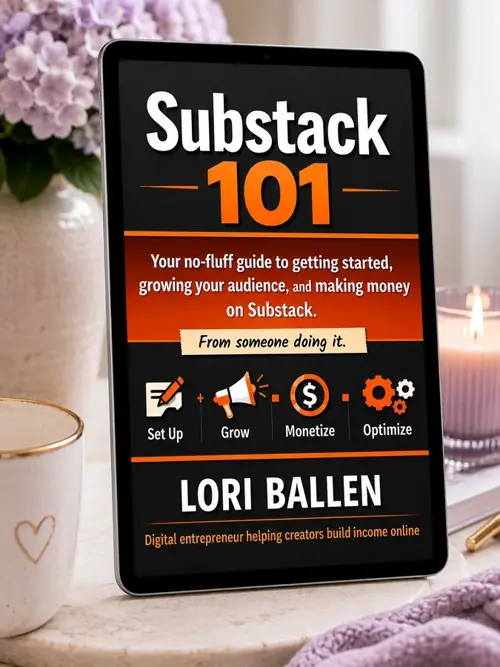
Substack 101
A no fluff guide to building and growing a paid newsletter, start to finish.
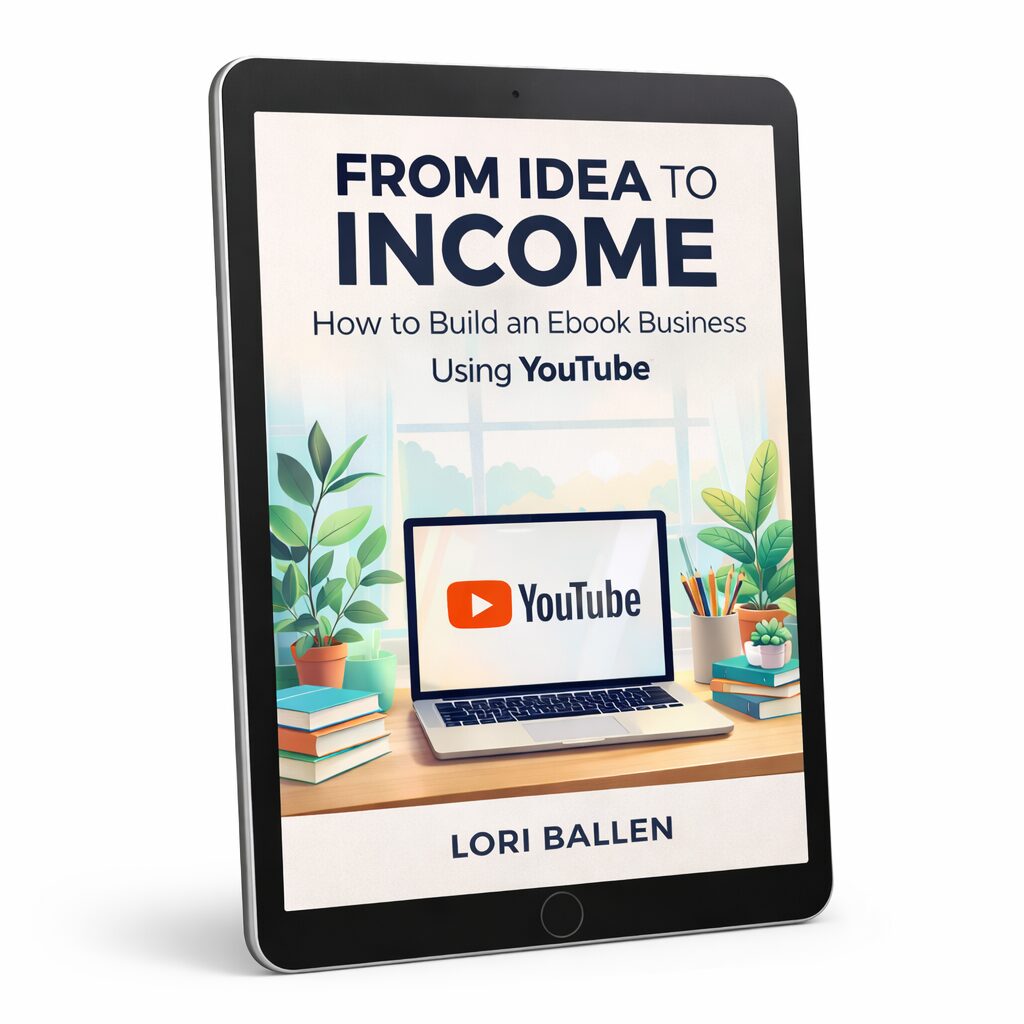
From Idea to Income
Selling something of your own alongside the subscription, so the newsletter is not the only income.
Five mistakes people make choosing
- Choosing on commission before you have revenue. 0% of zero and 10% of zero are the same number. Optimize for shipping in year one and for margin in year two.
- Reading Ghost’s pricing card as the monthly price. Those are annual-equivalent rates at 1,000 members. And Starter cannot take paid subscriptions at all, so the real entry point for a paid newsletter is Publisher.
- Assuming the free tier includes monetization. On Beehiiv it does not. Paid subscriptions need Scale at $49 a month. Check what the free tier actually unlocks before you build on it.
- Building your only home on Medium. No documented email export. Whatever you build there, build the list somewhere else at the same time.
- Never exporting your list. Substack’s publisher agreement lets them terminate or restrict an account at any time, for any reason, and says nothing about preserving your export access. Download the CSV monthly. It takes two minutes.
Where to take this next
Build the newsletter itself
Types, cadence, and how the monetization actually works. How to build a newsletter →
Make Substack convert
Why treating it as a blog leaves money on the table. Substack as a conversion engine →
Pick the subject first
The platform matters less than the lane. Pick one profitable niche →
Weighing Substack against Medium
Which one actually pays writers, side by side. Substack vs Medium →
Check what Substack really costs
Every fee, and what you keep at each price. Is Substack free? →
Before you commit to a platform
What should I pick if I am starting today with no audience?
Substack, unless you already have a website with traffic. Nothing else gives you readers you did not have to go find, and at zero subscribers that is the only advantage that matters.
When is it worth leaving Substack?
When 10% of your revenue is larger than what a competitor would charge you in monthly fees, and when the network is no longer bringing you meaningful new subscribers. Run both numbers before you move, not just the first one.
Will I lose my paid subscribers if I switch?
No, if you do it properly. Both Ghost and Beehiiv document a migration that keeps active cards billing without your subscribers touching anything, because the Stripe account was always yours. Just remember to cancel billing on the old platform so nobody gets charged twice.
Beehiiv or Ghost?
Beehiiv if the plan is ads and rapid list growth. Ghost if the plan is a real website you own with a newsletter attached. They are not really competing for the same job.
Can I run Substack and my own site at the same time?
Yes, and plenty of people do. The site handles search traffic and the offers, Substack handles the network and the paid subscriptions. Just be deliberate about which one owns the email relationship.
Does the 10% apply to everything on Substack?
To paid subscription revenue. Publishing itself is free at any list size, and free subscribers cost you nothing no matter how many you have.
“Ten percent of nothing is nothing. Pick the platform that gets you publishing, then optimize the margin once there is a margin.“— Lori Ballen
Get Letters from Lori
My weekly notes on building a one-person business after 50: what I’m building, what’s working, and what I’d do if I were starting over. Free, straight to your inbox.
Let’s pick your platform together
If you are stuck between two of these, it is usually because the decision depends on something specific about your situation. Inside Substack SKOOL, my community for Substack creators, we look at your traffic, your offer and your appetite for setup, and you leave with one platform and a plan for it.
Join Substack SKOOL →Pick the one that gets you publishing this week. Export your list monthly. Revisit the fees when there are fees worth revisiting.
Want it in your inbox instead? Get Letters from Lori, my field notes on building a business that earns for the long haul.
The business behind the business — every week, free.
I walked away from a company with 100 employees to build a one-person business. I write down what it actually earns, what it actually costs, and the systems I use to run it alone.
- Real revenue numbers, not screenshots
- The systems that let me run it solo, over 50
- What’s working on Substack right now
Hey there! Just a quick heads-up: some of the links on this site are affiliate links, meaning I may earn a small commission if you make a purchase (including through the Amazon Associates program), at no extra cost to you. Occasionally, products featured here are gifted by brands.
I also use AI tools to help research and create content for you! While I love sharing strategies to help you succeed, please remember that everyone's journey is unique—individual results vary, and there are no guarantees. Thanks so much for stopping by!
