I put off starting a newsletter for four years
Then Google stopped sending clicks and it stopped being optional. Here is what I wish somebody had told me on day one: which kind to build, where to put it, what it really pays, and how to start this week. If Substack is on your shortlist, here is my plain-English guide to how Substack works.
If you only remember four things
You own the list
When you send an email it lands. No algorithm decides whether your people see you that day.
Pick one type first
Five kinds of newsletters. They make money in completely different ways.
Know the real math
About six readers in a thousand upgrade to paid. Plan around that, not the number everybody repeats.
Sell your own thing
Per reader, your own products beat both ads and subscriptions. It is not close.
Google closed the front door
For about fifteen years the plan was simple. You wrote something helpful, Google sent you readers, and some of those readers gave you their email. Google was the front door. Email was the thing you did after.
That front door is closing, and the numbers are not subtle.
So the newsletter stopped being the nice to have and became the actual thing. When you send an email, it lands. Every person who signed up gets it.
But here is the part nobody says out loud. The list is worth more than it used to be, and getting people onto it is harder than it used to be. Both are true. The traffic that used to fill up signup forms is the exact traffic that disappeared. If you are starting from scratch, you are not imagining it. It is still worth doing.
Figure out which kind you are building
This is the step almost everybody skips, and skipping it is why so many newsletters quietly die around month four.
The big free list
You gather a lot of readers who care about one thing, then companies pay to reach them. Slow to earn, high ceiling.
The paid newsletter
Free content pulls people in, the good stuff sits behind a paywall. Works when your topic has money attached.
The one that sells your stuff
The list is how you stay in touch with people who might buy your course or coaching. Best math per reader.
The one that recommends products
You share tools you actually use and earn commission. Still works, but the rules changed this year.
The front door
Agents, consultants, local business. Nobody pays for it. It keeps you in front of people until they hire you.
Write down which one you are building. You can add others later. Every person I have watched burn out tried to do all five in the first month.
Pick where it lives
People lose weeks here. Let me make it fast.
| Substack | Kit | beehiiv | Ghost | |
|---|---|---|---|---|
| Free plan | Unlimited, forever | Up to 10,000 readers | Up to 2,500, no earning tools | None |
| At 1,000 readers | Free | $39/mo | $49/mo | $18/mo |
| At 10,000 readers | Free | $139/mo | $109/mo | $105/mo |
| Cut of paid subscriptions | 10% | None | None | None |
| Helps new readers find you | A lot | Some | Some | A little |
| Automated emails | Barely | Best in class | Strong | Okay |
Substack when you need to be found
The network is the real product. You publish and the app puts you in front of people who have never heard of you. The trade is the 10 percent cut, plus card fees, so roughly 13 to 14 cents of every dollar. Fine when you are small. Real money once you are not.
beehiiv when ads are the plan
The best advertising marketplace for newsletters, paying out over a million dollars a month to writers. Zero percent of your subscriptions and zero percent of what you sell. The catch is you cannot earn anything on the free plan.
Ghost when you never want the rules changed
Run by a nonprofit, takes nothing from your revenue, ever. Just know it is not the cheap option once you grow, and the starter plan stops at 1,000 readers.
Two things to know about Substack first
Their ad program needs 100 paying subscribers before you can join, and they have not said publicly what cut they take.
They also had a security problem where subscriber emails and phone numbers were exposed. No payment information, but it took months to catch.
What I actually do: Substack so new people find me, Kit for anything I am selling. You do not have to marry one. You have to start with one.
The number that will save you from a bad plan
You have probably read that 5 to 10 percent of your free readers will upgrade to paid. That number gets repeated everywhere. It is wrong for almost everybody. It came from early Substack advice and it describes the people at the very top.
Six paying readers for every thousand free ones. That is the honest picture. Not bad. Just very different from what most people imagine.
And people cancel. In money and investing topics a big chunk leave every month and the average reader sticks around six to eight months. In slower topics like food they stay closer to a year and a half. The topics that pay the most are the ones that leak the fastest.
If you want to soften that, push the yearly option. People who pay for a year cancel far less than people who pay monthly.
What sponsors actually pay
Advertisers pay based on how many people open your email. Most newsletters land between $10 and $75 for every thousand opens.
- Under 5,000 readers. $50 to $250 for one ad spot.
- 5,000 to 50,000 readers. $500 to $3,000.
- Over 50,000 readers. $3,000 and way up.
The thing that surprises people is that being small is not the problem. Being vague is. Three thousand readers who all run fintech startups is worth more than thirty thousand people who like everything.
Realistically you need about 2,500 readers to get into an ad marketplace and closer to 10,000 before a brand takes a direct pitch. Below that you are reaching out to smaller sponsors yourself. That works, it just does not run on autopilot.
If you recommend products, read this twice
Amazon changed the rules this year and a lot of people still have not adjusted. Two separate things happened.
April: how you get credited changed
It used to be that if someone clicked your link for a blender and bought a toaster in the same trip, you got paid on both. Not anymore. You only get credit for the exact product you linked to.
That update also said your content has to actually say something. Real commentary, real opinion. A page that is nothing but a wall of links does not qualify.
May: the rates themselves were cut
Several categories were reduced, in some cases by about half.
What this means for you. The old “here are 12 things I love” roundup is worth a lot less than it was. One product, explained well, with your actual opinion in it, is worth the same or more. If Amazon is a big chunk of your income, start building something else alongside it.
Why I sell my own things
Here is the comparison that made the decision for me. Per free reader, per year:
That is not a small gap. And you keep almost all of it, you set the price, and you are not stuck at $10 a month. I would rather sell one $27 guide to a handful of people than talk 30 people into a subscription.
While we are here, let me kill an old rule. “A dollar per subscriber per month” is dead. For a normal newsletter the honest range is one to five dollars per subscriber per year. The dollar a month version only holds for established businesses selling their own products.
How lists actually grow now
Recommend other newsletters
Let them recommend you back. This is the best free thing you can do and people skip it because it feels like helping the competition. Newsletters using recommendations grow almost three times faster.
Turn on a referral program
Cheapest way to grow and the readers you get are the best ones. Just do not expect it to build the list by itself. It multiplies something already moving.
Post short notes on Substack
That is the growth engine there and it takes real volume. Fair warning, the feed is crowded now and each post does less than it did a year ago. Long articles are the opposite. Write the article, use notes to point at it.
Be careful with paid ads
A subscriber costs $1.50 to $4 right now. At $2 each, spending $2,000 gets you a thousand readers and about six paying customers. Paid is for scaling something that already makes money.
Feed the list from LinkedIn and YouTube
Both are great at putting you in front of new people. Neither lets you take those people with you. Always point them back to your own list.
Two things I would skip
llms.txt. It is a file that is supposed to help AI tools find your site. Google has said flat out it does nothing, and when researchers checked, the AI companies were not even requesting the file.
Most “optimize for AI search” advice. It does not hold up when anyone tests it. What works is boring and familiar. Write things worth quoting, include real numbers, keep your pages updated.
This quietly kills newsletters
Nobody wants to read about this. Read it anyway, because none of the rest matters if your email lands in spam.
Gmail, Yahoo and Outlook all tightened their rules. A badly set up email used to squeak through. Now it gets rejected.
You need a few technical things turned on. They have unfriendly names: SPF, DKIM and DMARC. They are just records that prove you are really you. Every platform here walks you through it. Do it on day one and forget about it.
Then there is the part that is actually about you. Gmail now watches whether people open your emails and quietly sorts you down if they do not. Dead subscribers are not just useless. They drag down whether your real readers see you.
So clean your list. If somebody has not opened anything in three or four months, send two or three emails asking if they want to stay. Then delete the rest. I know that feels awful. Do it anyway.
One thing about that open rate. Apple loads images automatically now, which counts as an open even when nobody read it. Clicks are the honest number, and clicks have been falling across the whole industry. People open, skim, and stay in their inbox. Plan for that.
Your first 90 days
Four moves in order. Do not skip ahead and do not run them all at once.
Week one: pick your lane
Choose your type and your platform. Then write one sentence about exactly who this is for. If that sentence needs the word and twice, it is too broad.
Weeks two to four: publish weekly
Weekly is what holds up. Keep it short, keep subject lines short, and write your welcome email this month instead of next year.
Days 31 to 60: turn on recommendations
Recommend other newsletters and let them recommend you. Free, and the strongest growth move you have.
Days 61 to 90: turn on the money
Most newsletters see a first dollar around day 66. Sell one thing, join an ad network, or launch the paywall. Then keep publishing.
Keep reading: compare the best newsletter platforms for beginners, follow my walkthrough on how to start a Substack, and see how to get your first 1,000 Substack subscribers.
“The hard part was never the writing. The hard part was deciding who it was for and then showing up on the same day every week.“— Lori Ballen
The tool I use to sell
Some of the links below are affiliate links. If you sign up or buy through them I may earn a commission at no extra cost to you. I only ever share tools I actually use.
Kit
If you want the long version
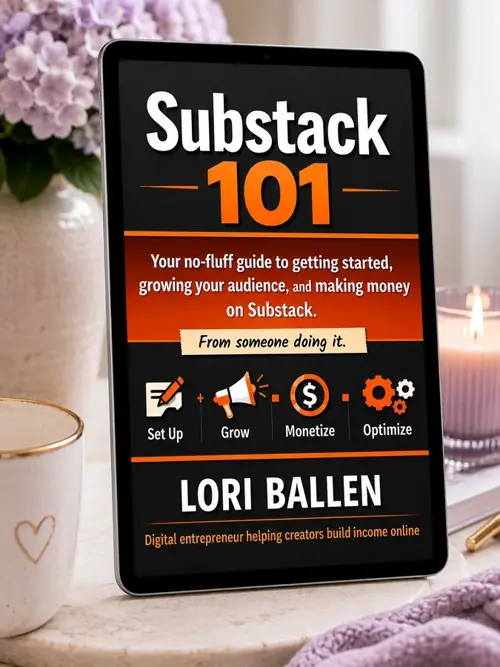
Substack 101
A no fluff guide to building and growing a paid newsletter, start to finish.
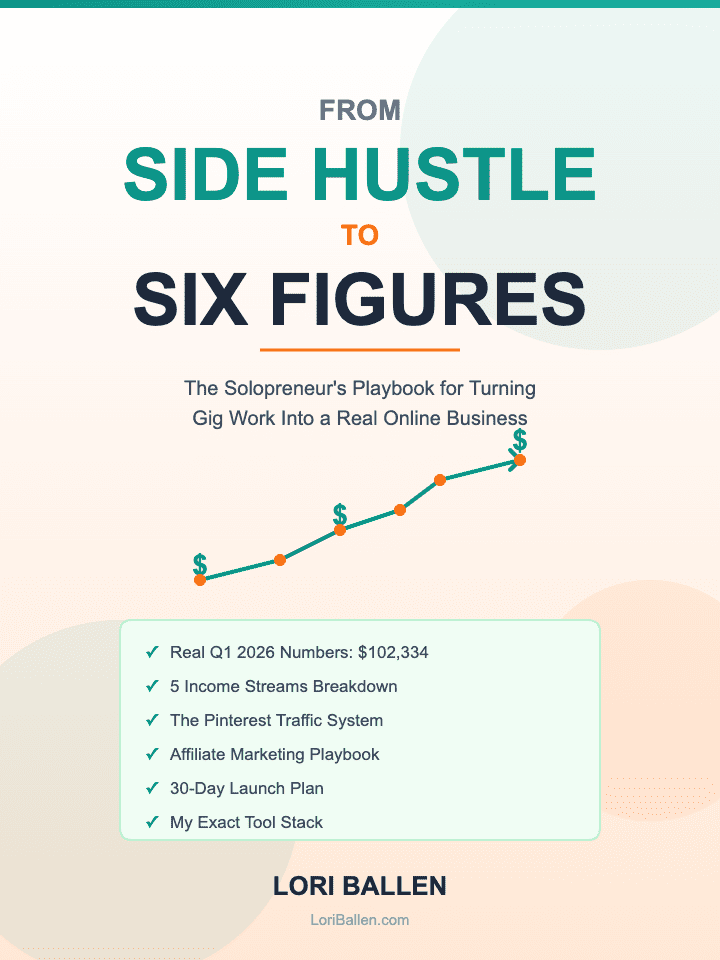
Side Hustle to Six Figures
The solopreneur playbook for stacking income streams that keep paying.
Where I keep the list that buys things. The free plan goes to 10,000 readers and you can sell products on it without paying a cent.
Get Letters from Lori
My weekly notes on building a one-person business after 50: what I’m building, what’s working, and what I’d do if I were starting over. Free, straight to your inbox.
Loved this? Pin it.
Hover the image and tap the Pinterest Save button to keep this on one of your boards.

Let’s build your newsletter together
Reading about it is the easy part. Inside Substack SKOOL, my community for Substack creators, we pick your one type, set up your platform, and get your first emails out the door while you have someone to ask.
Join Substack SKOOL →Start before you feel ready. This only gets harder to put off.
Join Substack SKOOL →Not ready to join yet? Get Letters from Lori, my field notes on building a business that earns for the long haul.
Hey there! Just a quick heads-up: some of the links on this site are affiliate links, meaning I may earn a small commission if you make a purchase (including through the Amazon Associates program), at no extra cost to you. Occasionally, products featured here are gifted by brands.
I also use AI tools to help research and create content for you! While I love sharing strategies to help you succeed, please remember that everyone's journey is unique—individual results vary, and there are no guarantees. Thanks so much for stopping by!
