Clicky

  • About
    • Affiliate Disclosure
    • Ballen Academy
    • Contact Us
    • Privacy Policy
    • Youtube
  • Loris Tools
  • Lori Ballen’s Blog
    • Affiliate Marketing Strategies
    • Blogging Strategies
    • Branding Strategies
    • Digital Products
    • Financial Freedom
    • Marketing Tools and Resources
  • Substack
Thursday, January 22, 2026
  • Login
❤️ Lori Ballen
No Result
View All Result
Ballen Blueprint Coaching
eBooks
Get a Website
  • About
    • Affiliate Disclosure
    • Ballen Academy
    • Contact Us
    • Privacy Policy
    • Youtube
  • Loris Tools
  • Lori Ballen’s Blog
    • Affiliate Marketing Strategies
    • Blogging Strategies
    • Branding Strategies
    • Digital Products
    • Financial Freedom
    • Marketing Tools and Resources
  • Substack
Ballen Blueprint Coaching
eBooks
Get a Website
No Result
View All Result
❤️ Lori Ballen
No Result
View All Result
Home Make Money Online
My Pinterest Funnel The Click To Cash System

My Pinterest Funnel The Click To Cash System

in Make Money Online, Pinterest
Reading Time: 13 mins read
Share on FacebookShare on Twitter

This website contains affiliate links. Some products are gifted by the brand. As an Amazon Associate, I earn from qualifying purchases. The content on this website was created with the help of AI.

Table of Contents

Toggle
  • The Problem Diagnosis Viral But Broke
  • The Solution Introducing The Click To Cash System
  • Stage 1 The Foundation – Buyer Keyword Research
  • Stage 2 Creating Pins That Actually Get Clicked
  • Stage 3 The Destination – Your Monetized Blog Post
  • Stage 4 Tracking What Matters – Conversions, Not Impressions
  • Stage 5 The Optimization Loop – Testing and Retargeting
  • Scaling the System Automation and Cadence
  • The Biggest Pitfalls to Avoid
  • Conclusion Your Action Plan

While I share money-making strategies, nothing is "typical", and outcomes are based on each individual. There are no guarantees.

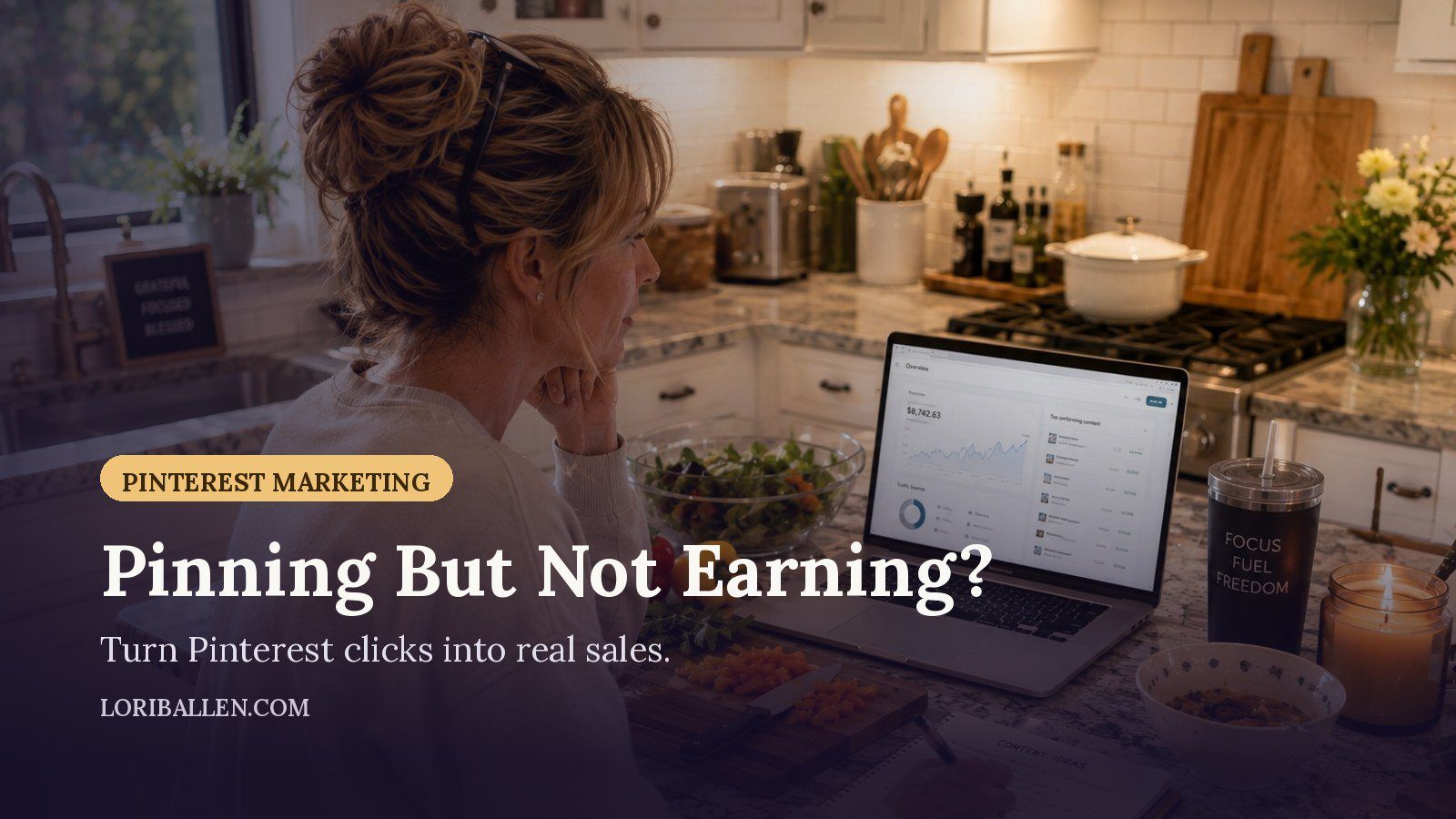
Let’s be honest: you need to stop wasting your time on Pinterest.

Seriously. You’re doing everything you’re “supposed” to do. You’re creating dozens, maybe hundreds of pins. You’re pinning consistently with beautiful templates, and hey, maybe a few of your pins even went “viral,” pulling in thousands of impressions. But when you look at your bank account? Crickets. All that work, all that time, and nothing to show for it.

Here’s the thing: the problem isn’t your work ethic. The problem is your pins are leading to dead ends. They’re digital roads to nowhere. So today, I’m pulling back the curtain on my repeatable ‘Click to Cash’ system. This is the simple framework that connects people searching for solutions directly to your monetized blog posts, turning every single pin into a potential, trackable sale. In my own business, this is the exact system that helped me triple my affiliate income in just 60 days—and it had absolutely nothing to do with going viral.

The Problem Diagnosis: Viral But Broke

Let’s diagnose the real issue here, because it’s where most creators go wrong. The platform itself, and a lot of the advice you hear, has trained you to chase the wrong things. You’ve been taught to celebrate impressions, saves, and follows. We call these “vanity metrics.” They feel good, they look great on your dashboard, but they don’t pay the bills. You can’t take a million impressions to the grocery store.

The reason you feel like you’re spinning your wheels is the massive gap between the traffic you’re getting and the offers you have. Your pin about “fall decor ideas” might get 100,000 impressions, but if it just links to your blog’s homepage, what is a visitor supposed to do? They’ll probably click around, get confused, and leave without doing a single thing that helps you. That click was a total waste.

This is what I call the “viral but broke” syndrome. You have tons of visibility, but zero conversions. The truth is, a pin with just 100 targeted clicks that leads to a perfectly matched, monetized article can make you more money than a viral pin with 10,000 clicks that goes nowhere. We have to shift your focus from getting seen to getting paid. And we do that by treating Pinterest not as a social media platform, but as what it truly is: a visual search engine. For every search, there’s an intent. Our job is to capture it.

The Solution: Introducing The Click To Cash System

So, how do we fix this? The answer is a funnel. My Click To Cash System is a simple, five-stage funnel that makes every piece of the puzzle work together to transform a casual searcher into a customer. Think of it as a clear path, with signs at every turn, leading someone straight from their problem to your solution.

Here are the five stages. Visualize this as a flowchart.

Stage One: Keyword Intent. This is your foundation. We find what your future customers are actually searching for when they’re getting ready to make a purchase. The goal here isn’t just search volume; it’s buyer intent.

Stage Two: The Keyword-Aligned Pin. We create a pin that not only grabs their attention but speaks directly to that keyword and promises a clear, valuable solution. All we care about here is the Click-Through Rate, or CTR. We need that click.

Stage Three: The Monetized Destination. The click has to go somewhere meaningful. Every single pin will link to a specific blog post or landing page that’s built to convert that visitor. We’ll measure this by how long they stay on the page and, of course, the conversion rate.

Stage Four: Tracking and Measurement. This part is non-negotiable. We install tracking, like the Pinterest Tag, to see what actually happens after the click. We measure what matters: actions, add-to-carts, and sales. We’re looking at pure revenue.

Stage Five: The Optimization and Retargeting Loop. Finally, we use all that data to do more of what works and less of what doesn’t. We test our pins, improve our landing pages, and even retarget people who showed interest but didn’t buy. This is how we scale our results and profitability.

That’s the whole system. Keyword, to Pin, to Click, to a Monetized Page, to a measurable Conversion. Now, let’s break down how to actually do it.

Stage 1: The Foundation – Buyer Keyword Research

Everything starts here. Get this wrong, and the whole funnel falls apart. You have to stop thinking about broad, trendy topics and start thinking about specific, buyer-intent keywords.

What’s the difference? A vague keyword is something like “meal prep.” What does the searcher want? Recipes? Motivation? Pretty pictures? Who knows. Pinning for this term is like shouting into a hurricane.

A buyer-intent keyword, on the other hand, signals that someone is trying to solve a problem with their wallet. For instance: “best meal prep containers for families.” See the difference? The word “best” implies they’re comparing options. “For families” defines the user. This person isn’t just browsing; they’re actively shopping. Other high-intent words include “review,” “how to choose,” and specific brand names. Words like “ideas for” can also be great, but think of those as targeting someone in the research phase, one step before they pull out their credit card.

How do you find these golden keywords?

First, use Pinterest itself. Go to the search bar and type in a broad topic from your niche. Let’s stick with meal prep. Type “meal prep” and see what auto-suggested phrases pop up. Pinterest is literally telling you what people are searching for. You’ll see things like “meal prep for weight loss,” or “meal prep containers.”

Click on one, like “meal prep containers.” Now, look for the suggested term bubbles that appear. These will help you drill down into even more specific, long-tail keywords. You might see “glass,” “BPA-free,” or “freezer safe.” A fantastic keyword could be “best glass meal prep containers freezer safe.” Someone searching for that is ready to buy.

Second, you can use tools to streamline this. Tools like Tailwind, for example, have features that help you find keywords, giving you data on search volume and competition so you can pick terms that have high intent without being totally saturated.

Your mission for this stage: build a list of 10-15 high-intent, long-tail keywords that directly relate to products or solutions you can promote. Don’t move on until you have this list. This is your content roadmap.

Stage 2: Creating Pins That Actually Get Clicked

You’ve got your keyword. Now it’s time to create a pin that acts as the perfect bait. Remember, the goal of the pin isn’t to be saved; the goal is to get a high-quality click. The pin is a promise. The click is the user saying, “I want that.”

Here’s how to craft a pin that gets clicks.

First, your pin’s text needs to be drenched in your keyword. Your primary keyword should show up in four places: the Pin title, the Pin description, the text overlay on your image, and the alt-text. You’re essentially spoon-feeding the Pinterest algorithm, making it impossible for it to miss that your pin is the perfect answer to that search.

Second, your title has to be compelling. A title like “Glass Meal Prep Containers” is a snooze-fest. A title like “The 5 Best Glass Meal Prep Containers That Won’t Leak in Your Bag”? That’s a promise. It hits a pain point—leaky containers—and offers a clear solution. Use questions, numbers, and punchy words like “easy,” “quick,” or “budget” to make your titles pop.

Third, the visual has to match the searcher’s intent. For our example, don’t just show a picture of a container. Show the containers in action. Show them filled with colorful food, stacked neatly in a fridge, or being pulled from a lunch bag. You want the searcher to imagine themselves using the product. Before-and-afters or quick visual tutorials are also incredibly powerful. And always, always make your visuals vertical for that mobile-first view.

Finally, add a clear Call-to-Action on the pin image itself. A little arrow with text like “Click to Read the Review” or “Shop the Look” tells the user exactly what to do next. You’re not hoping they click; you’re guiding them to.

From now on, every pin you create has a job: to be the perfect answer for one of your buyer-intent keywords. No more random pinning.

Stage 3: The Destination – Your Monetized Blog Post

This is where the magic happens and, frankly, where most people drop the ball. That precious, hard-earned click needs to land on a page that’s specifically designed to turn traffic into income. Whatever you do, do not send traffic to your generic homepage. That’s the digital equivalent of inviting someone to a party but dropping them off in a random neighborhood.

Every pin must link to a dedicated, monetized blog post that perfectly matches the pin’s promise.

So, what does a conversion-focused blog post look like?

First, the headline of your post must echo the pin and the keyword. If your pin was “The 5 Best Glass Meal Prep Containers,” your blog post title should be almost identical. This instantly reassures the user they’re in the right place, which keeps them from bouncing.

Second, the first paragraph needs to deliver on the promise immediately. Acknowledge their problem and tell them you have the solution right here in this article. Lead with value before you ask for anything.

Third, the content itself needs to guide them to a purchase. If it’s an affiliate post, use clear comparison tables, discuss pros and cons, and show the products in different scenarios. You’re their trusted advisor.

Fourth, and this is critical, you need obvious Calls-to-Action. These are your affiliate links or “buy now” buttons. Don’t just hide a link in some text at the very bottom. Use visually distinct buttons or product displays. There are great tools for this, like Lasso, which lets you create beautiful, conversion-focused product boxes you can just drop into your posts. And don’t forget your affiliate disclosure! It builds trust, and in many places, like under FTC rules in the US, it’s legally required.

The goal of this page is to have one primary objective. For an affiliate post, it’s getting a click on an affiliate link. For a product page, it’s an “add to cart.” Don’t distract them. Guide them clearly to the one action you want them to take.

Grab Your Free Checklist!

I know that setting up a monetized, conversion-focused blog post can feel like a huge step. To help you out, I’ve created a free “Monetized Post Checklist” that walks you through the exact structure and strategies I just mentioned. You can grab it for free at the link below. It’s the perfect guide to make sure your pages are primed for profit before you send any traffic their way.

Stage 4: Tracking What Matters – Conversions, Not Impressions

If you don’t measure it, you can’t improve it. This stage is what separates the hobbyists from the pros. You absolutely must have tracking in place to know if your efforts are paying off. Relying on Pinterest’s impression and save counts is like trying to drive with the windshield blacked out.

There are two key pieces of tech you need: The Pinterest Tag and UTM parameters.

First, the Pinterest Tag. It’s a little snippet of code you install on your website. Don’t let the word “code” scare you; it’s usually a simple copy-and-paste job, and plugins make it even easier. The Pinterest Tag, sometimes just called their conversion tracking, lets Pinterest see what people do on your site after they click your pin. It can track page views, add-to-carts, sign-ups, and most importantly, purchases. By installing it, you unlock “Conversion Insights” in your Pinterest Analytics. This is where you see the money metrics. You can see exactly which pins are driving actual sales, not just clicks. This data is pure gold.

Second, you need to use UTM parameters. Think of these as little tracking tags you add to the end of your URLs. They tell your other analytics tools, like Google Analytics, exactly where your traffic came from—from Pinterest, from a specific campaign, even from a specific pin. This lets you see the full story. You can log into Google Analytics and see not just that someone came from Pinterest, but how long they stayed and what they did. You can then check your affiliate dashboard and see if that specific journey resulted in a commission.

This gives you a full-circle view of your funnel. You can track a user from the moment they see your pin to the moment they make a purchase. Without this, you’re flying blind, optimizing for saves while potentially leaving thousands of dollars on the table.

Stage 5: The Optimization Loop – Testing and Retargeting

All this data is just a bunch of numbers until you actually do something with it. Stage five is about using those insights to make the entire system more profitable. It’s a constant loop: Test, Measure, Optimize, Repeat.

Start with A/B testing. This just means creating two versions of a pin for the same blog post to see which one performs better. For the same keyword and the same URL, create two different pin images. Maybe one is a lifestyle photo and the other is a graphic with bold text. Or, use the same image but test two different titles. Pin A could be “5 Best Leak-Proof Containers,” and Pin B could be “Tired of Messy Lunches? Try These Containers.”

Let them run for a couple of weeks, then check your analytics. Which one got more clicks? Which one led to more conversions? The data will give you a clear winner. Now, you take that winning element—the image style or the title formula—and use it in your future pins. This is how you systematically get better instead of just guessing.

The next level is retargeting. Thanks to your Pinterest Tag, you can create audiences of people who’ve interacted with you but haven’t converted yet. For example, you can create an audience of everyone who clicked a specific pin in the last 30 days. Then, you can run a low-cost Pinterest ad campaign targeting just this warm audience. Show them a new pin with a stronger call-to-action, a special offer, or a testimonial. Since these people already know you, their conversion rate will be way higher than with a cold audience. This is how you capture sales from people who might have otherwise drifted away.

Scaling the System: Automation and Cadence

Once the funnel is built and you’re seeing results, it’s time to scale. And scaling isn’t about working harder; it’s about building a repeatable workflow. This is where a scheduling tool becomes your best friend. A tool like Tailwind is great for this stage because it lets you build a smart schedule that pins your content at the best possible times, without you having to be chained to your desk.

Your workflow will look something like this:

  • Keyword Research: Do this in batches. Spend a few hours once a month finding your buyer-intent keywords.
  • Content Creation: Write the amazing, monetized blog posts for those keywords.
  • Pin Creation: For each blog post, create 5-10 different pin variations. Test different images and titles. This gives you an arsenal of content to promote one monetized article.
  • Schedule: Load up all your pin variations into your scheduler, spreading them out over different boards and times.
  • Measure and Iterate: Once a week or once a month, dive into your analytics. Find your winning pins—the ones driving clicks and conversions.
  • Repurpose and Scale: Take your winners and re-schedule them. Create new “spin-off” pins that are similar. If a pin is a huge winner, consider putting a small ad budget behind it to amplify its reach.

This creates a powerful, semi-automated system that consistently drives targeted traffic right into your proven funnel.

The Biggest Pitfalls to Avoid

As you build this out, watch out for three common traps that can completely sabotage your success.

  • Sending Clicks to the Wrong Place: The number one mistake is linking a specific, promising pin to your generic homepage. Always, always link to the dedicated post that fulfills the pin’s promise.
  • The Promise Mismatch: If you have a high click-through rate but also a high bounce rate, it means your pin promised one thing and your landing page delivered another. Make sure your messaging is consistent all the way through.
  • Flying Blind: The most tragic mistake is doing all the work but having no tracking. If you don’t install the Pinterest Tag and use UTMs, you’ll never know what’s truly working. You’ll end up optimizing for feel-good metrics like saves instead of actual sales.

Avoid these three mistakes, and you will be ahead of 90% of the creators on Pinterest.

Conclusion: Your Action Plan

Let’s bring it all home. The Click To Cash system is a strategic shift. It’s about moving away from vanity metrics like impressions and focusing relentlessly on a funnel that turns searcher intent into real revenue. It’s about treating Pinterest like a search engine, aligning your keywords with your pins and your content, and tracking every step so you can optimize for what actually matters: profit.

Stop pinning into the void. Start pinning with purpose.

Here is your challenge. Take action on this today, not tomorrow. Pick one single buyer-intent keyword from your niche. Just one. Create one monetized blog post that is the absolute best solution for that searcher’s problem. Then, design one keyword-rich pin that links directly to it. Finally, make sure your Pinterest Tag is installed so you can measure that pin’s true performance over the next two weeks.

Now, go get that first funnel built.

Pinterest Power Stack: Turn One Post into Many | Lori Ballen
TikTok Shop Creator Content Kit | Lori Ballen
Affiliate Marketing System
How to Sell eBooks and PDFs Using YouTube
The Ultimate Pinterest Prompt Pack
45 Proven Ways to Turn Content Into Cash
The YouTube System That Feeds My Entire Business
Blueprint Coaching Program

Tags: Pinterest
Previous Post

The Lazy Blogger’s 4-Hour Pinterest Workflow

Next Post

20 Pinterest Content Ideas That Go Viral Without Ads

Lori Ballen

Lori Ballen

I'm a full-time blogger. I teach entrepreneurs how to get more website traffic, generate leads, and make more money online. This website contains affiliate links that benefit me. Take a Course Get a Website Try my Tools

Related Posts

How To Start a Book Blog And Make Money (and Actually Succeed)
Make Money Online

How To Start a Book Blog And Make Money (and Actually Succeed)

January 7, 2026

This guide is your complete, step-by-step blueprint to launch a book blog and, more importantly, turn your passion into a paycheck.

25 Pinterest Hacks To Drive $5K In Affiliate Sales
Affiliate Marketing Strategies

25 Pinterest Hacks To Drive $5K In Affiliate Sales

January 5, 2026

In this guide, I’m sharing the exact 25 strategies I used to scale my affiliate commissions past that $5,000 a month mark, without creating a single product of my own. These are the tweaks that took me from feeling...

8 Apps Like Phrendly To Make Money
Make Money Online

8 Apps Like Phrendly To Make Money

December 21, 2025

Are you looking to make extra cash while connecting with others? Look no further! In this guide, we’ll introduce you to the top money-making chat apps, including apps like Phrendly to make money, that offer a variety of opportunities...

A pin on Pinterest can be deleted for a variety of reasons. Whatever the reason, here's how to delete a pin on Pinterest
Pinterest

How to Delete a Pin from Pinterest [Step by Step Tutorial]

December 21, 2025

A pin on Pinterest can be deleted for a variety of reasons. Whatever the reason, here's how to delete a pin on Pinterest

Next Post
20 Pinterest Content Ideas That Go Viral Without Ads

20 Pinterest Content Ideas That Go Viral Without Ads

Leave a Reply

Your email address will not be published. Required fields are marked *

This site uses Akismet to reduce spam. Learn how your comment data is processed.

About Me

Lori Ballen

Lori Ballen

Content Creator

Welcome! I'm Lori Ballen—digital entrepreneur, affiliate marketing expert, and creator of content that keeps earning long after it's published. I teach creators and bloggers how to turn videos, blogs, and automation into scalable income streams with freedom at the core. Here you’ll find tips, tools, and real talk on building a content-driven business that works for you.

Search This Website

No Result
View All Result

Join me on Substack

Categories

  • Affiliate Marketing Strategies (64)
  • Blogging Strategies (166)
  • Branding Strategies (1)
  • Business Ideas (13)
  • Canva (4)
  • Content Marketing (11)
  • Digital Marketing (5)
  • Digital Products (20)
  • Etsy (2)
  • Financial Freedom (9)
  • Make Money Online (13)
  • Make Money with Youtube (2)
  • Marketing Tools and Resources (10)
  • Mindset and Motivation (2)
  • Pinterest (84)
  • Print on Demand (3)
  • Side Hustles (37)
  • Social Media Strategies (7)
  • Things to Sell (1)
  • Travel (11)
  • Website Design (1)
  • Work From Home Strategies (2)
  • Youtube Channel (18)

Popular

  • websites like omegle

    15 Best Get Paid to Chat Apps

    1854 shares
    Share 707 Tweet 442
  • ChatGPT Prompts: The Ultimate Resource for Bloggers, Writers, and Content Creators

    2455 shares
    Share 458 Tweet 286
  • How to Delete a Pin from Pinterest [Step by Step Tutorial]

    8917 shares
    Share 406 Tweet 254
  • The Ultimate Guide to Affiliate Marketing Strategy on Instagram: A Beginner’s Blueprint

    847 shares
    Share 331 Tweet 207
  • How I Use ChatGPT to Create Affiliate Blogs

    2018 shares
    Share 310 Tweet 194
Content Marketing

This Single ChatGPT Prompt Built My Profitable Affiliate Blog

by Lori Ballen
January 21, 2026
0

Stop publishing generic AI content that doesn't rank. Learn the exact "Magic Prompt" used to build a profitable affiliate blog...

Read moreDetails
Substack Explained In 5 Minutes

Substack Explained In 5 Minutes

January 21, 2026
Stop Choosing Between Amazon’s Programs Do This Instead

Stop Choosing Between Amazon’s Programs Do This Instead

January 21, 2026
68% of Amazon Influencers Fail Heres The New Playbook

68% of Amazon Influencers Fail Heres The New Playbook

January 21, 2026
How I Build a Pinterest-Focused Affiliate Blog That Earns on Autopilot

How I Build a Pinterest-Focused Affiliate Blog That Earns on Autopilot

January 14, 2026

Instagram

  • The new Dyson air  wrap for the win!! Ignore my patchy eyebrows. They are in the healing phase from microblading. 

Comment SHOP below to receive a DM with the link to this post on my LTK ⬇ https://liketk.it/5NSI1
  • Do not come between a girl cat and her fish.
  • Toll Brothers luxury homes on the way. I’m enjoying watching the development. It’s as if I’m watching my own home be built ♥️
  •  when you hear the automated cat feeder go off and you know it’s lunchtime.
  • Finally got my platinum Top Creator badge on Amazon (influencer). I love this business so much!! This cat tree is my best seller. Gabe got a raise this year 😂
  • He couldn’t wait for the full assembly 😂
  • Homesites with a view. Toll Brothers coming soon in Boulde City, NV - 10 minutes from Henderson, 20 minutes from Vegas, 35 minutes from Summerlin- Lori Ballen Real Estate 702-604-7739
  • Takes me longer to assemble than most because I have to include the time I have to take it apart after I put it together because I put something on backwards 😂
  • Tabs fell in love with my Dyson air wrap on the cruise, so I gave it to her. I wanted to get the new one anyway so I could review all the attachments on the newer model. Time to go test her out!! I’m obsessed with how my hair looks when it’s curled with the air wrap!  I have eight cat trees sitting here waiting for me to assemble so I better get busy.

Welcome Back!

Login to your account below

Forgotten Password?

Retrieve your password

Please enter your username or email address to reset your password.

Log In

Add New Playlist

No Result
View All Result
  • About
    • Affiliate Disclosure
    • Ballen Academy
    • Contact Us
    • Privacy Policy
    • Youtube
  • Loris Tools
  • Lori Ballen’s Blog
    • Affiliate Marketing Strategies
    • Blogging Strategies
    • Branding Strategies
    • Digital Products
    • Financial Freedom
    • Marketing Tools and Resources
  • Substack

© 2025 Lori Ballen