Clicky

  • About
    • Affiliate Disclosure
    • Ballen Academy
    • Contact Us
    • Privacy Policy
    • Youtube
  • Loris Tools
  • Lori Ballen’s Blog
    • Affiliate Marketing Strategies
    • Blogging Strategies
    • Branding Strategies
    • Digital Products
    • Financial Freedom
    • Marketing Tools and Resources
  • Substack
Saturday, January 17, 2026
  • Login
❤️ Lori Ballen
No Result
View All Result
Ballen Blueprint Coaching
eBooks
Get a Website
  • About
    • Affiliate Disclosure
    • Ballen Academy
    • Contact Us
    • Privacy Policy
    • Youtube
  • Loris Tools
  • Lori Ballen’s Blog
    • Affiliate Marketing Strategies
    • Blogging Strategies
    • Branding Strategies
    • Digital Products
    • Financial Freedom
    • Marketing Tools and Resources
  • Substack
Ballen Blueprint Coaching
eBooks
Get a Website
No Result
View All Result
❤️ Lori Ballen
No Result
View All Result
Home Blogging Strategies
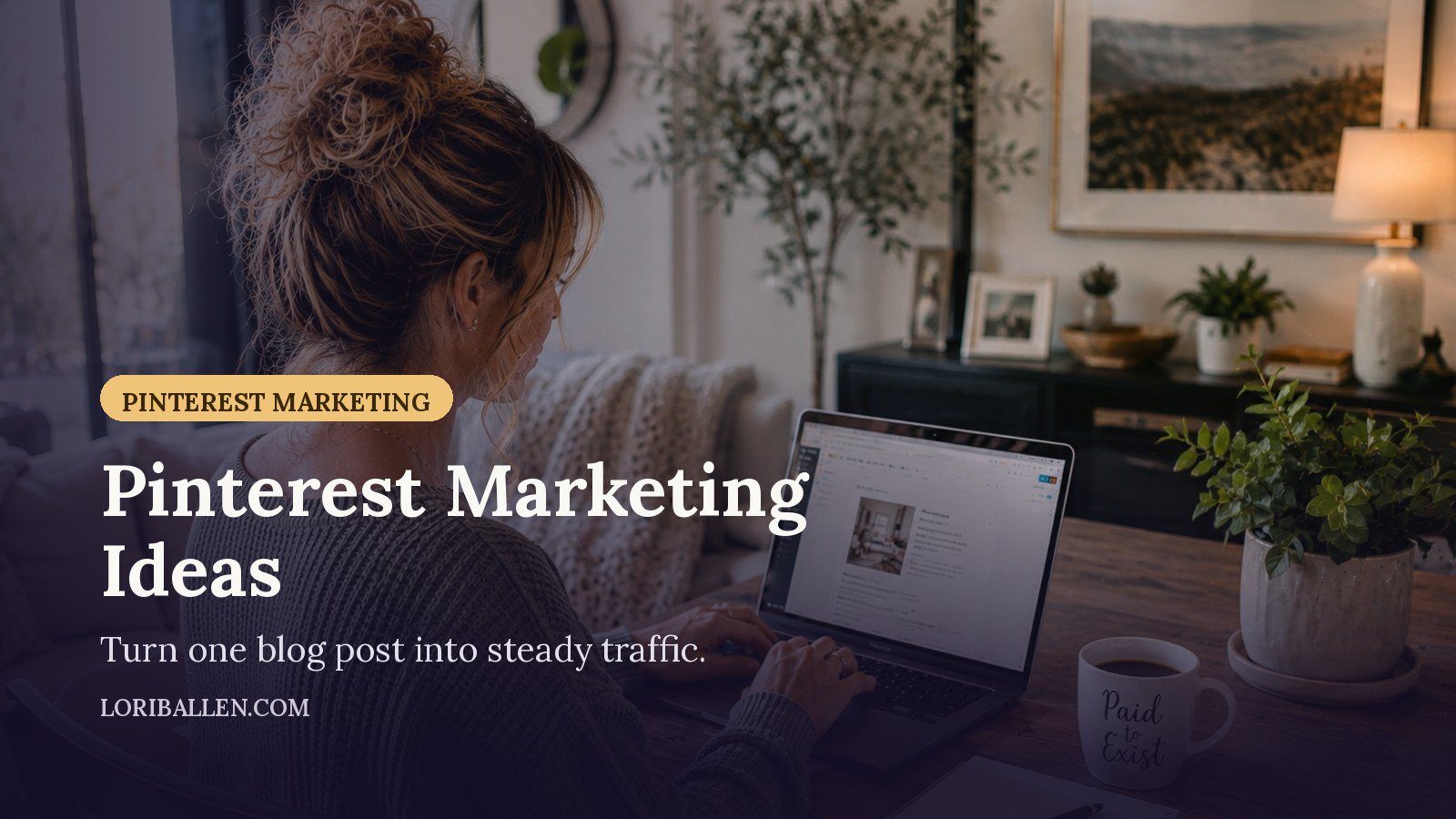
Stop guessing what Pinterest wants in 2026 and start building a system that actually drives traffic. Learn how to use fresh pins, new formats, and keyword funnels to turn your blog into a traffic magnet. Tap to get the full strategy.

Pinterest Marketing Ideas For Bloggers In 2026

in Blogging Strategies, Pinterest
Reading Time: 16 mins read
Share on FacebookShare on Twitter

This website contains affiliate links. Some products are gifted by the brand. As an Amazon Associate, I earn from qualifying purchases. The content on this website was created with the help of AI.

While I share money-making strategies, nothing is "typical", and outcomes are based on each individual. There are no guarantees.

So, you’re doing everything you’re supposed to. You’re creating pins, you’re scheduling them… but your blog traffic is still a ghost town. You’re following all the old advice, and it’s getting you absolutely nowhere, leaving you frustrated and honestly, probably ready to quit. I get it. I’ve been in that exact same spot. But my entire perspective changed when I stopped focusing on the old rules and started paying attention to the new content formats and strategies that Pinterest is secretly rewarding.

This isn’t about some fleeting hack. It’s about building a sustainable system that can turn Pinterest into your number one source of blog traffic for years. We’re going to cover why your old strategy is officially dead, the three pin formats you have to be using right now, how to build a content funnel that actually turns visitors into loyal readers, and a simple workflow that will save you from burnout. By the end of this, you’ll have a complete roadmap to finally get the traffic you deserve.

The “Why” – Why Your Old Pinterest Strategy Died

Let’s just start with the hard truth: if you’re still using Pinterest like it’s 2020, you are setting yourself up to fail. The whole game has changed. The strategies that used to be a goldmine for traffic—like repinning other people’s content or looping your same five pins to a dozen group boards—are now the fastest way to get ignored by the algorithm.

The number one mistake bloggers make is treating Pinterest like another social media platform. It’s not. Pinterest is a visual search engine. People aren’t there to see your lunch or chat about their day; they are there with a purpose. They’re actively searching for solutions and planning for the future. They’re typing in things like “how to start a side hustle,” “healthy weeknight dinner recipes,” or “small bathroom remodel ideas.” Your job as a blogger is to be the answer to those searches.

In 2026, Pinterest has gone all-in on this search-and-discovery model. The algorithm is smarter than ever. It doesn’t just look at your last few clicks; it can analyze a user’s extensive history on the platform to get an incredibly accurate picture of what they want to see next. This means it understands long-term interests and seasonal trends better than ever. Content you made last year for a holiday can automatically resurface and go viral all over again because the algorithm remembers who was into that topic.

This brings us to the most important concept for 2026: Fresh Content. Pinterest has been very clear that it rewards creators who consistently upload new, original images and videos. They call these “Fresh Pins.” A fresh pin is simply a new media file—a new image or video—that Pinterest hasn’t seen before. You can link to the same old blog post, but if the pin image is new, Pinterest sees it as fresh content and gives it a boost. The days of just re-saving your old pins are over. In fact, that can actually hurt your reach now. Your entire strategy needs to revolve around creating a steady stream of SEO-driven pins that answer the questions your audience is asking.

The Foundational Fix – Turning Your Profile into a Traffic Magnet

Before you even think about your next pin, we need to fix your profile. Your profile is the first thing that tells the Pinterest algorithm who you are and what you talk about. If this foundation is shaky, even the best pins in the world will struggle. Here’s your step-by-step plan to get it right.

First, if you haven’t already, you need to switch to a free Pinterest Business account. This is non-negotiable. A business account unlocks your analytics, the ability to run ads, and crucial features like Rich Pins. After you’ve switched, the very next thing you must do is claim your website. This simple step creates a verified link between your Pinterest and your blog, which helps your pins rank higher and gives you way more data on your traffic.

Next up is the most important part: keyword research. Please, do not skip this. Remember, Pinterest is a search engine. To get found, you have to use the same words your audience is using. The best place to find them? Right inside Pinterest. Go to the search bar and type in a broad topic from your niche, like “keto recipes.” The auto-suggest feature will immediately show you what people are looking for: “keto recipes for beginners,” “keto recipes for dinner,” “keto recipes easy.” This isn’t a guess; it’s real-time data on what users want. It’s pure gold.

Another great free tool is Pinterest Trends. It shows you the search volume for keywords over time, so you can see when a topic is about to peak. This is amazing for planning seasonal content, like “Christmas decor ideas” or “summer salad recipes,” way ahead of the curve.

Once you have a list of 10-15 main keywords for your blog, it’s time to put them to work in four key places:

  • Your Profile Name: Don’t just use your name. Use your name and your primary niche. For example, “Sarah Smith | Easy Vegan Recipes.” This tells everyone, including the algorithm, exactly what you do.
  • Your Profile Bio: Your bio should be a keyword-rich sentence or two explaining who you help. Something like, “Helping busy families make simple and delicious vegan meals. Find easy recipes, meal plans, and plant-based tips here!”
  • Board Titles: Your board titles need to be direct and keyword-focused. Ditch the cute names. Instead of “Yummy Things,” call your board “Healthy Breakfast Ideas.” Instead of “Crafty Corner,” use “Beginner Crochet Patterns.” This is so important for getting your pins to show up in search results.
  • Board Descriptions: Each board needs a 2-3 sentence description that uses a few related keywords. For that “Healthy Breakfast Ideas” board, you could write: “Find the best healthy breakfast ideas for quick mornings. This board has tons of oatmeal recipes, smoothies, and high-protein breakfasts to start your day right.”

When you take the time to build this keyword-optimized foundation, you’re basically creating a magnet that starts pulling your ideal audience to your content before you’ve even published your next pin.

The Content Revolution – The 3 Pin Formats Driving Blog Traffic in 2026

Okay, with your foundation solid, it’s time to actually build the house. A winning strategy in 2026 isn’t about using just one type of pin; it’s about a smart mix of formats, where each one has a specific job. Let’s break down the three formats you need to be using.

Format 1: The Modern Standard Pin (Your Traffic Workhorse)
The classic, static image pin is not dead—not even close. It’s still the most powerful tool for driving clicks directly to your blog. But, the standard for what makes a good pin has gotten much higher.

A high-converting pin in 2026 is a vertical image with a 2:3 aspect ratio—1000 by 1500 pixels is the sweet spot. This takes up the most space on a mobile phone, where most people are scrolling. The image has to be high-quality and eye-catching, but the most important part is the bold text overlay. Your text overlay is your headline. It has to scream value. Don’t be vague. Instead of “New Blog Post,” write “5 Mistakes You’re Making With Your Sourdough Starter.” Instead of “Yummy Recipe,” try “The Easiest 30-Minute Vegan Lasagna.”

Just as important is the backend SEO. Every single pin needs a keyword-rich title, a detailed description with a call to action like “Click to read the full recipe,” and a few relevant hashtags.

But here’s the real secret: you need to create multiple, unique pin images for every single blog post. For one post about sourdough, you could create five different pins: one with the finished loaf, one showing the bubbly starter, one that’s a simple infographic listing the five mistakes, and two more with different headlines. Each one of these is a “Fresh Pin,” giving you five new chances to rank in search for that one piece of content. This is how you stay consistent without having to write a new blog post every day.

Format 2: The Engaging Video Pin (The Scroll Stopper)
Video isn’t optional anymore. It’s essential for grabbing attention in a fast-moving feed. Video pins are short, looping videos that autoplay as people scroll, making them incredibly effective for stopping someone in their tracks.

For bloggers, video pins are a fantastic way to tease the value of your blog posts. You don’t need a film crew; a simple video from your phone works great. The ideal length is between 15 and 60 seconds.

Some ideas for bloggers:

  • Food Blogger? A quick time-lapse of you making a recipe.
  • DIY Blogger? A short “before and after” of a project or a quick demo of one technique.
  • Finance Blogger? A 30-second video with animated text highlighting three key tips from your latest post.
  • Travel Blogger? A montage of beautiful clips from a trip that makes people want to click to read your full travel guide.

Just like standard pins, video pins need strong SEO to get discovered. The goal is still to drive traffic. You’re giving them a taste that makes them want to click through for the main course on your blog.

Format 3: The Strategic Story-Style Pin (The Audience Builder)
Now, this is where the strategy gets a little more advanced. You may have heard of “Idea Pins,” which were Pinterest’s answer to stories. In late 2025, Pinterest began merging that into a single, unified pin creator. But while the name of the feature has changed, the strategy behind multi-page, story-style content is more important than ever. I call them “Story-Style Pins.”

These are multi-page pins that let you create a step-by-step guide or a mini-listicle right on Pinterest. The key difference is that their main job is to get engagement on Pinterest—things like saves and follows—rather than immediate clicks. This might sound wrong for a blogger who wants traffic, but it’s a critical part of a healthy, long-term strategy.

Why? Because when a user saves your pin or follows you, it sends a huge signal to the algorithm that you’re a quality creator. The algorithm will then show your other pins—including your standard pins that link to your blog—to that user and to more people like them.

Use Story-Style Pins to:

  • Create a teaser: Turn a list post like “7 Ways to Style a Bookshelf” into a 7-page pin, with the last page saying “Follow us for more home decor tips!”
  • Offer a mini-tutorial: If your blog post is a complex DIY, create a 5-page pin showing the first few simple steps, then direct them to your blog for the full instructions.
  • Build authority: Create a short pin that solves one tiny problem. For a business blogger, this could be a 3-page pin on “How to Write a Better Email Subject Line.” It provides instant value and encourages a follow.

By using a mix of traffic-driving Standard and Video Pins alongside audience-building Story-Style Pins, you create a powerful system where each type of content helps the others, leading to both immediate traffic and long-term growth.

The Blogger’s Funnel – From Pins to Pageviews to Subscribers

Creating great pins is only half the battle. To really win on Pinterest, you need to think like a marketer and build a funnel that guides a user from a casual scroller to a loyal fan. Your pins are just the front door.

Let’s break down what this funnel looks like.

Top of the Funnel: Attracting Traffic
This is where most of your Pinterest work happens. The top of your funnel is all about awareness and getting clicks. Here, you use your Standard Pins and Video Pins to grab the attention of people searching for solutions in your niche.

Every pin at this stage needs to make a clear promise and lead directly to a blog post that delivers on it. If your pin says, “The Only Chocolate Chip Cookie Recipe You’ll Ever Need,” that link had better go straight to the recipe post—not your homepage. Fulfilling that user’s intent is crucial for building trust and for keeping the Pinterest algorithm happy. Your goal here is simple: provide so much value in your blog post that the visitor is impressed and remembers your name.

Middle of the Funnel: Turning Traffic into a Community
Traffic is great, but if those visitors click away and never come back, you’re stuck on a content hamster wheel. The next stage of the funnel is to convert that traffic into an audience you own: your email list.

This is where you create pins specifically to promote a “lead magnet”—a freebie you offer in exchange for an email address. This could be a checklist, a short e-book, a printable guide, or a template.

You’ll design a whole new set of fresh pins just for this freebie. For example, a travel blogger with a “Paris Packing Checklist” lead magnet would create pins with headlines like “Don’t Forget a Thing! Download My Free Paris Packing Checklist.” These pins link directly to a landing page on your blog where people can sign up.

This step is absolutely vital. Your email list is the one asset you control, away from the whims of any algorithm. It’s a direct line to your biggest fans, letting you tell them about new posts and build a real relationship.

To keep this all organized, think of your Pinterest boards as categories for your funnel. You can have boards for your main blog topics (Top of Funnel) and a dedicated board just for your freebies and lead magnets (Middle of Funnel).

I know that building a funnel and mastering keyword research can feel like a lot. To make it super easy for you, I’ve created a free, comprehensive Pinterest Keyword Checklist. It walks you through the exact steps I use to find high-traffic keywords for my posts and pins. You can download it for free at the link in the description. It’s the perfect first step to putting all of this into action.

Workflow & Consistency – How to Win Without Burning Out

This strategy is powerful, but it probably sounds like a lot of work. You might be thinking, “How am I supposed to create multiple fresh pins every day on top of everything else?” The answer is two words: batching and repurposing. This is the workflow that lets you stay consistent without losing your mind.

First, batching. Instead of trying to create a new pin every day, you’re going to set aside one block of time each week or month to do all your Pinterest work at once. On your “Pinterest Day,” you’ll do your keyword research, design all your pins, write all your descriptions, and schedule everything. This is so much more efficient than trying to be creative on demand every single day.

The heart of this system is the Repurposing Matrix. The goal isn’t to write more blog posts; it’s to get more mileage out of the content you already have. For every blog post on your site, you should aim to create a batch of 5 to 10 fresh pins.

Here’s what that could look like for one blog post titled “How to Grow Tomatoes in a Pot”:

3 Standard Image Pins:

  • Pin 1: A beautiful photo of ripe tomatoes with the headline “How to Grow Tomatoes in a Pot.”
  • Pin 2: An infographic-style pin titled “5 Tips for Perfect Potted Tomatoes.”
  • Pin 3: A different photo with a question headline: “Think You Can’t Grow Tomatoes? Try This.”
  • 1 Video Pin: A 30-second time-lapse of you planting a tomato seedling in a pot.
  • 1 Story-Style Pin: A 5-page guide on “Choosing the Right Pot for Your Tomato Plant.”

Boom. You just created five fresh pieces of content for Pinterest from a single blog post. Now imagine doing that for four blog posts. You’d have twenty pins ready to go—enough for a whole month if you post one fresh pin a day.

Once your pins are created, you schedule them. Consistency is way more important than volume. Pinning 1-3 new, fresh pins every day is much more effective than pinning 20 in one day and then disappearing for a week. Use a scheduler like Tailwind or even Pinterest’s own tool to load up your pins so they post automatically. This system is the key to winning on Pinterest without burning out.

Common Mistakes That Are Sabotaging Your Traffic

As you start this new strategy, it’s just as important to know what not to do. There’s so much outdated advice out there that can actively hurt your progress. Here are the four biggest mistakes I see bloggers making right now.

Mistake 1: The Repinning Trap.
The old strategy was to spend hours repinning other people’s content to fill up your boards. That is dead. Seriously. In 2026, Pinterest is all about fresh content. Wasting your time repinning is a waste of your time.
The Fix: Dedicate 95% of your energy to creating and publishing fresh pins that link to your own content. Your job is to be a creator, not a curator.

Mistake 2: Ignoring SEO.
So many people design a beautiful pin, upload it, and then write one lazy sentence in the description. That’s like writing an amazing blog post and not bothering to tell Google what it’s about.
The Fix: Treat every single pin like a mini blog post. Do your keyword research. Write a compelling, keyword-optimized title and a helpful description. Use the alt-text field. SEO isn’t an option; it’s the entire foundation of getting discovered.

Mistake 3: Using Ugly or Wrongly-Sized Pins.
Pinterest is a visual platform. If your pins are pixelated, use fonts that are hard to read, or aren’t vertical, they will be dead on arrival.
The Fix: Be ruthless about your visuals. Stick to that 2:3 vertical ratio. Use clear, high-resolution images. Use bold, easy-to-read fonts that look good on a tiny phone screen. You don’t have to be a graphic designer—tools like Canva have thousands of great templates to get you started.

Mistake 4: Chasing Vanity Metrics.
So many bloggers get obsessed with their “monthly viewers” number. A big number might feel good, but it’s mostly a vanity metric. It just shows how many people saw your pins, not how many clicked or cared. Monthly viewers don’t pay your blog hosting bills.
The Fix: Focus on the metrics that actually matter for a blogger: outbound clicks, saves, and follower growth. Clicks are your traffic. Saves tell the algorithm your content is high-quality. Track these in your Pinterest Analytics to see what’s really working, and then do more of that.

Your 30-Day Pinterest Revival Plan

Theory is great, but let’s make this practical. Here is a 30-day plan you can follow to kickstart your new strategy.

Week 1: Audit & Foundation.
This week is all about cleaning house. Convert to a Pinterest Business account and claim your website. Then, do a keyword research blitz to find your top 15-20 keywords. Finally, audit your profile. Rewrite your bio. Go through every single board and give them new, SEO-friendly titles and descriptions. Archive any old boards that are no longer relevant.

Week 2: The First Fresh Batch.
Time to create. Choose your top 3-5 blog posts. Using the Repurposing Matrix, create a batch of 15-20 fresh pins for these posts. Make sure you create a mix of formats: standard pins, a few video pins, and one or two story-style pins. By the end of the week, you should have a folder full of new pins, ready to go.

Week 3: Schedule & Engage.
Let’s go live. Use a scheduling tool to load up your fresh pins to post consistently, aiming for 1-2 new pins per day. While that’s running on autopilot, your job is to spend 10-15 minutes a day on the platform itself. Follow a few new accounts in your niche and just browse around. This little bit of activity signals to the algorithm that you’re an active member of the community.

Week 4: Analyze & Learn.
You’ve got data now! Open up Pinterest Analytics. Ignore monthly viewers. Look at what matters: which pins got the most outbound clicks? Which got the most saves? Which designs or headlines worked best? The answers are your roadmap for what to create next month. Find the winners and make a plan to do more of what works.

Conclusion

Look, the opportunity for bloggers on Pinterest in 2026 is huge, but it belongs to those who adapt. It’s not about gaming the system with old hacks anymore. It’s about treating Pinterest as the powerful visual search engine it is. It’s about being a creator who consistently puts out fresh, helpful content that answers the questions your audience is asking.

This strategy—building an SEO foundation, mastering the key pin formats, and creating a sustainable workflow—isn’t a quick fix. It’s the framework for a long-term system. A system that won’t just revive your blog traffic but will build a predictable, evergreen engine for growth that can serve you for years to come. You have the roadmap. Now it’s time to get to work.

If this was helpful, please give it a thumbs up and subscribe for more no-fluff blogging strategies. And don’t forget to grab your free Pinterest Keyword Checklist from the link in the description. Now go get that traffic.

Previous Post

My Lazy Pinterest Workflow That Gets Massive Traffic

Next Post

25 Affiliate Marketing Ideas For Beginners With Zero Followers

Lori Ballen

Lori Ballen

I'm a full-time blogger. I teach entrepreneurs how to get more website traffic, generate leads, and make more money online. This website contains affiliate links that benefit me. Take a Course Get a Website Try my Tools

Related Posts

Why It’s Not Too Late to Build a Profitable Creator Business Over 50
Blogging Strategies

Why It’s Not Too Late to Build a Profitable Creator Business Over 50

January 9, 2026

It’s not too late to start a profitable creator business after 50—learn how I made $300K as a solo creator with no employees.

25 Pinterest Hacks To Drive $5K In Affiliate Sales
Affiliate Marketing Strategies

25 Pinterest Hacks To Drive $5K In Affiliate Sales

January 5, 2026

In this guide, I’m sharing the exact 25 strategies I used to scale my affiliate commissions past that $5,000 a month mark, without creating a single product of my own. These are the tweaks that took me from feeling...

How to Build Your First $5,000 Digital Product Funnel With Pinterest
Blogging Strategies

How to Build Your First $5,000 Digital Product Funnel With Pinterest

January 5, 2026

I’m going to break down every single component, step-by-step, from the spark of an idea to a fully automated funnel that turns casual Pinterest browsers into paying customers. So if you're ready to stop hoping for sales and start...

A stylish female beauty blogger of mixed descent is taking a selfie in her vibrant YouTube studio. The studio is designed for beauty blogging, with colorful makeup palettes, brushes, and beauty products visible in the background. The blogger is holding her smartphone at arm's length, capturing her image with a wide, engaging smile, showcasing her makeup artistry. The selfie pose is lively and confident, reflecting her personality as a beauty blogger. The room is well-lit with a mix of colorful studio lights and natural light, adding to the dynamic and fun atmosphere of the YouTube workspace. The image should be photorealistic with clean lines, vibrant colors, and a sense of excitement and creativity.
Blogging Strategies

The Brutal Truth About YouTube Shorts Money

December 21, 2025

Curious how much money viral YouTube Shorts actually make? Discover the shocking truth behind the ad revenue system and why views aren't the real payoff. Click to uncover the secrets creators aren’t sharing.

Next Post
Stop waiting for followers. These 25 beginner affiliate marketing strategies work with zero audience and zero budget. Learn how to start earning commissions today — even without going viral.

25 Affiliate Marketing Ideas For Beginners With Zero Followers

Leave a Reply

Your email address will not be published. Required fields are marked *

This site uses Akismet to reduce spam. Learn how your comment data is processed.

About Me

Lori Ballen

Lori Ballen

Content Creator

Welcome! I'm Lori Ballen—digital entrepreneur, affiliate marketing expert, and creator of content that keeps earning long after it's published. I teach creators and bloggers how to turn videos, blogs, and automation into scalable income streams with freedom at the core. Here you’ll find tips, tools, and real talk on building a content-driven business that works for you.

Search This Website

No Result
View All Result

Join me on Substack

Categories

  • Affiliate Marketing Strategies (64)
  • Blogging Strategies (163)
  • Branding Strategies (1)
  • Business Ideas (13)
  • Canva (4)
  • Content Marketing (10)
  • Digital Marketing (5)
  • Digital Products (20)
  • Etsy (2)
  • Financial Freedom (9)
  • Make Money Online (13)
  • Make Money with Youtube (2)
  • Marketing Tools and Resources (10)
  • Mindset and Motivation (2)
  • Pinterest (84)
  • Print on Demand (3)
  • Side Hustles (37)
  • Social Media Strategies (7)
  • Things to Sell (1)
  • Travel (11)
  • Website Design (1)
  • Work From Home Strategies (2)
  • Youtube Channel (18)

Popular

  • websites like omegle

    15 Best Get Paid to Chat Apps

    1843 shares
    Share 704 Tweet 440
  • ChatGPT Prompts: The Ultimate Resource for Bloggers, Writers, and Content Creators

    2448 shares
    Share 455 Tweet 285
  • How to Delete a Pin from Pinterest [Step by Step Tutorial]

    8904 shares
    Share 402 Tweet 251
  • The Ultimate Guide to Affiliate Marketing Strategy on Instagram: A Beginner’s Blueprint

    845 shares
    Share 330 Tweet 207
  • How I Use ChatGPT to Create Affiliate Blogs

    1987 shares
    Share 302 Tweet 189
How I Build a Pinterest-Focused Affiliate Blog That Earns on Autopilot
Affiliate Marketing Strategies

How I Build a Pinterest-Focused Affiliate Blog That Earns on Autopilot

by Lori Ballen
January 14, 2026
0

I built my affiliate blog to run like a publishing machine — built on Pinterest, powered by automation, and monetized...

Read moreDetails
Why It’s Not Too Late to Build a Profitable Creator Business Over 50

Why It’s Not Too Late to Build a Profitable Creator Business Over 50

January 9, 2026
How To Start a Book Blog And Make Money (and Actually Succeed)

How To Start a Book Blog And Make Money (and Actually Succeed)

January 7, 2026
25 Pinterest Hacks To Drive $5K In Affiliate Sales

25 Pinterest Hacks To Drive $5K In Affiliate Sales

January 5, 2026
How to Build Your First $5,000 Digital Product Funnel With Pinterest

How to Build Your First $5,000 Digital Product Funnel With Pinterest

January 5, 2026

Instagram

  • Tabs fell in love with my Dyson air wrap on the cruise, so I gave it to her. I wanted to get the new one anyway so I could review all the attachments on the newer model. Time to go test her out!! I’m obsessed with how my hair looks when it’s curled with the air wrap!  I have eight cat trees sitting here waiting for me to assemble so I better get busy.
  • Future homesite? Maybe.
  • Gabe is not objecting to testing out all of the new cat furniture!! I had no idea he was a hammock cat!
  • Waiting for mom to start unboxing so he can have his five minutes of fame. #influencerlife
  •  When you go to your pantry to grab something and find somebody staring at you 😂
  • For some reason, cruise money feels like monopoly money. I’d have a hard time paying that same price on a massage at home. I suddenly on a cruise ship. I’m a Baller 😂
  • Another one of my pics made Amazon ads! The best part of this is that I still get paid commissions, even though they are running the ad. Just because I uploaded my picture to my influencer hub. ♥️
  • Years ago, I opened a spreadsheet and named two columns, Pain and joy. 

Anything in the day that drained my energy, gave me a headache, or made me cry, went in the pain column. 

Everything that made me woo-hoo, gave me energy, or made me happy went in the joy column. 

Once I listed everything that brought me pain, I began to move out of those activities and tasks. I heavily pursued everything that brought me joy.

My entire business changed, and now I only work in the joy column. And my life followed
  • There is a time for hustle. But there’s also a time for systems so that you can breathe. Anything done twice should have a system. And before you know it, you’re making money every day without the hustle or time on task. #productivity #hustle #business

Welcome Back!

Login to your account below

Forgotten Password?

Retrieve your password

Please enter your username or email address to reset your password.

Log In

Add New Playlist

No Result
View All Result
  • About
    • Affiliate Disclosure
    • Ballen Academy
    • Contact Us
    • Privacy Policy
    • Youtube
  • Loris Tools
  • Lori Ballen’s Blog
    • Affiliate Marketing Strategies
    • Blogging Strategies
    • Branding Strategies
    • Digital Products
    • Financial Freedom
    • Marketing Tools and Resources
  • Substack

© 2025 Lori Ballen