This page contains affiliate links — if you click through and sign up or buy, I may earn a commission at no extra cost to you. I only ever recommend tools and programs I actually use.
How I Became A Substack Bestseller (And What It Actually Means)
Substack is not a blogging platform, it is people talking to people. Here is exactly how the feed, the notes, the paywall, and the bestseller badge work.
Go deeper on Substack
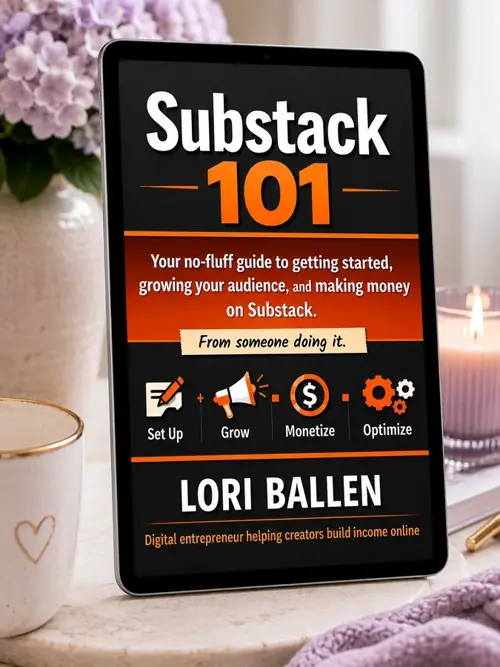
Substack 101
The exact framework for starting and growing a newsletter people pay for.
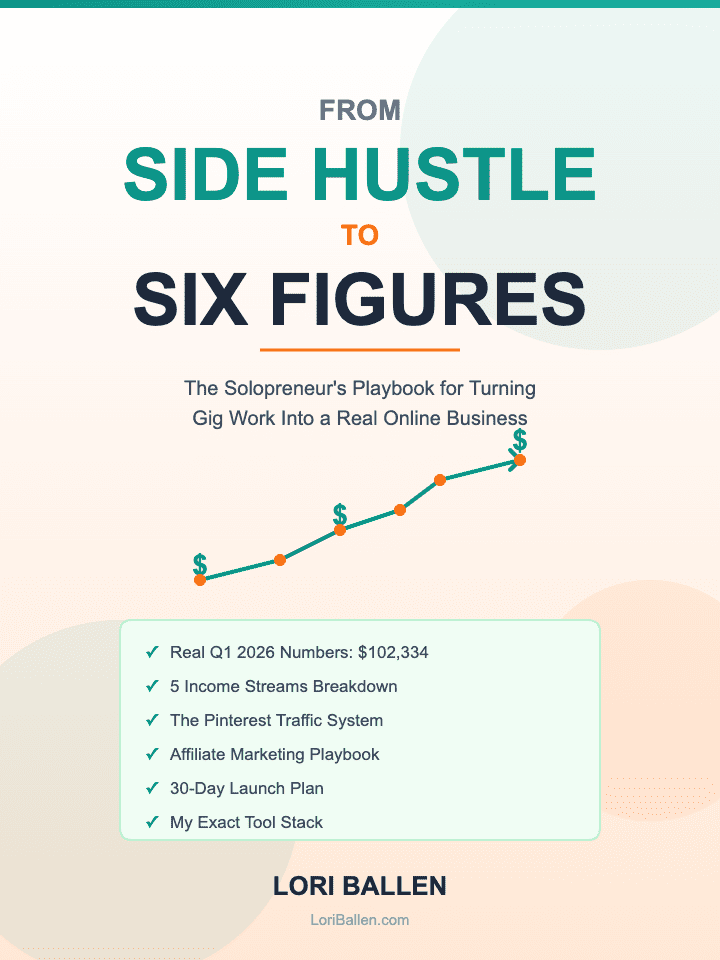
Side Hustle to Six Figures
The solopreneur playbook for building income without a team.
How the platform actually works
The mechanics, step by step
Check off each one as you set up your own publication.
“Substack only makes money if you make money. That’s exactly why it’s worth building there on purpose.”
— Lori Ballen
Questions about how Substack works
What’s the difference between a note and an article on Substack?
A note is a short, social, daily takeaway, similar in size to a tweet. An article is the full newsletter, the piece your subscribers actually pay for.
What does the bestseller badge actually mean?
It signals you have reached a meaningful number of paid subscribers, and it often comes with extra platform tools and visibility.
How do I decide where to put my paywall?
A good rule is to place it where the personal story ends and the structured how-to system begins.
Is there a minimum I can charge?
Yes, Substack sets a modest minimum monthly price, with an annual option usually priced a bit lower than paying month to month.
Full Video Transcript
Prefer reading to watching? Here is the whole video.
This is what I want you to understand: Substack is not a blogging platform. It’s people talking to people. It’s stories, storytelling. If you look at all of mine, I teach how to make money online, but what are all of my notes? They’re stories about how I failed, how I succeeded, and then I bring it back to how to make money in every article. I’ve only been on Substack since October of last year. I got my first paid subscriber on January 10th, and I became a bestseller in four months. That’s how I’ve really learned all of this.
Substack is a paid newsletter platform, part blog, part social media, and now podcasting, video, and live stream too. They’re building in a whole bunch of those things, and I think video, podcasting, and live streaming will really move to the front on Substack. Substack has been around for quite a while, I think nine or ten years, but it’s just really booming right now. Basically, anybody with an opinion, a hobby, experience in something, or a life status, someone getting divorced, retiring, getting married, a mom, wherever you are in life, can have a Substack, express themselves, and then decide how they’re going to make money on it. Some people never charge. They do it because they love to write, and that’s their way to express themselves. For me, I do it to make money.
Over here I’ve got my home screen. I’m in my feed, and you’re all going to recognize this, whether you’re on Instagram, TikTok, Facebook, or YouTube, there’s a feed like this. This is the part that’s like social media, but it’s different in the way we communicate. This isn’t a platform where you post a picture of your breakfast or rant about something unrelated to your niche. It’s more like you’re going to talk about everything within a specific interest. You can rant about that same interest, or talk about your favorite whatever, as long as it’s within that interest.
Let’s take some examples. Jo, at the very top, is a 53-year-old digital nomad, meaning she travels, and that’s her niche. You can subscribe to her free guide on becoming a digital nomad after 50. Her whole Substack is about traveling and being a nomad, so posting pictures of travel is incredibly appropriate for her audience. But if your Substack is all about, say, home decor, posting pictures of your travels probably doesn’t apply. Kim talks about losing her child, which is sad, and she’s also a Gen X entrepreneur and AI builder showing you how to build AI. That’s not related to her niche, so it probably won’t gain her new subscribers, but it does let you see who she is and adds a personal touch. That’s more traditional social media.
There are two feeds: you can look at only the people you follow, or the For You page. You’ve got to learn For You pages, because that’s where all the magic happens on YouTube, TikTok, and all the algorithms. A For You page is where the algorithm says, we think you’ll be interested in this post. I’ll always spend more time on my For You page than on who I follow, because if you only follow a certain number of people, you keep seeing the same people over and over. But if you let yourself see what’s suggested, you get to see all kinds of things and find new people. This is the magic for you as the writer, this is how new people find you. As you create these little notes, Substack puts them in other people’s For You pages, and that’s how new people find you. That’s one of the biggest questions I get, how do people find us, and it’s the social feed, you posting notes.
Underneath that we have subscriptions, the people you subscribe to, then chats, if you’re part of group chats a writer invited you to. I don’t mess with those, I find them distracting, but other people love them for community. Then notifications, who commented, who liked, who shared. Explore is where you go find people and articles and play around in different topics. Then your dashboard, where you see your stats, money, and subscribers, and your profile, where you set up your publication.
Your profile is what you have when you set up an account. You follow the steps, put in your name, and talk a little about who you are. A publication is where you write, and not everybody has one when they first start. My publication is called The Real Time Creator, that’s where I post all my articles and notes, and that’s where I’m able to charge. You can name it whatever you want, or name it after yourself, kind of like I’m Lori Ballen but I have a blog called the7thstream.com, or I’m Lori Ballen but I have a YouTube channel called something else, I’m making that up, but you get the point. Your channels can also be named after you if you want.
Let me give you an example of a newsletter, because this is what people pay for, they don’t pay for the little notes, they pay for the article. The publication actually lives in your dashboard, there’s not a separate spot for it, you click dashboard to access it. I actually sent one out this morning. I had two newsletters, and the second one was doing well, but I killed it yesterday. I deleted it because it was splitting the energy, my subscribers were confused about which one to sign up for, and the number of subscribers on my main one was dropping a little. My advice: one newsletter, one channel, one profile, at least in the beginning. If you run more than one, it splits hairs and gets weird.
An article is also called a newsletter, an essay, a note, or a post, I don’t know why they have a million names for it, maybe they used to be called essays and just kept changing the name. Basically, your newsletter is a blog post, an article, whatever you want to call it. If you’re from the blogging camp like I am, it looks just like a blog, but it gets emailed to your subscribers, that’s why it’s called a newsletter. There’s not even a newsletter template, you could format it however you want, but basically this is what I’m doing and it’s working. You title it and give it a subtitle. I became a bestseller doing articles once a week and notes every day.
Notes are short, your thoughts on something, a takeaway, a tip, a short comment, typically the size of a tweet, under 250 characters, that’s a note. An article is longer. Here’s an example: “You don’t have to hate your job to want something more.” This is perfect because that writer’s whole niche is about leaving the rat race, getting out of the job, and becoming a solopreneur, which is a very popular space in content creation, and one of my spaces too.
There are three status levels, and when you hover over someone it tells you their level, so you know this is a bestseller, which tells me they’re worth learning from or looking at because they’ve somehow reached paid newsletter status. When I first looked at one person’s Substack called something like The Unfolding, it said something like “quiet wisdom offers gentle reflections to help you find peace and clarity.” Basically, this person has no special niche or experience, they’re just teaching you how to live a more peaceful life, no guru status, no coach, no doctor name, which means anybody could start this. My 14-year-old niece could start this account very easily because there’s no big skill set required. I was looking at this and thinking, oh my gosh, ChatGPT can make these pictures, I didn’t even know this would work on Substack because it felt so Instagram. And I’m scrolling thinking, how is this a bestseller, so I click on their article, “Why you keep choosing manageable unhappiness over uncertain freedom, there is a kind of unhappiness that does not destroy your life all at once.” This is very simple, fifth-grade reading level writing, and again I’m not picking on this person, what they’re doing is working at a high level, it just feels very basic.
So look, they put a paywall on here, and this is how I build my account too, you get a little sneak preview, then a paywall pops up: “Hi Lori, this post is for paid subscribers.” So it’s telling us we have to click and pay to subscribe. Let’s see what happens when we click subscribe, it asks for your email, sometimes it goes right to pricing. So this is what pricing looks like, and you can set this up. This publication charges $750 a month for subscriber-only posts, full archive access, comments, and community access. My guess is they started lower and worked their way up, I have no data on that, but I did that too, I started at 10 and now I’m at 20.
When posting your article, how do you know when to give away content versus when to put the paid button? If you’re doing it the way where it’s free and then has a paywall, you’ve got to give just enough to buy in, “oh I like what they’re saying, I want more,” that’s where you put the paywall. If you don’t know where to put a paywall, do this: open your article, open an AI tool, and ask, “at what point should I put the paywall.” I’m going to train you on this, this is what AI is good for, it’s such a good analysis. Is it perfect every time? No. Is it right every time? No. But it’ll definitely guide you if you don’t know. It might say, by length, put the paywall 50 to 60% of the way through the article, or if you want to go by content, put it exactly where the story ends and the system begins, so in my case it knows I have a how-to in there.
I would say, tell me exactly where to put the paywall. Some people put theirs after the first paragraph, some halfway down, you’ve got to test what works, but make sure there’s enough there that they want more. You could even say, tell me the exact sentence to put the paywall after, literally, just tell it, be literal, be specific, and it’ll pinpoint the sentence location based on your draft: “the exact spot to insert the paywall is immediately after this sentence, if I were starting from scratch, here’s exactly what I would do.” So I’d find that spot and put it in.
Now, how do you put in a paywall? Right after that sentence, you go up top to the buttons, just like you would in a regular blog editor, go to more and find the word paywall, mine’s already in there, you click that, and then when people see your article after that point it goes to the paywall.
Now, there are some people who write and don’t put in a paywall at all, they want all the free subscribers they can get because they’re going to export them to another email platform and sell sponsorships, that’s one way to do it. Some people do only free and then sell them coaching, digital products, recipe books, whatever, because the more subscribers you get the better that works. But listen, Substack only makes money if you make money, so who do you think they’re going to push out on their Substack weeklies and in their algorithm? They get 10% of my newsletter income, so there is a reason to charge if you want to play nice with Substack and get more exposure.
Additionally, that bestseller checkmark is what gives you the recognition and authority, and people know that. That little checkmark gets you extra resources, like right now they just rolled out an MCP server that lets Claude communicate directly with Substack, so it can pull all my data, my analytics, and I can say, hey Claude, which of my article topics do people like. Only bestsellers have that, so Substack is going to continuously roll out more of these tools.
Is there a minimum you have to charge for a newsletter on Substack? I asked, and it turns out five dollars is the lowest amount you can charge per month, or you can charge an annual subscription of fifty dollars a year. My two cents: the day you get a free subscriber, open a paid option, because if somebody’s willing to subscribe to you for free, they might also be willing to pay, and if you don’t have a paid option, they can’t give you money even if they want to. This person we looked at was charging $750 a month, $80 a year I think, there’s a founding member tier that hardly anybody uses, I’m not even sure what the point of charging more there is, but people will pay more for it.
Most of us, I charge $20 a month and $150 for the year. I started at 10, went to 12, then 15, then 20, that’s like the high end for most people. I could probably get more subscribers if it were cheaper, but I’d rather have people who really want to work with me and learn from me. In my opinion, Substack focuses more on people they’re going to make money from, it just makes sense, doesn’t it?
I went viral on a note, and I hesitate to tell you that because then everybody thinks they have to go viral, but that is why I did this so fast. What happened was I had a post on Facebook go viral, and I wasn’t even hardly working on Substack, but I kept getting this intuition, this nudge, like go put that on Substack, and I kept thinking no, it doesn’t make sense on Substack, but I kept getting the nudge. So I went and put it on Substack, and the thing went viral and all these people started coming over and subscribing for free, so I opened the paywall that day because I got my first paid subscriber and my first free subscriber on the same day. That’s why I always say, as soon as you have one, open your paid option, because you just don’t know.
How many followers do I need before starting paid subscriptions? I think I just answered that one: open it. Who cares if nobody pays, but I do care if somebody wants to give me money and can’t. My first one was ten bucks.
If you like this style of coaching and you’re not already in my coaching program, sign up at Ballen Academy. You’ll get calls like this for free, and as long as you’re a coaching client you get all my ebooks, the training, the resources, two monthly two-hour calls where you’re on camera asking advice, and we’re all learning together. It’s a fantastic place to be.
Ready to build your own Substack?
Not ready to buy yet? Get Letters from Lori for more like this.
Hey there! Just a quick heads-up: some of the links on this site are affiliate links, meaning I may earn a small commission if you make a purchase (including through the Amazon Associates program), at no extra cost to you. Occasionally, products featured here are gifted by brands.
I also use AI tools to help research and create content for you! While I love sharing strategies to help you succeed, please remember that everyone's journey is unique—individual results vary, and there are no guarantees. Thanks so much for stopping by!
