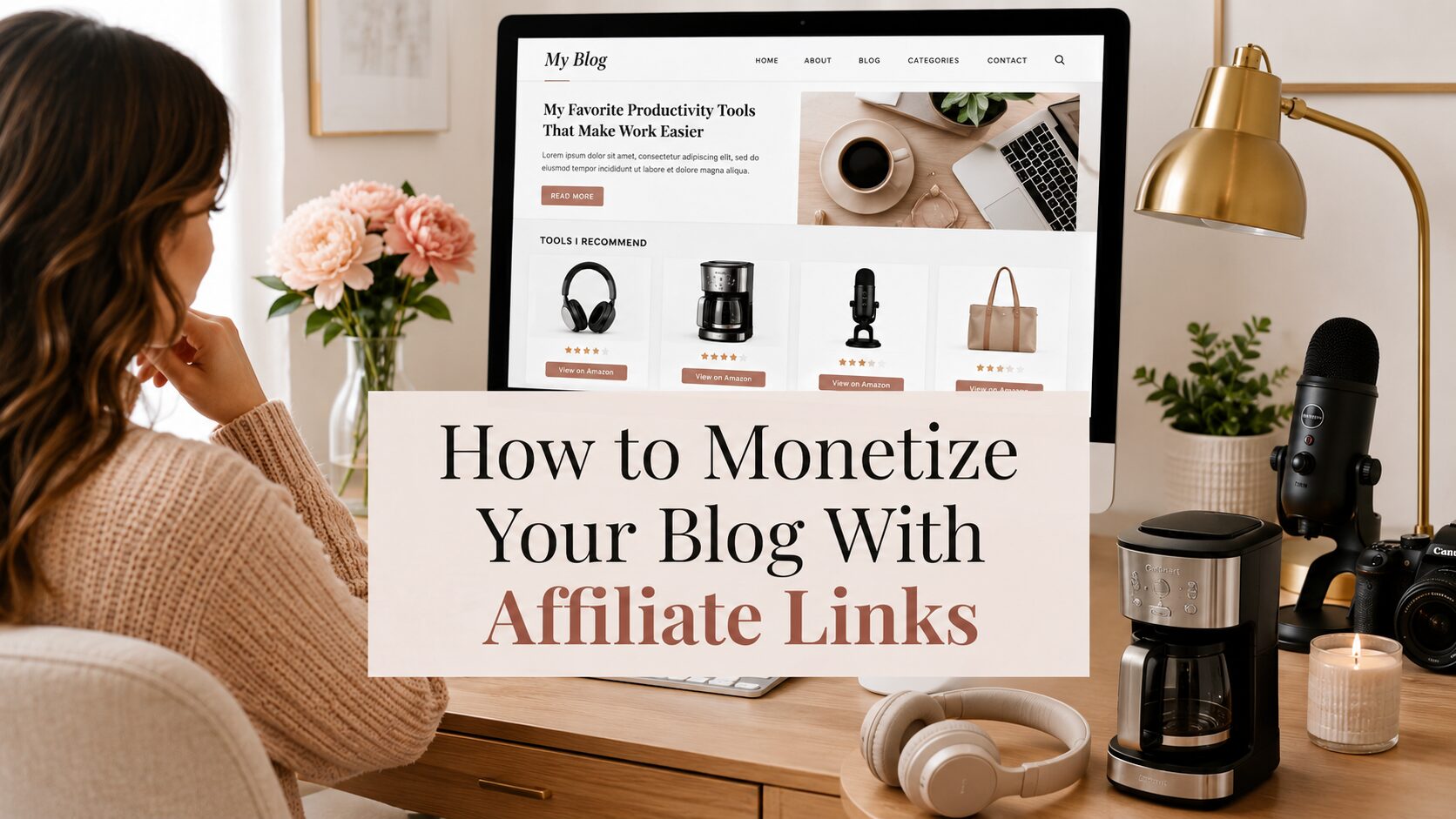
Affiliate marketing is one of the most reliable ways to turn a blog into income. It doesn’t require you to create a product, handle inventory, or manage customer service.
You recommend products you actually use and believe in, someone buys through your link, and you earn a commission. That’s the whole model.
The problem most bloggers run into isn’t understanding how affiliate marketing works. It’s building a system around it that’s actually sustainable, organized, and optimized to convert.
This post covers the full picture — from choosing programs to managing links to setting up your content for maximum earning potential.
What Affiliate Marketing Actually Is
When you join an affiliate program, you get a unique tracking link for each product or brand you promote. Every time someone clicks that link and makes a purchase, the merchant’s system records it and credits you with a commission.
The commission rates vary widely depending on the program. Amazon Associates pays between 1% and 10% depending on the product category, while software and digital products often pay 20% to 50% or more.
The traffic is the variable. The more targeted readers you send to the right products, the more commission you earn.
What makes affiliate marketing powerful for bloggers is the compounding nature of it. A post you write today can generate commissions for years if it ranks in search and stays relevant.
Choosing the Right Affiliate Programs
Most bloggers start with Amazon Associates because the product catalog is massive and nearly every reader already trusts and shops on Amazon. It’s the easiest entry point and a strong foundation for a monetization strategy.
From there, you layer in programs that match your niche and your audience’s buying behavior. A food blogger might add programs for kitchen equipment brands. A personal finance blogger might add software affiliate programs that pay recurring commissions.
The rule of thumb: only promote products you would actually buy yourself or have genuinely tested. Your readers can tell the difference between a real recommendation and a transparent attempt to earn a commission on something you’ve never touched.
Trust is the asset that makes affiliate marketing work long term. Once you burn it, you don’t get it back.
Building Content That’s Designed to Convert
Affiliate income follows buying intent. The closer your content is to the moment someone is ready to make a purchase, the higher your conversion rate will be.
Product reviews, comparison posts, best-of lists, and buying guides all perform well because they target people who are already in research mode — one step away from a purchase decision.
Informational content like how-to posts and tutorials can also drive affiliate sales, but you have to be intentional about product placement. If you’re writing about how to set up a home office, that’s a natural place to recommend the desk, monitor, and chair you actually use.
The integration should feel natural because it is natural. You’re writing about a topic and mentioning the tools that are genuinely part of the solution.
How to Place Affiliate Links Strategically
Where you put your links matters almost as much as which links you use. Links buried at the bottom of a long post get fewer clicks than links placed in the first third, in product display boxes, and woven naturally into the body copy where you’re already talking about the product.
The most effective format for affiliate links is a visual product display — a box or card that shows the product image, name, a short description, and a clear call to action button. Readers respond to these because they stand out from body text and make the next step obvious.
This is where having the right tool matters. Lasso is the affiliate plugin I use on my WordPress sites specifically because it creates those product display boxes automatically, pulls in product images and pricing, and keeps all your links organized in one dashboard.
Instead of inserting a raw hyperlink and hoping the reader notices it, Lasso gives you a branded, clickable card that actually stops the scroll and drives the click.
Managing Your Links Like a Business
One of the fastest ways to leave money on the table is to have broken affiliate links you don’t know about. Products get discontinued. URLs change. Programs end. If your link is broken, you get zero commission regardless of how much traffic lands on that page.
When you manage affiliate links manually across hundreds of posts, staying on top of broken or outdated links is nearly impossible. You’d have to audit every post individually to catch them all.
Lasso solves this by giving you a central dashboard where all your affiliate links live. When a product URL changes or a link breaks, you fix it in one place and it updates automatically across every post on your site where that link appears.
That’s not a minor convenience. At scale, it’s the difference between a link management system and a link maintenance nightmare.
Understanding Your Affiliate Analytics
You can’t optimize what you can’t see. Most affiliate programs give you basic commission reports, but they don’t tell you which specific posts and links are driving your revenue.
Knowing that you earned $300 last month from Amazon is useful. Knowing that $240 of it came from one post about standing desks, and that the specific Lasso display box at the top of that post got clicked 400 times, is actionable.
That second level of data tells you exactly where to put more effort — more posts like that one, more prominent product displays, more internal links pointing to that page.
Lasso tracks clicks at the link level so you can see exactly which products your audience is interested in, which display placements are working, and where you have earning potential you haven’t fully tapped yet.
SEO Is the Engine That Makes Affiliate Income Passive
Social media traffic is unpredictable. Algorithm changes, platform shifts, and content saturation mean that the audience you built on any given platform can shrink overnight without warning.
Search traffic is different. A post that ranks on page one of Google for a product-related keyword will keep sending buyers to your affiliate links for months or years after you publish it — without you doing anything additional to maintain it.
Building affiliate content around keywords with commercial intent is the most reliable path to income that doesn’t require you to be constantly active. Write the post. Optimize it. Let it rank. Collect the commissions.
This is why serious affiliate bloggers treat keyword research as the foundation of their content strategy, not an afterthought.
Disclosures and Compliance
The FTC requires that you disclose affiliate relationships to your readers. This means letting people know that your links are affiliate links and that you earn a commission on purchases made through them.
The disclosure has to be clear and conspicuous — not buried in a footer or hidden in a privacy policy page. It needs to appear near the affiliate links themselves, ideally at the top of any post that contains them.
Beyond the legal requirement, transparency is good business. Readers who know you’re recommending something you genuinely believe in and that you earn from trust you more, not less.
Your credibility is built on the quality of your recommendations over time, not on hiding the fact that you benefit when someone buys.
Scaling an Affiliate Blog
The most successful affiliate blogs aren’t built on one or two viral posts. They’re built on a library of well-researched, SEO-optimized content that collectively covers the buying questions in a niche.
Each post you add to that library is another entry point into your affiliate ecosystem. Each internal link you build between related posts strengthens the SEO authority of the whole site.
As your content library grows, so does the surface area for earning. More posts means more keywords ranking, more traffic, more clicks, more commissions.
The compounding effect takes time to build but becomes increasingly powerful. A site with 200 well-optimized affiliate posts earning an average of $5 per post per month is a $1,000 per month income stream — and that number grows as you add content and improve existing posts.
The Tools That Make It Manageable
Running an affiliate blog at any real scale requires the right infrastructure. You need a way to create compelling product displays, manage hundreds of links without chaos, track which content is earning, and catch broken links before they cost you money.
Doing all of that manually is possible when you have ten posts. It becomes unmanageable when you have a hundred. And it breaks down completely at two hundred or more.
Lasso handles the product display, link management, click tracking, and broken link detection all in one WordPress plugin. It’s built specifically for affiliate bloggers who are serious about treating their blog like a business rather than a hobby.
If you’re publishing affiliate content and managing your links manually, you’re spending time on administration that could go toward creating more content. Get the infrastructure right once, then scale on top of it.
What Separates Bloggers Who Earn From Bloggers Who Don’t

The bloggers making consistent affiliate income are not necessarily the ones with the most followers or the most posts. They’re the ones who treat affiliate marketing like a system.
They know which posts are earning and why. They update content when it becomes outdated. They fix broken links immediately. They test different product placements and pay attention to what converts. They add new content strategically based on what’s already working.
That’s the difference between a blogger who earns a few hundred dollars a month from affiliate links and one who earns several thousand. Not talent. Not luck. System and execution.
Build the system first. The income follows the infrastructure.
Hey there! Just a quick heads-up: some of the links on this site are affiliate links, meaning I may earn a small commission if you make a purchase (including through the Amazon Associates program), at no extra cost to you. Occasionally, products featured here are gifted by brands.
I also use AI tools to help research and create content for you! While I love sharing strategies to help you succeed, please remember that everyone's journey is unique—individual results vary, and there are no guarantees. Thanks so much for stopping by!


