
Building an Amazon Associates blog that actually earns is not a mystery. The formula is understood. The execution is what separates the blogs making real income from the ones that stall out at a few dollars a month.
The formula: find what people are searching for before they buy, create content that answers their questions, recommend the right products with the right displays, and manage the whole thing as a system rather than a collection of random posts.
Here’s how to build that system correctly from the start.
Pick a Niche With Buying Intent
Not all niches are created equal for Amazon affiliate income. A blog about philosophy might attract a highly engaged audience. It will not generate much Amazon revenue because the content doesn’t naturally lead to product purchases.
The niches that work well for Amazon Associates are the ones where the content naturally connects to things people buy. Home improvement. Kitchen and cooking. Outdoor and fitness. Baby and parenting. Technology and electronics. Organization. Crafting. Pets.
The test is simple: can you write 50 posts that each recommend at least one or two specific products? If the answer is yes, the niche can support a meaningful Amazon affiliate income. If the product recommendations feel forced, the niche probably isn’t the right fit for this model.
You can have genuine passion for your niche and still choose one where the commerce angle is natural. Passion without monetization potential is a hobby. Both together is a business.
Build Your Content Around Commercial Keywords
The content that drives Amazon commissions is the content that shows up when people search for product-related information. Best X for Y. X vs Y. Review of X. How to choose a X. What’s the best X under a certain price point.
These are commercial intent keywords. The person searching them is close to a buying decision. They’ve moved past the casual research phase and into the evaluation phase. Your job is to help them evaluate, give them a clear recommendation, and make it easy for them to click through and buy.
Informational content like how-to guides can also drive Amazon revenue when product recommendations are naturally integrated into the advice. A post about how to organize a pantry is a natural vehicle for container recommendations, label makers, and shelf organizers.
Build a content calendar that mixes commercial and informational keywords in your niche, with affiliate product integration built into the plan from the start rather than added as an afterthought.
Only Recommend Products You’d Actually Buy
Amazon affiliate income is built on trust. Your readers come to your post because they want a genuine recommendation from someone who has done the research. When you recommend a product you haven’t tested or wouldn’t actually buy, that inauthenticity shows in the writing.
More practically: the products with the best conversion rates are usually the ones the blogger has personal experience with. Real opinions are more specific, more credible, and more persuasive than generic descriptions that sound like they were copied from the Amazon product listing.
This doesn’t mean you can only recommend products you own. For roundups and comparison posts, you’ll often recommend products based on research, reviews, and market reputation rather than personal use. But your top picks, your number one recommendations, should be things you’ve genuinely engaged with.
Readers can tell. And your conversion rates will reflect it one way or the other.
Use Proper Product Displays, Not Raw Links
This is one of the highest-leverage decisions in Amazon affiliate blogging. A raw hyperlink is easy to overlook. A visual product display — with an image, product name, brief description, and clear button — stops the scroll and drives the click.
Lasso creates these product display boxes directly within WordPress. When you import an Amazon product into Lasso, it pulls the product image, name, and other data automatically and presents it as a branded card in your post. The difference in click-through rate between a bare text link and a Lasso display is not subtle.
It also makes your posts look more professional, which matters for reader trust. A blog that looks like it was built intentionally to help readers make good buying decisions is one readers return to. A blog that looks like affiliate links were just scattered randomly through text content doesn’t get bookmarked.
Invest in your product display setup before you start scaling content. The infrastructure should precede the volume.
Manage Your Links Like a Business
Amazon products get discontinued, relisted, and updated constantly. A link that worked perfectly three months ago may now return a 404 or point to a product that’s been replaced by a newer model. Without a system to catch this, your earnings quietly leak away as broken links sit undetected across your site.
Lasso monitors your links and flags broken ones automatically. You fix it once in the Lasso dashboard and every post on your site that contained that product display is updated simultaneously. This is the only sane way to manage a large affiliate site without dedicating hours every month to manual link audits.
At ten posts, manual management is fine. At a hundred posts with multiple affiliate links each, it’s a maintenance burden that either consumes your time or gets neglected. Get the infrastructure right before you need it.
The bloggers who earn the most from Amazon Associates are not the ones with the most posts. They’re the ones whose posts are consistently clean, current, and maintained.
Understand Amazon’s Commission Structure
Amazon pays different commission rates for different product categories. Luxury beauty and Amazon Games pay 10%. Furniture, home, and kitchen pay 3-4.5%. Electronics and video games pay 1-4%. Grocery pays 1-5%.
This matters enormously for your content strategy. A blog focused on high-ticket furniture in a 4.5% commission category will generate significantly more per sale than one focused on low-priced electronics at 1%. Understanding the commission structure of your niche should influence what products you prioritize recommending.
It’s also worth knowing that Amazon’s 24-hour cookie means you earn commission on anything the person buys within 24 hours of clicking your link, not just the product you linked to. Someone who clicks your kitchen gadget link and then buys a $500 appliance generates commission for you on the appliance, even though you only linked to a $30 gadget.
This is why high-traffic posts are so valuable even when the specific products you recommend aren’t expensive. You’re sending buyers to Amazon, and buyers buy more than just the one thing they came for.
Build the Site Like You’re Building a Brand
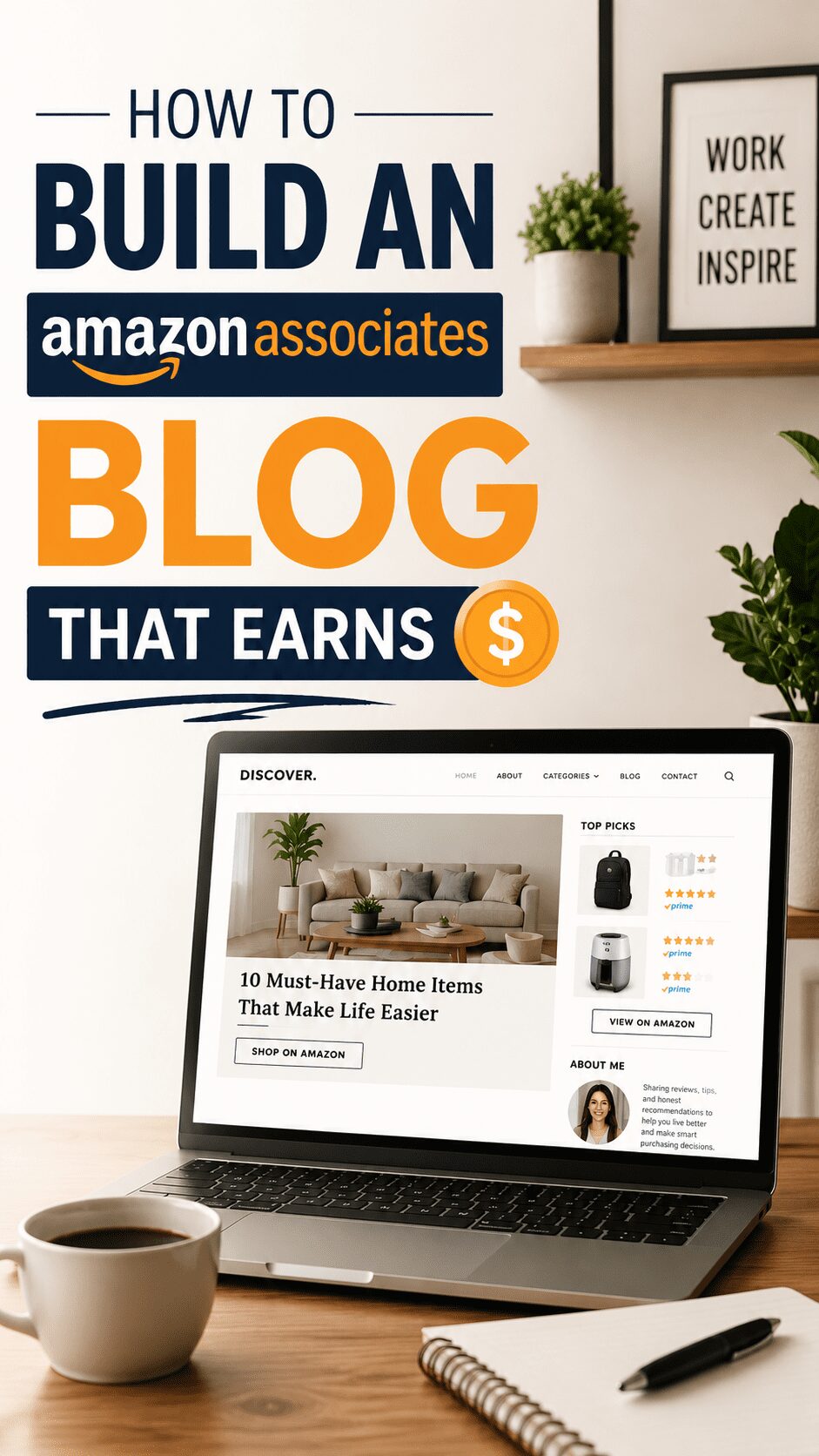
The Amazon affiliate blogs that earn meaningful long-term income are the ones that built genuine authority in their niche. They’re sites readers return to because they trust the recommendations. They rank well because they’ve built topical depth and a strong content library. They convert well because the product displays are clean and the writing is honest.
Treat your blog like a brand from day one. Have a clear niche. Have consistent quality standards. Have a voice readers can recognize. Have infrastructure that supports scale — which means using Lasso for link management, tracking, and displays rather than trying to do it all manually.
The blogs that are making four and five figures a month from Amazon Associates didn’t get there by posting randomly and hoping for the best. They built a content system, managed it like a business, and added posts consistently over time.
That’s the model. It’s not complicated. It just requires sustained execution and the right tools underneath it.
Hey there! Just a quick heads-up: some of the links on this site are affiliate links, meaning I may earn a small commission if you make a purchase (including through the Amazon Associates program), at no extra cost to you. Occasionally, products featured here are gifted by brands.
I also use AI tools to help research and create content for you! While I love sharing strategies to help you succeed, please remember that everyone's journey is unique—individual results vary, and there are no guarantees. Thanks so much for stopping by!


