Amazon changes products constantly. Listings get updated. Models get replaced. ASINs change. Products go out of stock permanently. If you’ve been publishing Amazon affiliate content for any length of time, some percentage of your links are already broken or pointing to something that no longer represents your best recommendation.
The question is how much that’s costing you, and what you’re going to do about it.
Why Amazon Links Break More Than You’d Expect
Amazon’s product catalog is one of the most dynamic on the internet. Sellers relist products under new ASINs. Manufacturers release updated models that replace old ones. Amazon itself changes its URL structure periodically. Third-party sellers that fulfilled a product listing disappear, taking their inventory with them.
Each of these events can break your affiliate link. Sometimes it results in a hard 404. Sometimes the link resolves but leads to a discontinued product page with no purchase option. Sometimes it redirects to a different product entirely that you didn’t intend to recommend and that may not even be in a commission category.
Most affiliate bloggers have no systematic way to detect any of these scenarios. They assume their links are working until a reader tells them one isn’t, or they happen to click through during a post review.
That’s not a system. That’s hope. And hope doesn’t pay affiliate commissions.
The Cost of a Broken Link You Don’t Know About
The cost of a broken link is proportional to the traffic that post receives and how long the link stays broken. A broken link in a post getting 100 visitors a month and broken for two months is a relatively minor problem. A broken link in a post getting 10,000 visitors a month and broken for three months is a significant revenue loss.
If your site has 200 posts and 10% of them have broken links at any given time, you have 20 posts silently leaking commission. If those posts are collectively getting 50,000 visitors a month and even 2% of those visitors would have clicked through, that’s 1,000 lost clicks a month. At any meaningful conversion rate, that’s real money disappearing without a trace.
Most bloggers who do their first real link audit are surprised by what they find. The number of broken or outdated links is almost always higher than they expected.
The audit is the first step. What you do next determines how much you recover.
How Lasso Detects and Flags Broken Links
Lasso monitors the health of every affiliate link in your dashboard on an ongoing basis. When a link returns an error, goes to a 404, or detects that the destination has significantly changed, it flags the link in your dashboard so you can review it.
You don’t have to manually check anything. You don’t have to run a monthly audit. The monitoring happens in the background and surfaces problems as they occur, which means you find out about broken links days after they break rather than months.
This passive monitoring is one of the most valuable things Lasso does for an affiliate blogger managing a large content library. The time savings alone are significant. The revenue recovered from catching broken links early is often even more valuable.
Set it up, let it run, and review your dashboard regularly. The system works for you while you focus on creating content.
Fixing a Broken Link the Right Way
When Lasso flags a broken link, you have a few options depending on the situation. If the product has simply been relisted under a new ASIN or URL, find the new product page on Amazon, copy the new URL, and update the Lasso record. Every post that contained that display updates automatically.
If the product has been discontinued permanently and there’s no current equivalent, you have a choice to make. Find the best available replacement that serves the same purpose and update the Lasso record with the new product. Or, if the product was central to the post’s recommendation, update the post content itself to reflect the current best option.
Don’t just delete the display and leave the post without a recommendation. That traffic was arriving because people wanted to buy something in that category. Give them the best current option, even if it’s not the exact product you originally recommended.
A replaced product with an honest update note in your post content maintains reader trust far better than a post that suddenly has a gaping hole where the recommendation used to be.
When a Product Gets a New Model
This is one of the most common situations in product-focused affiliate blogging. You recommended the 2022 version of a product. The manufacturer released the 2023 version. The old listing still technically exists but the new model is clearly superior and what your readers should be buying.
In this case, update your Lasso record to point to the new model. Update your post content to reference the current version. Check that the product image in your display reflects the new model rather than the old one.
A post recommending an outdated model when the newer version is widely available creates doubt in your readers’ minds. They’re doing their own research and they know the new model exists. If your post still recommends the old one without acknowledging the update, they’ll wonder if you’re keeping your content current at all.
Keeping your recommendations current is part of maintaining the trust that makes people click your affiliate links in the first place. Lasso makes the update process a two-minute task instead of an hour-long project.
Proactive Auditing for High-Value Posts
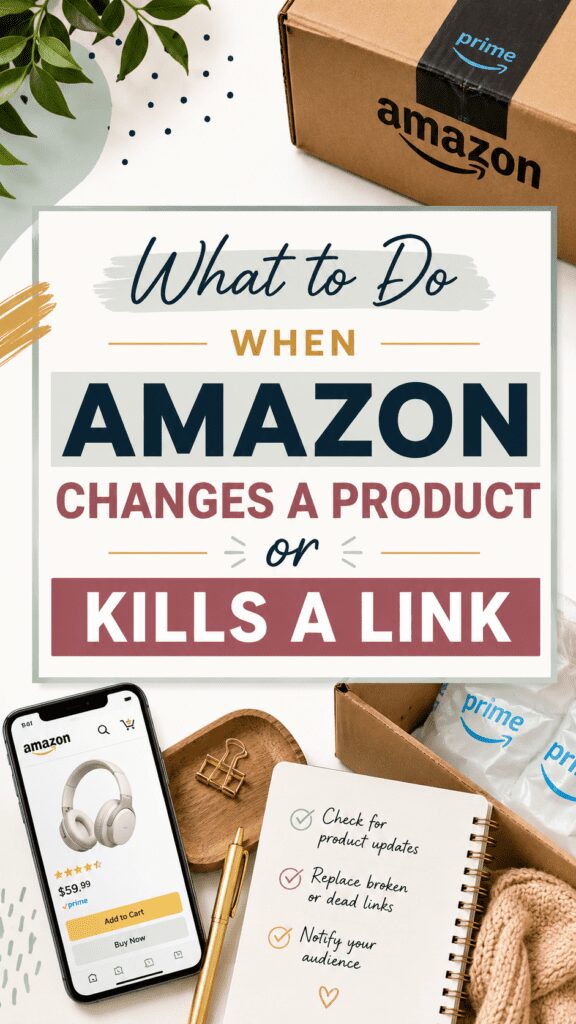
Even with Lasso’s automated monitoring catching broken links, it’s worth doing a proactive quarterly review of your highest-traffic, highest-earning posts. Automated tools catch hard failures. Human review catches soft issues: products that are still live but no longer the best recommendation, products with ratings that have declined significantly, products where the seller has changed and quality has dropped.
For your ten or twenty most important posts, click through to the Amazon listing for each recommended product. Is it still the best option available? Are the reviews still strong? Is the product still actively selling or does it look like a listing being kept alive by a seller with no real inventory?
A quarterly human review of your top posts takes a few hours. The quality maintenance it provides to your most valuable content is worth every minute of that investment.
Between Lasso’s automated monitoring and your regular human review, you have a system that keeps your affiliate content current and earning. That’s what serious affiliate bloggers do. That’s what makes the difference between a blog that earns consistently and one that decays slowly without anyone noticing.
Hey there! Just a quick heads-up: some of the links on this site are affiliate links, meaning I may earn a small commission if you make a purchase (including through the Amazon Associates program), at no extra cost to you. Occasionally, products featured here are gifted by brands.
I also use AI tools to help research and create content for you! While I love sharing strategies to help you succeed, please remember that everyone's journey is unique—individual results vary, and there are no guarantees. Thanks so much for stopping by!


