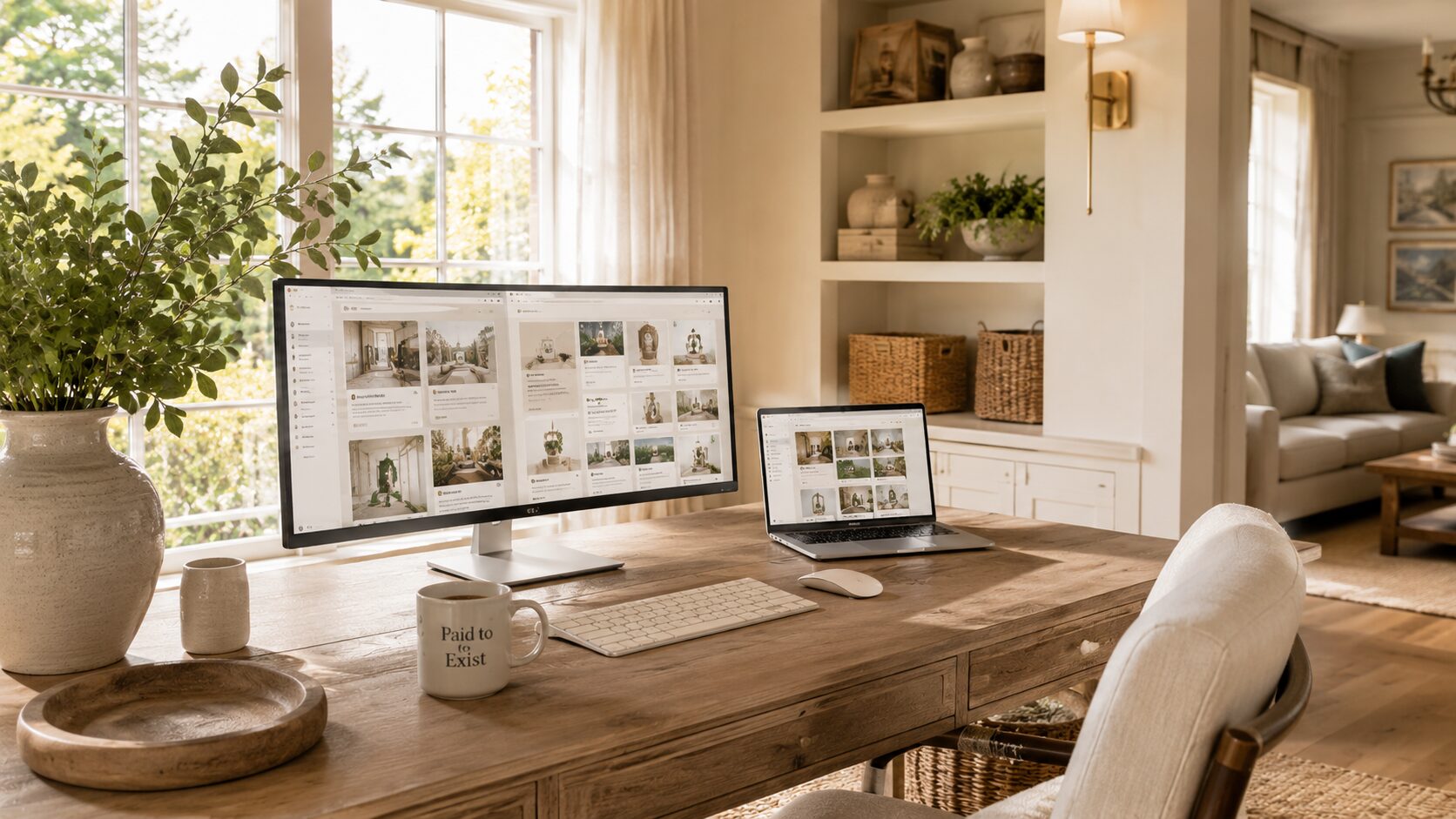
Someone once asked me what a typical work day looks like when you make six figures as a solopreneur. The honest answer is that there is no typical day, and that absence of a typical day is one of the things I like most about how I work. What I can describe is the range of what days look like, what they have in common, and how the income happens relative to the work.
I made $102,334 in Q1 2026 working alone from home with no fixed schedule, no daily standup, and no manager determining what I worked on each day. The system that makes that possible is documented in my ebook Side Hustle to Six Figures: The Solopreneur’s Playbook for Turning Gig Work Into a Real Online Business, available at ballenpublishing.com for $27. Here is what the actual work days look like.
The Day Has No Required Start Time
The most immediately practical freedom of the solopreneur life is that I start when I want to start. Some days that is 7am because I woke up with an idea and wanted to work before anything else. Some days that is 10am because I was not ready to think yet. The business does not care when the day begins as long as the work gets done, and the work that keeps the income engine running is not the kind that requires showing up at a specific time.
No required start time does not mean no discipline. It means the discipline is self-determined rather than externally imposed. The accountability is to results and to the compounding system, not to a clock. A day without meaningful work is a day the system did not grow, and I notice those days in the weekly analytics. That feedback loop provides its own accountability without anyone else needing to enforce it.
The First Check of the Day
The first thing I do when I sit down is check what earned yesterday. Not obsessively, and not to feel good or bad about a single day’s numbers. But to stay informed about which parts of the system are performing and which might need attention. A quiet day on affiliate commissions from a usually active program sometimes signals a broken link or a program change worth investigating. A strong day on digital product sales sometimes signals that a specific content piece is driving unusually qualified traffic.
After the earnings check I look at what content is in progress, what is scheduled, and what the priorities are for today based on what the system needs. Some days I am in creation mode, writing blog posts or recording videos. Some days I am in review mode, updating older posts that are losing search position or analyzing which pins are driving the most clicks.
Some days I am in systems mode, building or refining the automations and workflows that keep everything running. The day’s work follows from what the system needs, not from a predetermined content calendar.
What Creation Days Look Like
Creation days are when I write blog posts, create ebooks, record YouTube videos, or design Pinterest pins. These are the days that feel most productive in an obvious, visible way because something new exists at the end of the day that did not exist at the beginning. They are also the days that are most subject to creative resistance and the need to push through the gap between having an idea and actually executing it well enough to publish.
My creation routine is flow-based rather than schedule-based. I work on the thing that has the most creative energy behind it at the moment I sit down, not the thing that was next on a content calendar I made last week. A content calendar assumes that creative motivation is evenly distributed across time, which it is not. Following the creative energy produces better content and requires less willpower than pushing through resistance to complete a scheduled piece that I am not genuinely engaged with at that moment.
What Review and Maintenance Days Look Like
Review days are less obviously productive but often more valuable than creation days. A review day might involve going through the last month of affiliate analytics to identify which products are converting well and which are not, then updating the content for low-converting products or creating new content for high-converting products that do not yet have enough coverage.
Review days might also involve going through older blog posts that have started losing search position and updating them with new information, better keyword optimization, or fresh content that gives Google a reason to reassess and potentially improve the ranking. This maintenance work is unglamorous but it is what keeps a content library earning at a high level over time rather than gradually declining as the content ages without updates.
How the Income Happens During the Day
The most interesting thing about a six-figure solopreneur work day is that most of the income does not happen during the work hours. It happens during the hours when I am not working. The affiliate commissions coming in during a Tuesday morning are from content I created months ago. The ebook sales arriving during a Wednesday afternoon are from YouTube videos I recorded last year. The display advertising revenue accumulating during a long Saturday hike is from Pinterest pins I scheduled three weeks ago.
The work I do during active working hours is building assets for the future, not directly earning income for the present. The income that arrives today is almost entirely from work I did in the past. The work I do today is creating the income I will receive in the future. This temporal shift in the relationship between work and income is the defining characteristic of the content-based solopreneur business model, and understanding it is what gives the patience to keep building during the months when the income is not yet where the effort deserves it to be.
When I Stop Working
I stop working when I am done, not at a fixed time. Some days that is 2pm because I finished what I wanted to accomplish and there is no reason to sit at a desk pretending to be productive. Some days that is 7pm because I was genuinely engaged in something and lost track of time. The business has no closing time, and having no closing time means having genuine freedom about when I decide the day’s work is sufficient.
The flexibility in stopping time matters as much as the flexibility in starting time. Being able to stop at noon on a beautiful day without guilt, without asking permission, without worrying about whether someone needs me for a 2pm meeting, is one of the specific freedoms that the solopreneur business model produces that is very difficult to value until you have experienced its absence. The work continues earning whether I am at the desk or not. Stopping when I am ready is not a luxury. It is the design of the system working as intended.
The full system that produces this kind of work day, including the five income streams, the tool stack, and the 30-day launch plan, is in my ebook Side Hustle to Six Figures: The Solopreneur’s Playbook for Turning Gig Work Into a Real Online Business. It is $27 at ballenpublishing.com. The six-figure day is not the goal. The freedom of how that day is structured is.
Hey there! Just a quick heads-up: some of the links on this site are affiliate links, meaning I may earn a small commission if you make a purchase (including through the Amazon Associates program), at no extra cost to you. Occasionally, products featured here are gifted by brands.
I also use AI tools to help research and create content for you! While I love sharing strategies to help you succeed, please remember that everyone's journey is unique—individual results vary, and there are no guarantees. Thanks so much for stopping by!