Most agents have no clear picture of whether their real estate website is actually working. They know they have one. They might check it occasionally. They know they are paying for hosting and IDX every month. But without data, there is no way to know which pages are generating traffic, which pages buyers are entering the site through, where leads are actually coming from, or whether the IDX lead capture is functioning at all. Here is what to track, which tools to use, and what the numbers should tell you about what is working and what to fix.
Google Search Console: Your SEO Dashboard
Google Search Console is free and essential. It shows you which search queries are generating impressions and clicks to your site, which specific pages are receiving the most search traffic, your average ranking position for specific keywords, and whether Google is encountering any crawl errors or indexing issues with your IDX pages or other site content.
Set up Google Search Console before you publish your first piece of content. Connect it to your site by adding the verification code through your SEO plugin. Submit your XML sitemap so Google has a complete list of the pages it should be indexing. Then check it monthly to see which showcase pages and blog posts are gaining traction in search, which queries you are showing up for that you did not expect, and which pages that should be ranking are still showing no impressions at all.
The queries report is particularly useful for real estate agents because it reveals the actual language buyers are using to find your pages. If your Summerlin showcase page is receiving impressions for searches like Summerlin real estate but not for homes for sale in Summerlin, the page title may need to be adjusted to better match the higher-volume query. Search Console gives you the data to make those adjustments based on evidence rather than assumption.
Google Analytics 4: Traffic, Behavior, and Conversions
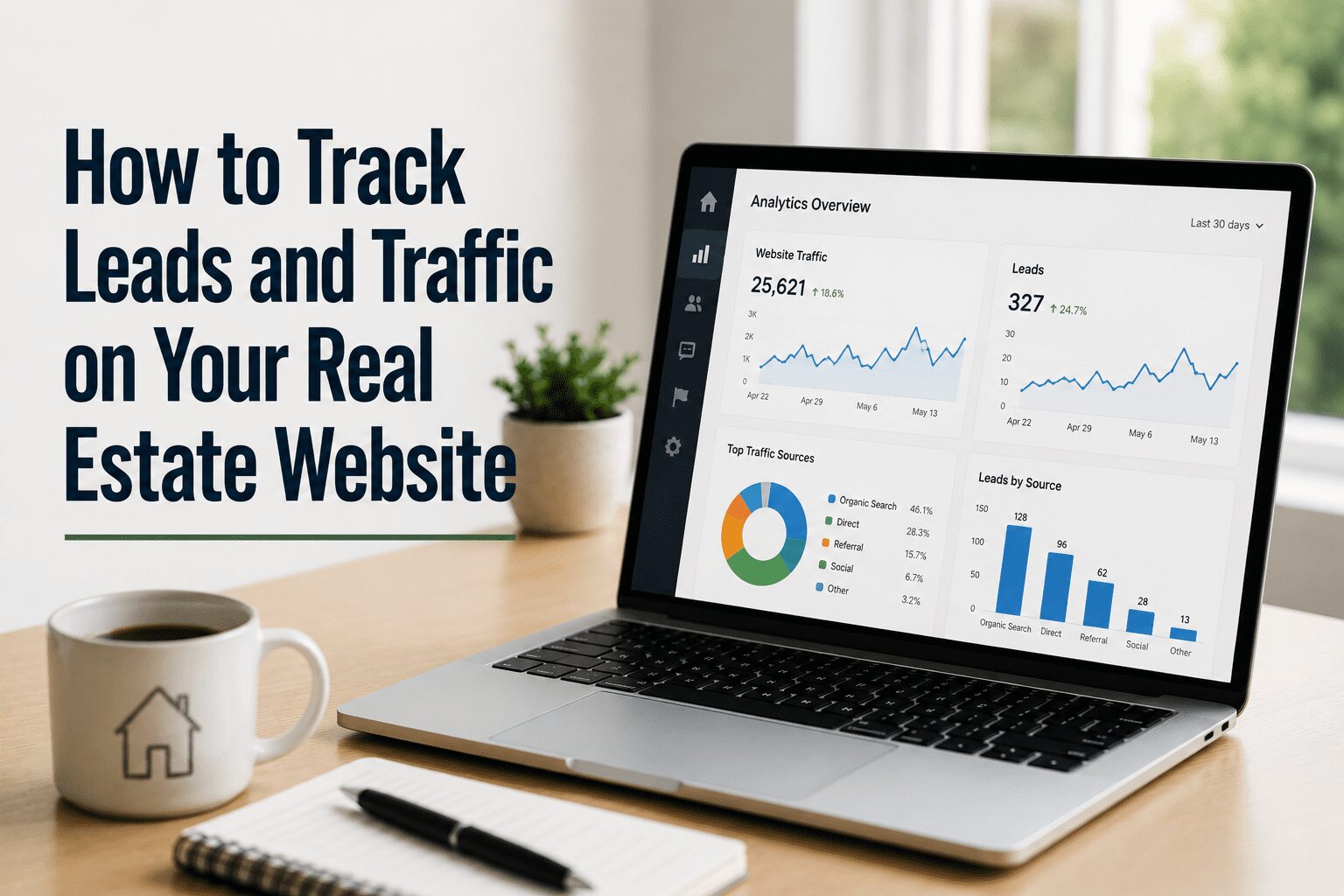
Google Analytics 4 shows you how many people are visiting your site, where they came from, what pages they viewed, how long they stayed, and whether they took any actions you have configured as conversion events. For a real estate agent, the most useful reports are the traffic source breakdown, the landing page report, and the engagement and conversion data.
The traffic source breakdown shows how much of your traffic comes from organic search versus direct versus referral versus social versus paid. For an agent investing in content and SEO, watching the organic search number grow month over month is the primary signal that the strategy is working. A flat or declining organic number after months of content production signals a problem with either the content quality, the technical SEO configuration, or both.
The landing page report shows which pages buyers and sellers are entering your site through from search. Showcase pages that appear in the top landing pages are ranking and generating organic traffic. Showcase pages that never appear as landing pages are not ranking for anything yet and may need their titles, descriptions, or content to be adjusted.
Behavior patterns reveal whether the site is converting traffic correctly. If buyers are landing on showcase pages and navigating deeper into IDX search, the showcase pages are doing their job. If buyers are landing and immediately leaving, there is a mismatch between what the page title promised and what the page delivered. Data makes these distinctions visible without guesswork.
IDX Broker’s Built-In Reporting
IDX Broker has its own reporting dashboard showing lead registrations, saved searches, property views by listing, and listing alert signups. This is where you see whether the lead capture system is functioning and at what volume. The IDX reporting separates what is happening inside the IDX search experience from what Google Analytics shows about overall site behavior.
A functioning IDX setup should show consistent registrations as organic traffic grows. If you are generating meaningful traffic to showcase pages but seeing few IDX registrations, the registration configuration needs attention. The threshold for triggering registration may be too high, meaning buyers are browsing extensively without being prompted to register, or the registration prompt itself may be creating friction that buyers are abandoning rather than completing.
If you are generating IDX registrations but those registrations are not converting to conversations, the follow-up system is the gap. The leads exist in the database but are not being contacted quickly enough or with relevant enough initial messages to generate a response. IDX reporting combined with CRM tracking shows you which part of the funnel is failing.
Clicky Analytics for Real-Time Data
Clicky Analytics is a real-time visitor tracking tool that shows you who is on your site right now, what they are looking at, and where they came from. It is more intuitive for day-to-day monitoring than Google Analytics and particularly useful for watching IDX activity in real time rather than analyzing it retroactively in monthly reports.
The BREW system from Ballen Brands installs Clicky as a standard component because the real-time visibility it provides gives agents immediate feedback on how the site is being used rather than waiting for the end-of-month Google Analytics report. When you publish a new neighborhood guide, Clicky lets you see almost immediately whether it is attracting visitors and how those visitors are interacting with the content.
Setting Up Conversion Tracking
Without conversion tracking, you can see that your site is getting traffic but you cannot connect that traffic to leads. Setting up conversion events in Google Analytics 4 for contact form submissions, IDX registrations if your IDX provider can send that data, and home valuation form submissions closes the gap between traffic reporting and lead reporting.
Once conversion tracking is configured, the source and medium report filtered by conversion events tells you which traffic channels are actually generating leads rather than just traffic. An agent might discover that organic search generates fewer sessions than direct traffic but twice as many lead conversions, which is exactly the kind of insight that informs where to invest more time and budget.
What the Numbers Should Tell You
The metrics that matter most for a real estate website are organic search traffic growth month over month, IDX lead registrations per month and whether that number is growing alongside traffic, which showcase pages are generating organic landing page traffic, and the overall conversion rate from site visitor to registered lead.
If organic traffic is growing month over month but registrations are flat or declining, the IDX configuration or the lead capture settings need attention. If traffic and registrations are both growing but conversations are not happening, the follow-up system is the bottleneck. If neither traffic nor registrations are growing after months of content production, either the content targeting is off, the technical SEO is preventing indexing, or the market competition makes the current approach insufficient. Data makes these distinctions clear so you know what to work on rather than guessing.
Jeff and Paul at Ballen Brands can help you interpret your site’s data and identify what is working and what needs adjustment. Reach them at 702-917-0755 or team@ballenbrands.com.
Lori Ballen is a digital entrepreneur and content creator based in Las Vegas. She founded Ballen Brands, now owned and operated by her brothers Jeff and Paul Helvin.
Hey there! Just a quick heads-up: some of the links on this site are affiliate links, meaning I may earn a small commission if you make a purchase (including through the Amazon Associates program), at no extra cost to you. Occasionally, products featured here are gifted by brands.
I also use AI tools to help research and create content for you! While I love sharing strategies to help you succeed, please remember that everyone's journey is unique—individual results vary, and there are no guarantees. Thanks so much for stopping by!