An email sequence is one of the most valuable assets a solopreneur can build. Done right, it works 24 hours a day — welcoming new subscribers, delivering value, building trust, and converting readers into buyers without you being involved in each individual interaction. Done wrong, it sits unread and unsubscribed.
Claude can help you build a complete email sequence from scratch — but the quality of what you get depends entirely on the quality of the brief you give it. This lesson walks you through exactly how to use Claude to create an email sequence that actually works, whether it’s a welcome series, a nurture sequence, or a launch funnel.
What Makes an Email Sequence Work
Before you write a single email, you need to be clear on four things: who the sequence is for, what transformation it’s designed to deliver, what action it’s ultimately leading toward, and what the reader’s emotional journey looks like from the first email to the last.
Most email sequences fail not because the writing is bad but because the strategy is muddled. They try to do too many things at once, they don’t build progressively toward a single destination, or they don’t account for where the reader is emotionally at the start versus where they need to be at the end.
Getting clear on this before you open Claude is the most important step in the whole process. Claude can write the emails. Only you can define the strategy.
The Brief That Makes Claude’s Sequence Actually Good
The quality of your sequence is directly proportional to the quality of your brief. Here’s what to include:
“I need a [number]-email [type: welcome/nurture/launch] sequence for [audience description]. The sequence starts when [trigger — e.g., someone opts in for my free Pinterest checklist]. By the end of the sequence, I want the reader to [desired outcome — e.g., understand why Pinterest strategy matters more than Pinterest volume, and be ready to join my Academy]. The ultimate conversion goal is [what you want them to buy/do]. My tone is [description]. The reader’s starting point is [where they are emotionally/practically]. The sequence should NOT be salesy until [specific email number]. Here are the key beliefs I want the reader to have by the end: [list].”
That brief gives Claude the architecture it needs to write a sequence with a coherent arc, not just a collection of disconnected emails.
The Welcome Sequence: What It Should Accomplish
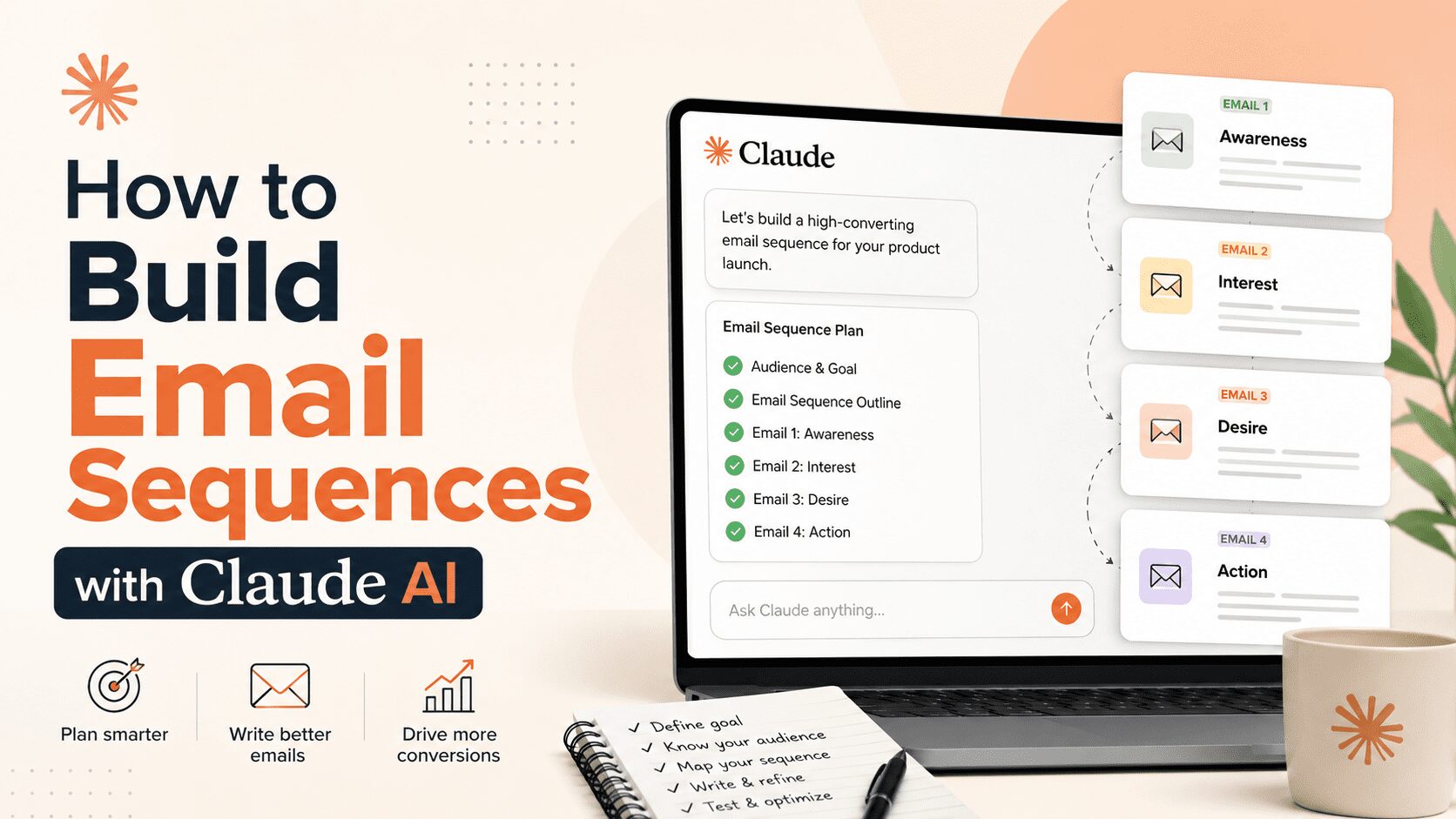
A welcome sequence typically runs three to five emails and covers: confirming the opt-in and delivering the lead magnet, introducing who you are and why you’re the right person to learn from, setting expectations for what subscribers will get from being on your list, and delivering early value that makes them glad they signed up.
“Write a 4-email welcome sequence for new subscribers who opted in for my free ’30 Pinterest Mistakes to Avoid’ checklist. Email 1 (immediate): deliver the freebie, introduce myself briefly, set a warm tone. Email 2 (day 2): tell my story — how I went from zero Pinterest traffic to [result] and what that experience taught me. Email 3 (day 4): deliver my best piece of free advice about Pinterest strategy that isn’t in the checklist. Email 4 (day 7): light soft pitch for Ballen Academy, framed around what the reader can accomplish with the right support. Each email should be 200-300 words. Conversational, direct, personal.”
The Nurture Sequence: Building Trust Over Time
A nurture sequence runs longer — sometimes weeks or months — and is designed to build relationship and trust before asking for a sale. These emails are primarily about delivering value and demonstrating expertise.
Claude handles nurture sequence writing well when you give it a content calendar-style brief: the topic of each email, the key insight or tip you want to share, and where in the reader journey that email falls.
“Write email #3 in my ongoing nurture sequence. This email is about why most Pinterest strategies fail at the conversion stage, not the traffic stage. The reader has been on my list for about two weeks and has received two previous value emails. They know who I am. This email should feel like advice from a trusted peer, not a lesson from a teacher. End with a subtle nod toward a more advanced training I have available but don’t hard-sell it.”
The Launch Sequence: Moving From Value to Conversion
A launch sequence is structured around a specific window — usually five to seven days for a digital product launch — and escalates from value delivery to urgency to final call. Each email has a specific job in the sequence.
A typical launch sequence structure: Day 1 — open cart announcement with the core promise. Day 2 — address the biggest objection. Day 3 — share a success story or transformation. Day 4 — add urgency (bonus expiring, seats filling). Day 5 — FAQ and final push. Day 6 — last day reminder. Day 7 — final hours.
Brief Claude on each email individually within a single conversation: “This is email #2 in my launch sequence for Ballen Academy. Yesterday’s email announced the open cart and led with the transformation promise. Today’s email addresses the biggest objection my audience has: they don’t have time to learn a new strategy. Write this as a direct, empathetic response to that objection. Show them that the time investment is smaller than they think and the return is larger. Keep it under 350 words.”
Personalizing Claude’s Output
Every email Claude writes for your sequence needs your personal touch before it goes out. The things Claude can’t add: your specific results and numbers, your personal story details, your specific references to your audience’s conversations and questions, and the subtle voice markers that make your emails recognizable.
Go through each email and add at least one personal element — a specific result, a story, a reference to something that happened in your business. That element is what makes your emails feel authored and real rather than generated.
The Bottom Line
A well-built email sequence is one of the most powerful assets in your content business. Claude can help you build it in a fraction of the time it would take to write from scratch — but the strategy, the story, and the personal voice have to come from you.
Brief Claude thoroughly. Write each email with intention. Personalize before you send. And build a sequence that works for you around the clock.
Build the sequence once. Let it work forever.
Hey there! Just a quick heads-up: some of the links on this site are affiliate links, meaning I may earn a small commission if you make a purchase (including through the Amazon Associates program), at no extra cost to you. Occasionally, products featured here are gifted by brands.
I also use AI tools to help research and create content for you! While I love sharing strategies to help you succeed, please remember that everyone's journey is unique—individual results vary, and there are no guarantees. Thanks so much for stopping by!