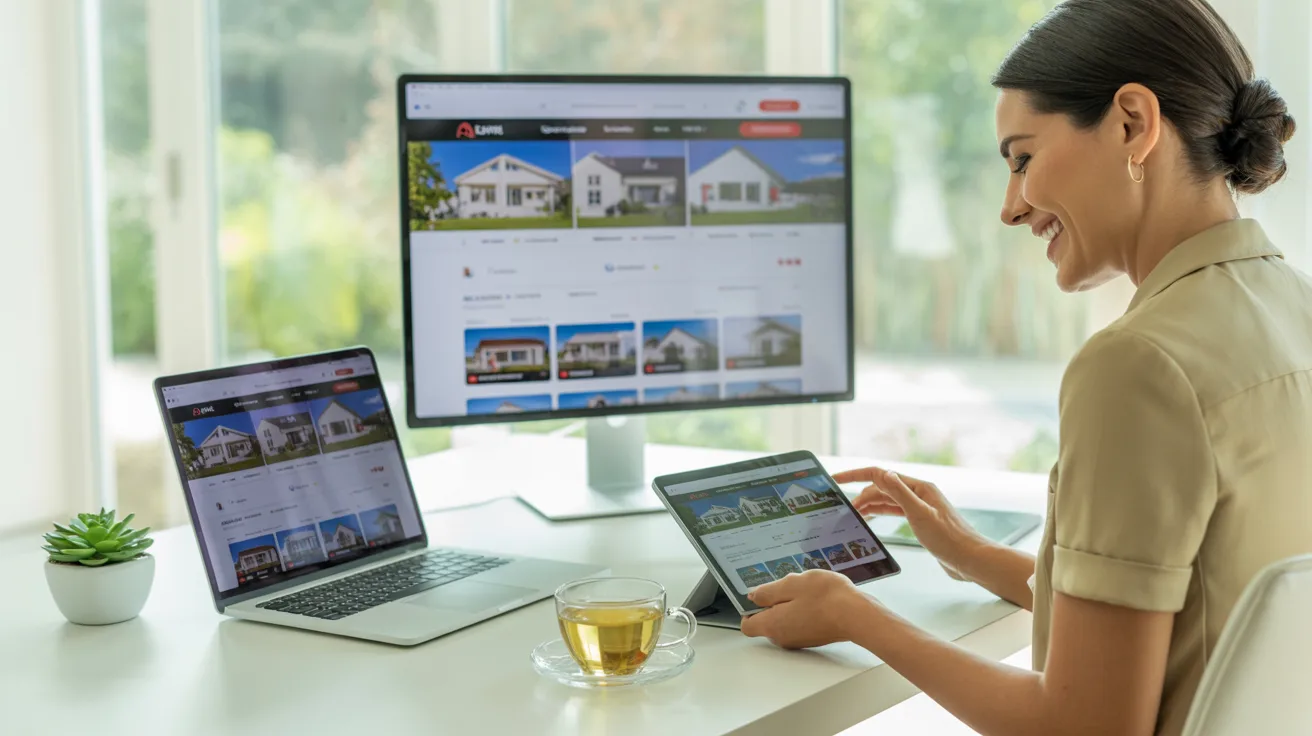
You got your license, joined a brokerage, and on day one they handed you a website. It had your photo, a short bio, a contact form, and maybe even a property search feature. It looked professional. It felt like a gift.
It wasn’t a gift. It was a leash.
That free website your broker gave you comes with a condition nobody puts in writing but everyone eventually learns the hard way: the moment you leave that brokerage — and statistically, you will leave, because the average agent changes brokerages every four to five years — you walk out the door without it. The domain. The content. The leads. The SEO equity you built up over years of blogging and Google rankings. Gone. It belongs to them, not you.
That’s not a technicality. That’s the entire strategy.
And even if you never leave, the free broker website is working against you in ways that compound quietly in the background — ways most agents don’t notice until they’re sitting across from a client who found their home on Zillow, registered there, and is now being called by three other agents who paid Zillow for that same lead.
Let’s talk about what’s actually happening and what you can do about it.
The “Free Website” Trap Is a Transfer of Value — Away From You
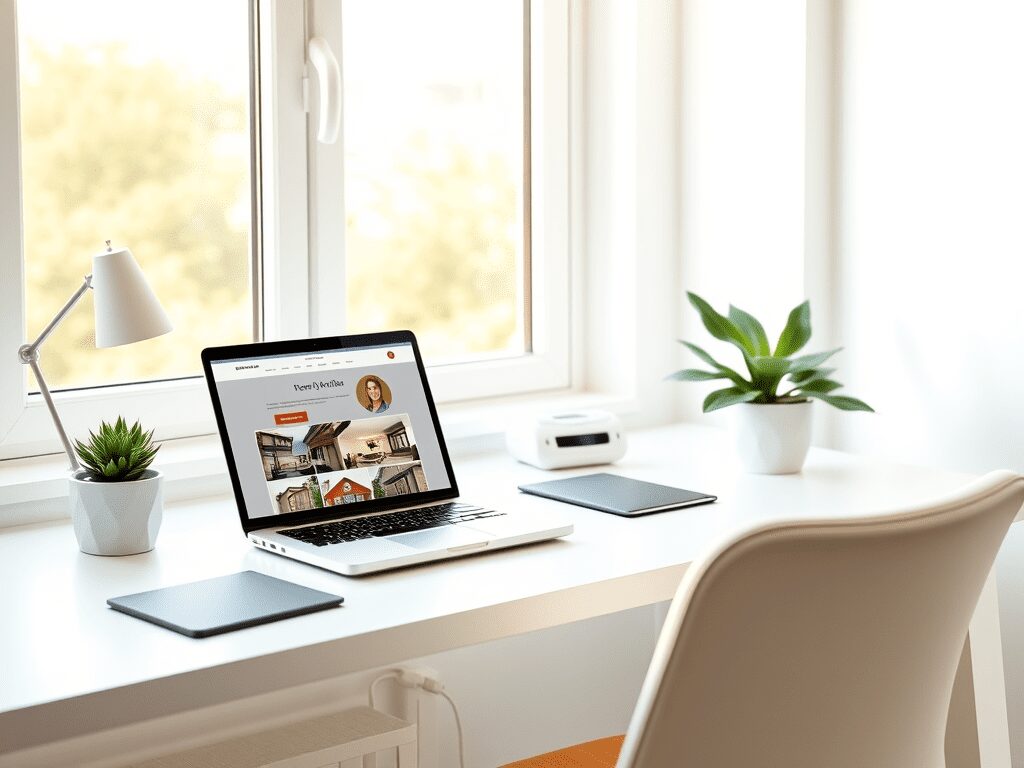
Here’s the basic economics of a broker-provided website that almost no one explains clearly.
When a visitor lands on your broker’s website and searches for homes, browses listings, or fills out a contact form, that activity creates data. Behavioral data. Search preferences. Budget signals. Email addresses. Phone numbers. Interest patterns.
That data doesn’t belong to you. It belongs to the platform.
In the best case, your broker’s system passes you a lead notification and you get to work. But the relationship between that visitor and your business lives inside your broker’s infrastructure, not yours. If you leave, you don’t take the contact history, the saved searches, the behavioral data, or any of the SEO rankings that helped bring that person to the site in the first place.
You start over. From zero.
Compare that to what happens when you own your website. Every lead that registers on your site is in your database. Every person who saves a search, sets up a property alert, or requests a home valuation is a contact you own outright. If you change brokerages, you take your entire database with you. If you change IDX providers, you keep your content. If the industry shifts and you decide to hang your own shingle, you already have the asset you need to survive.
Ownership changes everything. And most agents give it away without even realizing it.
What Zillow Is Actually Doing With Your Clients
Before we talk about the solution, let’s be honest about the other half of the problem.
Even if your broker website technically “works,” there’s a good chance it’s designed to funnel visitors toward third-party portals. Many broker sites pull listing data and then redirect buyers to Zillow or Realtor.com for the full search experience. This feels convenient. It is not.
Zillow’s entire business model depends on what happens after a buyer registers on their platform. They take that person’s search intent, their budget range, their preferred neighborhoods — and they sell it. They sell it to multiple agents simultaneously through their Premier Agent program. So if your client, someone who found you because they liked your Instagram or your referral gave them your name, ends up on Zillow during their home search, Zillow is now selling their contact information to your competition.
Zillow earned over a billion dollars doing exactly this. Your clients are the product. And if your website is pointing them toward Zillow to search, you’re actively feeding the machine that profits from your relationships.
This isn’t theoretical. It’s the business model, publicly documented in their SEC filings.
An IDX-powered website you own solves this. When buyers can search the entire MLS on your site, they have no reason to leave. The search experience is just as comprehensive as any portal. The listings are live and accurate. And every click, every saved search, every registration stays in your world, not Zillow’s.
What an IDX Website Actually Does For Your Business
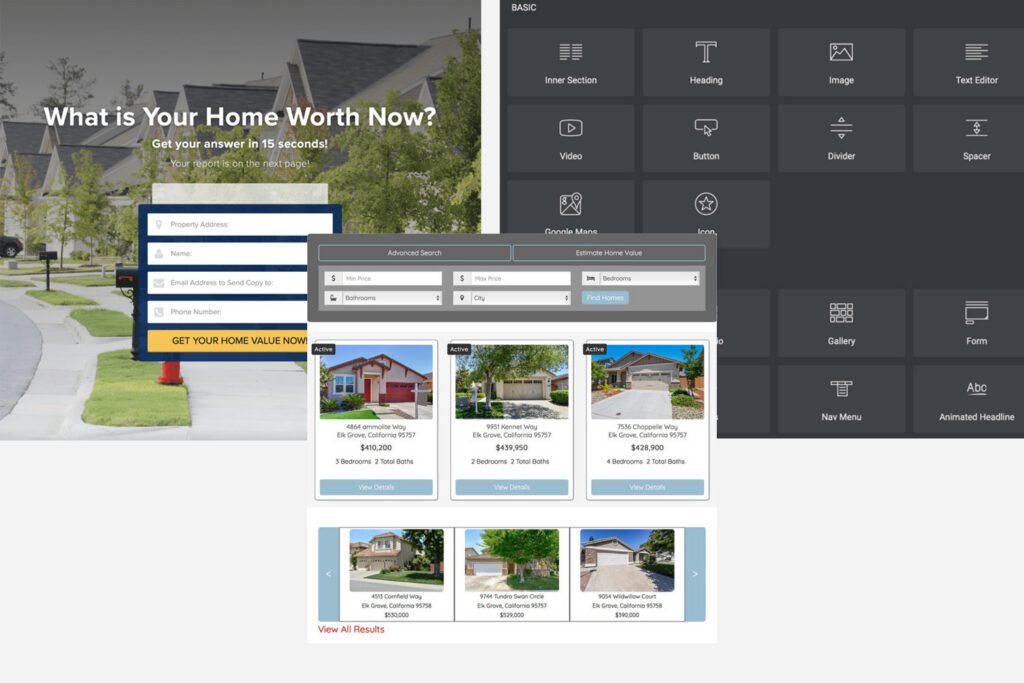
IDX stands for Internet Data Exchange. It’s the technology that connects your website to your local MLS and displays live, accurate listings directly on your domain. When a buyer searches for homes on your site, they’re searching the same database that powers Zillow — but the experience happens under your brand, and every lead it captures belongs to you.
Here’s what a properly built IDX website does around the clock:
Captures leads through property searches. Buyers search, find listings they like, and are prompted to register to save their searches or request alerts. You get a lead. You own that lead.
Sends automated property alerts. Once someone registers, your site automatically emails them new listings that match their search criteria. This keeps them engaged with your brand instead of drifting back to Zillow between home searches.
Generates SEO traffic. Every neighborhood page, every property type page, every market report gives Google something to index and rank. Over time, your site builds organic authority that drives traffic without you paying for ads.
Qualifies leads passively. The search behavior a registered user leaves behind — what they clicked, what they saved, what price ranges they’re browsing — tells you exactly where they are in the buying process before you ever pick up the phone.
Works while you sleep. You don’t have to be online for leads to register, search, and receive follow-up. The system runs automatically.
This is why agents who build their own IDX websites treat them as infrastructure, not marketing. It’s not a campaign. It’s a foundation.
My brothers Jeff and Paul at Ballen Brands build these! (702-917-0755)
Why BREW Websites From Ballen Brands Are Built Differently
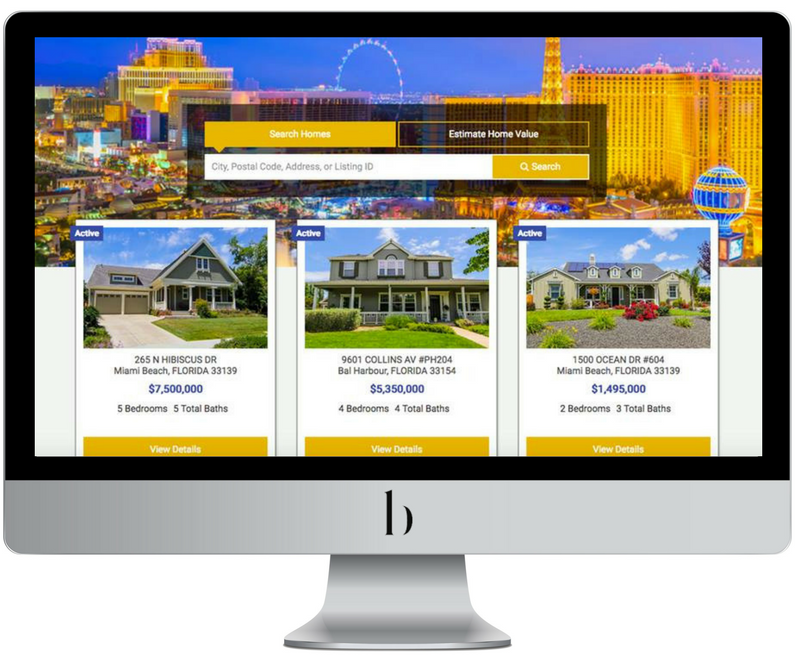
Most website solutions in the real estate space give you one of two things: a cheap, generic template that looks like every other agent’s site, or a fully custom build that costs thousands of dollars upfront and locks you into a proprietary system you don’t actually own.
Ballen Brands built a third option specifically because of this problem.
The BREW — which stands for Ballen Real Estate Website — was built by real estate agents for real estate agents. Lori Ballen, the founder of Ballen Brands, developed the BREW product to solve her own lead generation needs as a working agent in Las Vegas. Now the company is owned and run by her brothers Jeff and Paul Helvin.
After closing 101 transactions using internet marketing strategies in her first years in the business, she systematized what worked, tested it over years with her own sites, and then built it into a product other agents could use.
Every BREW is built on WordPress, which means you own your website outright. There are no proprietary platforms to escape, no long-term contracts, no starting over when you switch brokerages. If you leave your brokerage tomorrow, your website comes with you. Your content comes with you. Your SEO equity comes with you. Your leads come with you.
BREWs integrate directly with IDX Broker, one of the most respected and feature-rich IDX platforms in the industry. This integration means buyers can search the full MLS on your domain — complete with saved searches, property alerts, advanced filters, interactive maps, and home valuation requests — all without leaving your site. Every lead that engages with those tools is captured in your system, not handed off to a portal.
The site also comes built with Yoast SEO for on-page optimization, Smush and Hummingbird plugins for site speed, and community showcase pages that are built to rank on Google. These aren’t afterthoughts bolted on later — they’re foundational to how the site is designed from day one.
BREW packages include community pages dedicated to specific neighborhoods and areas in your market. These pages are built with keyword research behind them, targeting what buyers are actually searching for in your city. One BREW client shared this result directly:
“Made a showcase page in my BREW website for a local townhome community. Units sell up to $800,000. Added photos, custom Google map and a simple video. It soon ranked #1 in Google. Tuesday of last week I received a lead. Offer accepted today. Second deal this year over $700,000 from townhome showcase pages.”
That’s not a lucky outcome. That’s the strategy working as designed.
Different BREW package tiers — Light, Medium, Bold, and Broker — give you different numbers of community pages and IDX showcase pages depending on how many markets or neighborhoods you want to target. The Broker BREW is built for teams and brokerages that need coverage across multiple areas at scale.
There are no contracts. If the product doesn’t perform for your business, you’re not locked in. That’s intentional. Ballen Brands built it this way because the site should earn your loyalty by delivering results — not hold you hostage with fine print.
The Real Cost of Not Owning Your Platform
Let’s put some concrete math around this for a moment.
If you’ve been with your current brokerage for three years and you’re planning to move, every blog post you wrote, every neighborhood guide you published, every Google ranking you earned on that broker website disappears. Assume you published even two posts a month for three years. That’s 72 pieces of content. Gone.
Now assume each of those posts was pulling in modest traffic — say, 50 visitors a month each. That’s 3,600 visitors a month your future self would have had for free, ranking on search engines, bringing in leads around the clock. At even a 2% conversion rate, that’s 72 leads a month from organic traffic alone. Starting over means rebuilding all of that from scratch, typically on a new domain, which means Google’s trust in your domain authority goes back to zero.
This is the invisible tax agents pay for using a free broker website. The cost doesn’t show up on a bill. It shows up in the years of rebuild work after every brokerage transition.
Owning your website eliminates that tax entirely.
What Agents Who Own Their Websites Know That Others Don’t

The agents who dominate their local markets online aren’t necessarily the ones spending the most on Zillow. They’re the ones who figured out early that their website is an asset, not a tool. Assets appreciate. Tools get replaced.
When you own your IDX website, you are building something. Every ranking you earn, every lead that registers, every piece of content you publish is adding to the value of a platform you control. Five years from now, that website is a business asset with real worth — traffic, leads, SEO authority, and a database of contacts that belongs entirely to you.
A broker website, no matter how polished it looks, is a rental. You’re building on someone else’s land. And when the lease ends, you leave with nothing.
The BREW exists because Lori Ballen lived this exact problem as an agent, decided there had to be a better answer, and built the better answer from the ground up.
If you’re still on a broker-provided website, the question isn’t whether you should make the switch. The question is how much you’re willing to leave on the table before you do.
Ready to own your platform? Ballen Brands builds BREW websites for real estate agents who are serious about lead generation. No contracts, no proprietary lock-in — just a WordPress-based IDX website you own outright. Visit BallenBrands.com to explore packages or call 702-917-0755 to talk through which BREW is right for your market.
Hey there! Just a quick heads-up: some of the links on this site are affiliate links, meaning I may earn a small commission if you make a purchase (including through the Amazon Associates program), at no extra cost to you. Occasionally, products featured here are gifted by brands.
I also use AI tools to help research and create content for you! While I love sharing strategies to help you succeed, please remember that everyone's journey is unique—individual results vary, and there are no guarantees. Thanks so much for stopping by!