
This page contains affiliate links. If you sign up or buy through them I may earn a commission at no extra cost to you.
Amazon Affiliate Marketing Is a Publishing Business, Not a Link
Most people join Amazon Associates, drop a link, and wonder why nothing happens. Pinterest is where that link turns into a real system, if you build it right.
See Every Amazon Commission Before You Scale the Cluster
This entire system runs on Amazon Associates and Influencer commissions, so I don’t guess which products in a cluster are actually working. ViralVue is what I use to see real Associates and Influencer earnings in one place, so I know exactly which products to double down on and which to drop.
Check Out ViralVue →The Tools I Use
Some of the links below are affiliate links — if you sign up or buy through them I may earn a commission at no extra cost to you. I only ever share tools I actually use.
PinClicks
Before I build a cluster, I check keyword-level search volume and trends on Pinterest, so I’m building around real demand instead of a guess.
ViralVue
On the Amazon side, this is what I use to track my Associates and Influencer earnings and find what’s actually converting, so I know which products in the cluster to double down on.
What Actually Moves the Needle
Chase intent, not trends
Amazon pays on buying intent. My whole job is aligning content with people who already have a credit card out, not chasing whatever’s trending this week.
Validate before you build
Before I build around a product category, I check whether it’s actually moving. Is demand accelerating? Are creators converting here? A quick pull in PinClicks answers that before I write a word.
Build clusters, not posts
One post never compounds. A cluster does: comparison content, reviews, best-for guides, search-driven articles, all pointed at the same buying intent.
Pin the intent
Pinterest is a search engine with a shopping cart attached. Every pin is another entry point into the same cluster, still working long after I hit publish.
How I Build an Amazon + Pinterest Cluster
No guessing what’s hot. No dropping a link and hoping.
Validate demand before I build anything
I don’t guess what’s hot. I check whether a product category is actually moving and whether creators are converting in that space before I write a single word.
Pick one keyword theme
Everything I build points at the same search intent. One theme, multiple angles, so the content reinforces itself instead of competing with itself. I use PinClicks to find the theme, since it shows me real Pinterest search volume instead of a guess.
Build the cluster, not a post
Comparison content, reviews, best-for guides, search-driven articles, YouTube walkthroughs, all pointed at the same theme with multiple entry points.
Put Pinterest in front of every piece
Each piece of content gets its own pin. Pinterest is where buying intent lives longest, a pin from months ago can still be converting today.
Research, build, refine, repeat
Mastery here is strategic repetition, not one big swing. I revisit what’s working, kill what isn’t, and keep validating demand as it shifts.
Want the whole system written out?
Content to Commissions walks through this exact validate-then-cluster process step by step, so you can run it on your own Amazon cluster.
Get Content to Commissions →“Amazon affiliate marketing isn’t about dropping links. It’s about owning demand.“— Lori Ballen
Get The Ballen Method — My Free Pinterest Guide
The exact framework I use to turn Pinterest into a search-driven, buying-intent traffic engine for affiliate content.
More Pinterest + Affiliate Systems Worth Reading
Get the Full Playbooks
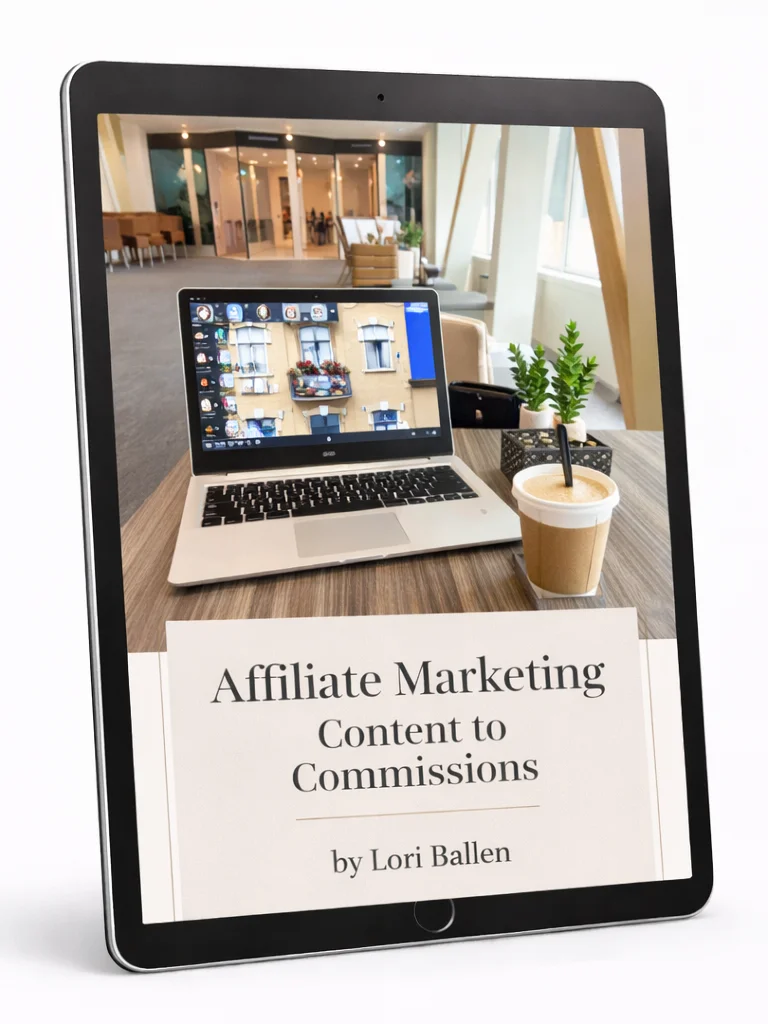
Content to Commissions
How I turn content into Amazon and affiliate commissions, from picking a category to building the cluster around it.
- How to validate a product category before you build
- The exact cluster structure that compounds
- Turning one review into a whole content system

Pinterest Power Stack
Turn one post into many pins, and one pin into an evergreen entry point that keeps working for the whole cluster.
- Turn one piece of content into a full pin set
- Keyword-first pin descriptions that actually get found
- The repost and refresh cadence that keeps pins alive
Before You Build Your First Cluster
Do I need a big Pinterest following to make Amazon affiliate income?
No. Pinterest is a search engine, not a popularity contest. A handful of well-targeted pins pointed at real demand outperforms a huge following with no intent match.
How do I know if a product category is worth building around?
Check whether it’s actually moving: rising search demand, other creators converting in that space, not just personal interest.
What’s the fastest way to start?
Pick one keyword theme, build three or four pieces of content around it (a review, a comparison, a best-for guide), pin each one, then look at what’s converting before you build more.
Ready to Turn One Cluster Into a Real Income Stream?
Not ready to buy yet? Grab the free Pinterest guide above, or get Letters from Lori for more field notes.
Hey there! Just a quick heads-up: some of the links on this site are affiliate links, meaning I may earn a small commission if you make a purchase (including through the Amazon Associates program), at no extra cost to you. Occasionally, products featured here are gifted by brands.
I also use AI tools to help research and create content for you! While I love sharing strategies to help you succeed, please remember that everyone's journey is unique—individual results vary, and there are no guarantees. Thanks so much for stopping by!


