How I do Pinterest affiliate marketing.
Pinterest affiliate marketing works when you match what you promote to what people are already searching for. Here’s the exact system I use: start with demand, choose the right products, build one strong post, then let pins and boards send outbound clicks for the long haul.
Sell the search, not the product
Demand comes first
Validate that people are actually searching for it on Pinterest before you pick a single product to promote.
Match the intent
Promote the product that solves the exact thing the searcher typed, not whatever pays the most.
One strong post wins
Send pins to a genuinely helpful blog post, not straight to an affiliate link. That’s what Pinterest rewards.
Clicks tell you what’s next
Watch outbound clicks, then make more pins like your proven winners. The data shows you where to double down.
My exact Pinterest affiliate system
The repeatable process I run to turn Pinterest searches into steady affiliate commissions.
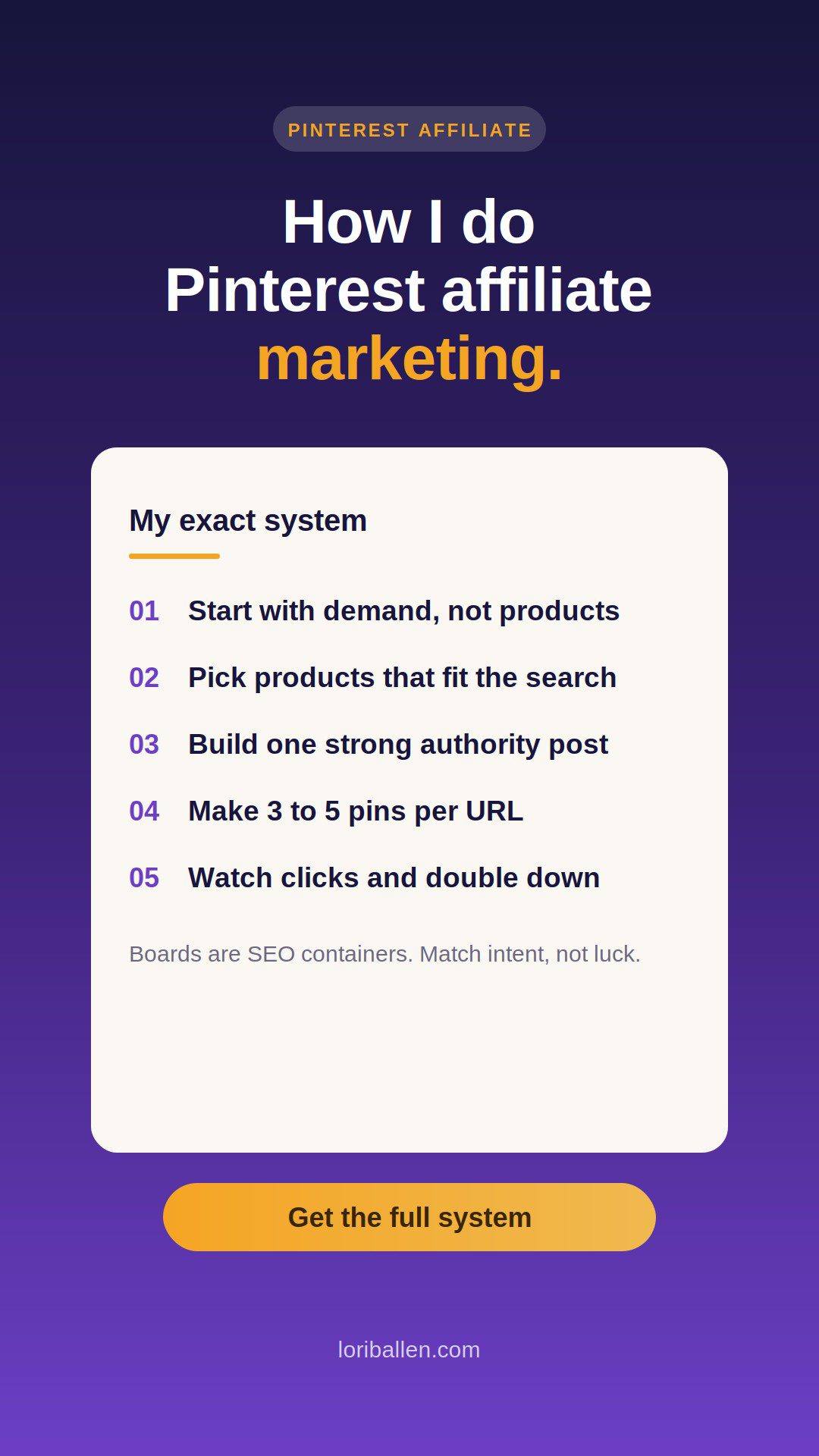
Start with demand, not products
Validate the keyword in PinClicks first. If nobody is searching for it, no pin will save you.
Choose products that fit the search
Pick the affiliate product that solves the exact problem behind the search, so the click actually converts.
Build one strong authority post
Write a genuinely helpful post around that keyword and place your affiliate links naturally inside it.
Create 3 to 5 pins per URL
Different angles, different images, same destination. More pins means more chances to rank and get saved.
Use boards as SEO containers
Organize boards around keywords so Pinterest understands exactly what each pin is about.
Schedule with Tailwind
Batch your pins and let them go out on a steady rhythm instead of posting by hand every day.
Watch outbound clicks and double down
Track which pins send real clicks, then make more like them. Let the winners scale the whole system.
Free: The Ballen Pinterest Method
My keyword-first Pinterest workflow in one short PDF — the exact way I turn pins into steady, clickable traffic.
“Affiliate commissions on Pinterest don’t come from pushing products. They come from matching what you promote to what people already search for.“— Lori Ballen
Want the whole system, with me?
Inside coaching I walk this entire Pinterest affiliate system with you, step by step — the exact keyword research, product picks, pin strategy, and schedule I use every week. Live, every week.
Join group coaching →The tools I use
Some of the links below are affiliate links — if you sign up or buy through them I may earn a commission at no extra cost to you. I only ever share tools I actually use.
PinClicks
See real Pinterest search volume so you build every pin around demand people are already looking for.
Ideogram
Generate tall, high-contrast pin images that stop the scroll, no design skills needed.
Tailwind
Batch a month of pins and let SmartSchedule post them at the best times automatically.
Lasso
Manage and cloak every affiliate link in one place so your links stay clean, tracked, and easy to update.
Turn pins into commissions
Content to Commissions
My playbook for turning helpful content into affiliate income that keeps paying.

Pinterest Power Stack
Turn one blog post into many Pinterest-optimized pins that keep driving fresh traffic.
Loved this? Pin it.
Hover the image and tap the Pinterest Save button to keep this on one of your boards.
Turn Pinterest searches into affiliate commissions that compound.
Join group coaching at Ballen Academy →Not ready to coach yet? Get Letters from Lori — my field notes on building a business that earns for the long haul.
Hey there! Just a quick heads-up: some of the links on this site are affiliate links, meaning I may earn a small commission if you make a purchase (including through the Amazon Associates program), at no extra cost to you. Occasionally, products featured here are gifted by brands.
I also use AI tools to help research and create content for you! While I love sharing strategies to help you succeed, please remember that everyone's journey is unique—individual results vary, and there are no guarantees. Thanks so much for stopping by!


